Trump's Ballroom Problem: Why the Iran Deal Talks Are Harder Than the White House Lets On
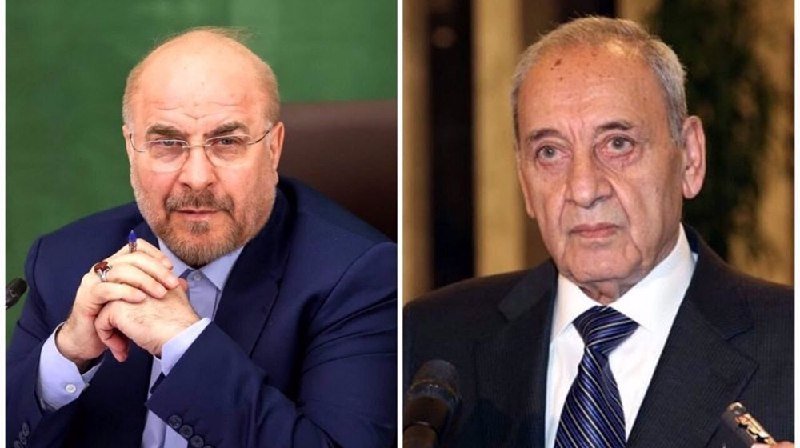
There is a ballroom somewhere in Vienna where diplomats have, on at least one occasion, attempted to keep a nuclear negotiation from collapsing. The details change; the venue does not. What matters is that the metaphor has outgrown its origin story and now functions as shorthand for the irreducible gap between what Washington says publicly and what Tehran believes privately.
That gap is widening.
On 19 May 2026, reporting from Middle East Eye confirmed that Iranian air defence operators have mapped out American flight patterns in the region — not as idle intelligence collection, but as operational preparation. Tehran is watching, and it is drawing conclusions about American intent from observable behaviour rather than official statements. Iranian state media, via Jahan Tasnim, went further the same day, characterising the Trump administration's posture as a set of "delusions" that had begun to infect the Vice President's office. The framing was pointed: what begins as the President's improvisation tends to metastasize into official policy.
That reading may be self-serving. It is also not irrational.
The White House has given Tehran no reason to trust its public commitments. Trump himself, speaking on 19 May, said he had made up his mind on the endorsement "a long time ago" — language that could mean anything from a fixed diplomatic position to a decision already made for domestic political reasons. Polymarket, tracking the probability of what participants are calling the "ballroom project" being unblocked by the end of the month, put the odds at 20 percent. That is not a confidence interval. It is a signal that the market — aggregate expert opinion, however imperfect — does not believe a deal is imminent.
The Framing Problem
Washington's approach to the Iran nuclear question has always suffered from a category error: it treats the negotiation as a contract to be signed rather than a relationship to be managed. The Joint Comprehensive Plan of Action, which Trump exited in 2018, worked not because its terms were optimal but because both sides had, after years of Quiet American diplomacy, developed sufficient mutual predictability to operate within the same frame. That frame broke when the United States withdrew. Rebuilding it requires something the current administration has shown little appetite for: patience calibrated to Iranian decision-making timelines rather than American electoral cycles.
Tehran's calculus is structural. The Islamic Republic survived maximum pressure under the first Trump term. It watched the JCPOA's European signatories fail to deliver economic relief after American withdrawal. It has since deepened its relationship with Russia, expanded its enrichment programme well past the original limits, and cultivated relationships with Gulf states that once viewed it as an existential threat. Iran enters any new negotiation from a position that is, by any measure, stronger than the one it held in 2015. Washington enters it from a position of demonstrated unreliability.
The asymmetry matters. One side has a clear understanding of what it wants; the other has a clear understanding of what it wants to say. These are not the same thing.
What the Flight Patterns Mean
Intelligence collection is not itself an act of hostility. States map each other's capabilities as a matter of course, particularly in regions where military presence is constant and overlapping. But the specific focus on American flight patterns — as distinct from overall regional monitoring — suggests something more targeted. Air defence systems, by their nature, require real-time data on flight routes, altitudes, and patterns to function effectively against unpredictable targets. Iran's investment in mapping those patterns implies planning for a scenario in which direct engagement with American assets becomes plausible.
That is not a negotiating position. It is a contingency posture. And it tells us something important about how Tehran reads the current moment: not as a negotiation in progress, but as a countdown to something else.
American officials, when they address Iranian capabilities at all, tend to frame them in terms of threat reduction — what must be eliminated before talks can proceed. Iranian officials frame American statements in terms of domestic politics — what the President needs to say for his base, rather than what he means for the other side. Neither side is wrong. That is the problem.
The 20 Percent Problem
Prediction markets are not crystal balls. They aggregate information from people who have varying degrees of access and expertise, filtered through financial incentives that reward accuracy. The fact that Polymarket puts a 20 percent probability on the "ballroom project" clearing by end of May is not a condemnation of diplomacy. It is a measurement of uncertainty — and the primary driver of that uncertainty is not Iranian obstinance, but American incoherence.
When a White House communicates through offhand remarks and contradictory signals, markets and adversaries alike are forced to discount official statements. They instead watch behaviour: which officials are meeting, which pressure points are being activated, which domestic audiences are being prepared. The flight pattern intelligence programme is, in this sense, the Iranian equivalent of a prediction market — a systematic attempt to extract signal from noise by watching what the other side actually does.
What Iran has observed, according to the Middle East Eye reporting, is a pattern consistent with preparation for military rather than diplomatic action. That reading may be wrong. It is being held by people with significant intelligence resources and a direct stake in being right.
The Stakes Beyond the Deal
A collapsed negotiation does not simply mean no deal. It means a United States that has, for the second time in eight years, demonstrated that its diplomatic commitments expire with its President's tolerance. It means an Iran that moves definitively toward weapons-capable enrichment with full knowledge that the only international constraint on its programme was the one Washington destroyed. It means allies in the Gulf and Europe who have been waiting for American steadiness, watching it instead fluctuate with approval ratings and internal polling.
The ballroom is not a real place. The metaphor, however, is precise: it is a space where two sides come together to negotiate what they can live with. What the current moment suggests is that one side is arriving without having decided whether it wants a deal at all — and the other side knows it.
This publication finds that the gap between what the White House says it wants and what it is actually prepared to accept may be unbridgeable under current conditions. The question is not whether Iran will test American resolve. The question is whether American resolve is coherent enough to be tested.