Trump's Iran Deal Optimism Meets Analyst Skepticism Over Demand That Analysts Say Blocks Path
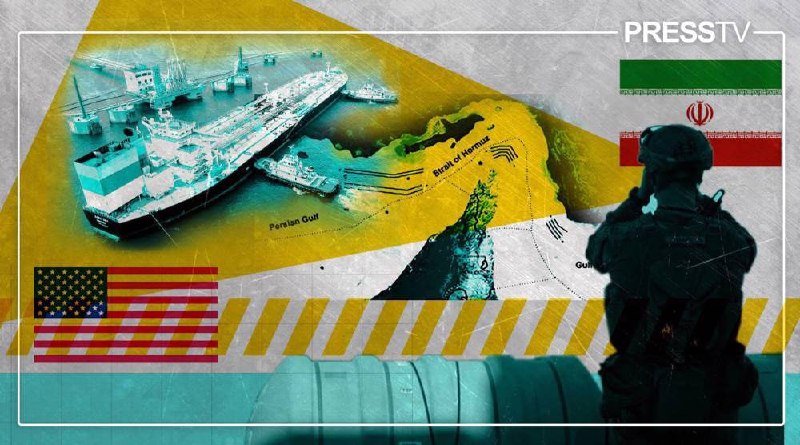
President Trump told reporters on May 18, 2026, that there appeared to be "a very good chance" the United States and Iran could work something out on the nuclear file — a statement that landed alongside analyst commentary suggesting the administration was presenting an illusion of diplomatic traction where none genuinely existed.
Speaking from the White House, Trump said: "There seems to be a very good chance that they could work something out," according to social media reports of the exchange. The remarks followed days of shuttle diplomacy and media signals from both capitals that some form of framework was under discussion.
The optimism in public remarks stood in sharp contrast to what regional analysts described as an unresolved fundamental sticking point. One analyst, quoted in Middle East Eye's live coverage of May 18, said Trump's insistence on a specific demand effectively closed off the path to a verifiable, mutually binding agreement — not because Iran lacks interest in sanctions relief, but because the demand in question requires concessions no Iranian government could accept without triggering domestic political collapse.
The Administration's Public Framing
The Trump administration has described its Iran approach as simultaneously maximum pressure and maximum flexibility — a formula that senior officials argue allows the U.S. to extract better terms than the 2015 JCPOA without the diplomatic constraints that critics on both sides of the aisle called unacceptably permissive. On May 18, Trump himself signaled that dealmaking remained possible.
"There seems to be a good chance of reaching an agreement with Iran," he said separately, per Arabic-language regional wire reports. The phrasing was notable for its calibration — neither a declared collapse nor a declared breakthrough, but an open door.
Administration officials have repeatedly argued that the Islamic Republic's economic deterioration from sanctions gives the U.S. structural leverage that did not exist in earlier negotiating rounds. The argument, familiar from the original maximum pressure campaign, holds that patience and sustained isolation will eventually produce a partner willing to accept terms far more favorable than those offered under the JCPOA.
What the Analysts Say Closes the Door
But analysts tracking the negotiations closely argue that the leverage calculus is more complicated than the White House presents. The demand cited in Middle East Eye's May 18 reporting — which one analyst described as blocking the path to deal — appears to require Iran to take irreversible steps before receiving any sanctions relief, a sequencing that removes any credible enforcement mechanism if Tehran moves to restart enrichment.
Under that formulation, Iran would be asked to dismantle existing capabilities while retaining only American good faith as insurance. The 2015 deal survived in part because sanctions relief was phased in alongside verified nuclear steps — both sides moved simultaneously, creating mutual dependency on compliance. A deal structured around Iranian up-front capitulation on the most sensitive infrastructure, with American concessions deferred to an unspecified future, asks Tehran to accept a different kind of risk entirely.
The same analyst told Middle East Eye that Trump was presenting a "false impression of control" in the talks — implying a level of U.S.主宰 over outcomes that the underlying dynamics do not support. The phrasing matters: it suggests the administration's optimistic public posture is not merely aspirational diplomacy but potentially a manufactured narrative designed to signal resolve to domestic audiences and regional partners without delivering a substantive agreement.
The Regional Context That Shapes Tehran's Calculations
Iranian negotiators operate under constraints that extend well beyond the nuclear file. The broader Middle East security environment — ongoing Israeli operations in Gaza, Lebanese Hezbollah's post-war repositioning, and the cumulative weight of regional isolation — shapes what any Iranian government can accept as politically viable.
A nuclear agreement that appears to reward the United States for pressure campaigns widely seen in the region as having failed to produce strategic concessions elsewhere would carry significant domestic political costs. The Iranian system, whatever its internal divisions, has historically demonstrated coherence when presented with external pressure that can be framed as illegitimate. A deal that looks like capitulation on one front invites harder-line critics to argue the entire negotiating premise was flawed.
Israeli officials, meanwhile, have been unambiguous in their stated position that any agreement must leave Iran with no meaningful enrichment capability and include robust verification mechanisms — a standard that analysts note would require Iranian concessions exceeding anything accepted in 2015, making the gap between the stated Israeli floor and the publicly stated U.S. floor potentially wider than the diplomatic language suggests.
Where This Goes Next
The next several weeks will test whether the administration's optimism reflects a genuine behind-the-scenes process moving toward agreement or a public posture designed to manage multiple audiences simultaneously. If genuine talks are underway, the sequencing question — who moves first, on what, and with what guarantees — will determine whether a deal survives contact with the political systems on both sides.
Analysts who track the file note that previous administrations have also announced imminent breakthroughs only to watch negotiations collapse over precisely the kinds of technical and political constraints now visible. The difference, if any, would have to emerge from actual text — from the specific mechanism that addresses Iran's demand for sanctions certainty and the U.S. demand for irreversible nuclear limits.
Without that mechanism, the "very good chance" Trump described on May 18 remains a political statement rather than a diplomatic fact. The sources consulted for this article do not indicate whether the underlying negotiations have resolved the sequencing problem, or whether they are proceeding on parallel tracks that may never converge.
Monexus is tracking developments in the Iran nuclear file as they occur. Our next update will incorporate any additional statements from U.S., Iranian, or third-party officials.
Wire provenance
This editorial synthesis draws on the following public wire/social posts:
- https://t.me/alalamarabic
- https://t.me/ClashReport