Trump Team Lays Down Red Lines on Iran Nuclear Programme as Regional Tensions Mount
Senior Trump administration officials delivered a coordinated series of statements on 19 May signalling that diplomatic windows on Iran's nuclear file are closing, while video emerged of environmental damage from last month's strike on the Lavan refinery.
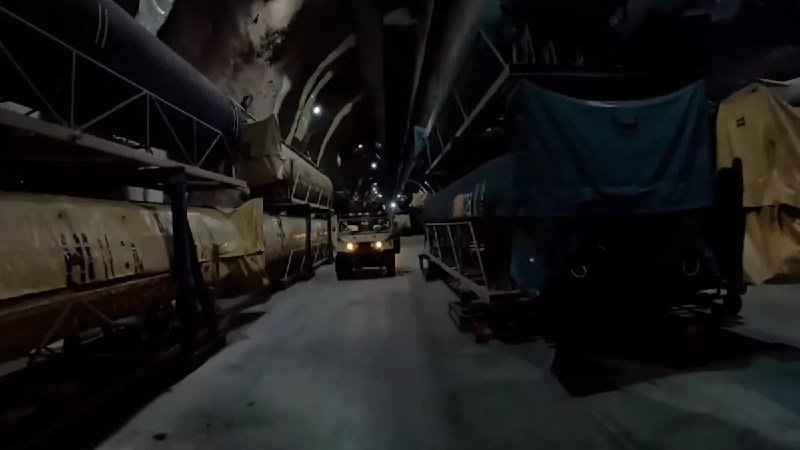
Senior Trump administration officials delivered a coordinated series of statements on 19 May signalling that diplomatic windows on Iran's nuclear file are closing rapidly, even as video emerged showing environmental damage from an attack on the Lavan refinery last month that has since spilled oil onto a strategically significant Iranian island in the Persian Gulf.
Vice President JD Vance, speaking to reporters at the White House on 19 May, offered a measured but unambiguous assessment. "Iran can never have a nuclear weapon," Vance said. "Iran would really be the first domino in what would set off a nuclear arms race all over the world." The Vice President added that the administration had been told by the President that the United States was "locked and loaded" to prevent that outcome. President Trump, speaking separately on the same day, was more blunt still: "We can't let Iran have a nuclear weapon." The sources do not specify whether Trump was referring to a diplomatic or military timeline for that determination.
The coordinated messaging, delivered within a single hour on 19 May, read to regional observers less as a negotiation posture than as a public conditioning exercise — laying out the terms under which the administration would consider its diplomatic efforts exhausted. A Telegram channel tracking intelligence developments reported that Trump convened a meeting on Monday of that week at which the question of resuming what the channel described as "war with Iran" was under active discussion, with consequences that would carry "a massive geopolitical price."
The Lavan Spill as Context
Al Jazeera published video on 19 May showing the extent of an oil spill caused by last month's strike on Iran's Lavan refinery, located on Lavan Island in the Persian Gulf. The island sits roughly 80 kilometres off the Iranian coast and hosts one of Iran's significant oil-processing facilities. The environmental impact — a slick extending into Gulf waters — adds a humanitarian and ecological dimension to the escalating strategic confrontation, though the sources do not attribute civilian harm figures to the spill. The refinery attack itself has not been claimed publicly by any party; the sources do not confirm which actor carried it out.
The timing of the video's release — coinciding with the Vance and Trump statements — underscores how the military and diplomatic pressure on Tehran is running on parallel tracks. Environmental fallout from strikes on critical energy infrastructure is rarely the primary frame in Western coverage, but it is a material consequence that affects both Iranian civilian populations and, potentially, shared Gulf marine resources.
What Negotiations Look Like Now
Vance expressed scepticism about the coherence of Iran's own decision-making on the nuclear question. "Maybe the Iranians aren't themselves quite clear in what direction they want to go," he said. The Vice President described Iran as "a very complex country" — language that stopped short of the maximalist framing sometimes deployed in Washington while stopping well short of any softening on the core demand.
The sources do not detail the current status of any indirect talks between the United States and Iran, which have been conducted through Omani and Swiss intermediaries since the collapse of the original JCPOA framework. What is clear from the 19 May statements is that the administration's public posture has shifted from the conditional optimism that characterised earlier signals about a potential new deal. The language of "locked and loaded" and the explicit invocation of a regional arms-race consequence are red-line declarations, not opening bids.
The Structural Frame
The United States has not fought a direct military campaign against Iran since the 1979 revolution, though it has engaged in a sustained campaign of economic pressure, cyber operations, and proxy confrontations across the region. What the current moment represents is a reversion to a more confrontational default in Washington — one that treats the nuclear file as a binary question rather than a spectrum of partial compliance.
The invocation of "first domino" logic — that an Iranian nuclear weapon would trigger a cascade across the Middle East — is not new, but its articulation by a sitting Vice President in 2026 carries different weight than similar statements did a decade ago. Saudi Arabia, the UAE, Egypt, and Turkey have all watched Iran's nuclear programme advance in the years since the JCPOA's collapse. Whether that observation produces pressure on Washington to act or pressure on Iran to compromise is the central unresolved question.
Stakes and Forward View
If the diplomatic track closes, the options available to the administration are stark: continued economic strangulation through sanctions, covert operations targeting nuclear facilities, or direct military strikes. Each carries distinct escalation risks. A strike on Fordow or Natanz would require deep penetration of Iranian air defence systems and would almost certainly provoke retaliation against US personnel and assets in Iraq, Syria, and the Gulf. A diplomatic failure also removes one of the few channels through which the international community — including European signatories of the original deal — has maintained any leverage over Iran's programme.
The oil spill on Lavan Island will complicate the environmental diplomacy of any future Gulf-wide negotiations, adding another constituency — maritime and environmental regulators — to the already crowded list of parties with interests in the outcome. That the footage emerged precisely as Washington was delivering its red lines is unlikely to be coincidental.
This publication led with the Al Jazeera video and the Vance/Trump statements as a coordinated pair, presenting the environmental and strategic dimensions of escalating US-Iran confrontation in the same frame. Western wire coverage of the Vance statements on 19 May focused on their domestic political resonance; this article prioritised the geopolitical substance and the regional context the same statements carry.
Wire provenance
This editorial synthesis draws on the following public wire/social posts:
- https://t.me/osintlive/1847