Trump Postpones Iran Strike as Gulf States Seek Diplomatic Window
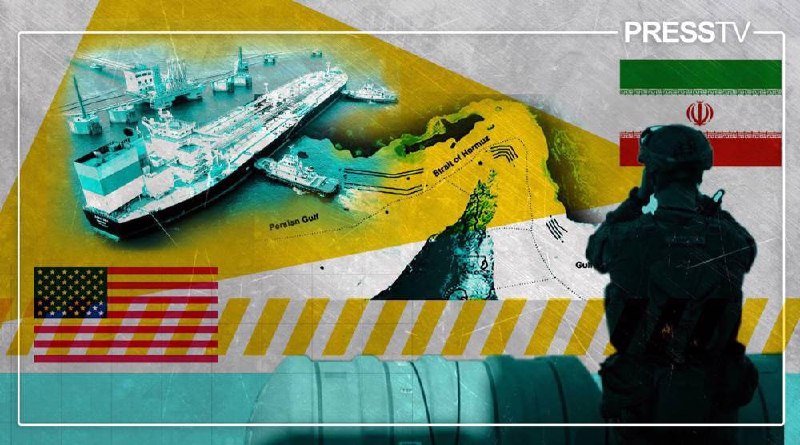
President Donald Trump announced on 19 May 2026 that a US military strike against Iran had been deferred for two to three days at the request of Gulf Arab states, a concession to regional partners who fear that an attack could destabilise oil markets and trigger a broader security crisis. The announcement, posted to his social platform, came hours after Vice President JD Vance reiterated that the administration will not accept any diplomatic arrangement permitting Iran to possess a nuclear weapon. "We're locked and loaded," Vance told reporters. "We don't have a deal that allows the Iranians to have a nuclear weapon."
The deferral signals a genuine divergence between the Trump administration's maximalist public posture and the appetite of its closest Arab allies for a more controlled diplomatic trajectory. It also raises questions about whether the Gulf states — Saudi Arabia, the UAE, Qatar, and Kuwait — possess sufficient leverage to shape a durable US decision, or whether this pause reflects a tactical realignment of positions that were never as far apart as the public rhetoric suggested.
The Domino Theory and the Gulf Calibration
Vance, speaking alongside the president, framed Iran's nuclear programme as an existential threshold for the entire Middle East. "Iran would really be the first domino in what would set off a nuclear arms race all over the world," he said. The argument — that Iranian capabilities would prompt Turkey, Saudi Arabia, and Egypt to pursue their own weapons — is a longstanding tenet of the pro-proliferation school inside US foreign policy establishments, and one the current administration has adopted wholesale.
The framing matters because it pre-empts the argument that US military action would itself destabilise the region. If the domino logic holds, inaction is the greater risk. Gulf states have publicly accepted that logic in general terms — they supported the 2015 nuclear agreement's restrictions precisely because they feared a regional arms race. But accepting the broad argument and accepting a unilateral US strike, launched on Trump's timetable without allied consultation, are different propositions entirely.
What the Gulf States Are Buying
Saudi Arabia, the UAE, and Qatar have invested heavily in normalisation with Iran over the past two years, following the Chinese-brokered détente of 2023. Their版面 state media and diplomatic communications have been uniformly cautious about military escalation, warning that strikes on Iranian nuclear or energy infrastructure would affect Gulf maritime traffic and oil terminal operations at a moment of acute fiscal strain across the region.
The two-to-three-day pause serves multiple Gulf interests. It extends the diplomatic window, allowing Qatar and Oman — both of which maintain back-channel contacts with Tehran — to test whether Iranian negotiators have meaningful authority to make concessions. It also recalibrates the domestic US political dynamics around the strike, potentially creating conditions in which a negotiated standstill on uranium enrichment becomes the face-saving outcome the administration presents as a win.
The sources do not specify what concrete commitments the Gulf states offered in exchange for the deferral. Iranian state media, citing an unnamed government source, described Trump's framing as a reflection of delusional thinking in Washington rather than a genuine concession. That framing — dismissiveness toward US signals — is itself a negotiating posture, one designed to signal to Gulf intermediaries that Tehran will not be rushed.
Why the Delay May Not Signal a Diplomatic Opening
There are at least two plausible explanations for why Trump accepted the deferral, and they point in opposite directions.
The first is that Gulf pressure worked. Regional capitals hold significant leverage over US energy and security interests — not enough to veto US military action, but enough to create a temporary delay. If Qatar, which hosts the largest US Central Command airbase in the region, signals that a strike complicates its mediation role, the White House has reasons to listen.
The second is that the delay reflects internal administration calculations that have nothing to do with Gulf preferences. Trump faces midterm political pressures where a military strike could be portrayed as either reckless or overdue depending on the news cycle. "Locked and loaded" language serves domestic positioning even when it is not immediately followed by action. In this reading, the Gulf states' request provided convenient cover for a pause already decided for other reasons.
The sources do not specify which explanation holds. What is clear is that the administration's position — no deal permitting Iran a nuclear weapon — remains non-negotiable in public framing, while Iran's stated position demands that any agreement recognise its right to civilian enrichment under IAEA oversight, not perpetual restrictions imposed by a non-party. The gap between those positions has not narrowed in the past seventy-two hours.
The Stakes
The diplomatic window the Gulf states are buying may be narrow. Every hour of public deferral reduces the deterrent pressure that makes Iranian negotiators willing to talk. If the administration resumes strike preparations at the end of the two-to-three-day window without a credible alternative on the table, the delay will have served primarily to signal to Gulf capitals that their influence is operational — and to Tehran that the threat itself is partly performance.
Gulf states that have spent two years normalising relations with Iran have the most to lose from a strike. Their requested delay is not a rejection of the Trump administration's core argument about Iranian nuclear ambitions. It is an insistence that the timeline, the targeting choices, and the diplomatic off-ramp all reflect Gulf interests as well as American ones. Whether that insistence carries weight beyond this particular news cycle remains the central question for regional capitals watching Washington closely on 19 May 2026.
This publication reported the deferral announcement as it appeared in the wire, treating it as a confirmed statement of fact. The Iranian counter-framing appeared in a Mehr News Telegram post carrying an identifiable Iranian state-adjacent editorial character and is reported as such. The Vance statements derive from a Telegram feed that aggregates US official commentary and are treated as direct attribution pending formal US government transcript confirmation.
Wire provenance
This editorial synthesis draws on the following public wire/social posts:
- https://x.com/sprinterpress/status/1924085749879472373
- https://t.me/BellumActaNews/4821
- https://t.me/BellumActaNews/4820
- https://t.me/mehrnews_en/293418