Trump Says He Delayed Iran Strike by One Hour, Warns of Renewed Attack Within Days
President Trump disclosed on May 19, 2026 that he came within an hour of authorizing a military strike on Iran before pulling back, and warned that the US could strike again within days if Tehran does not move toward a ceasefire agreement.
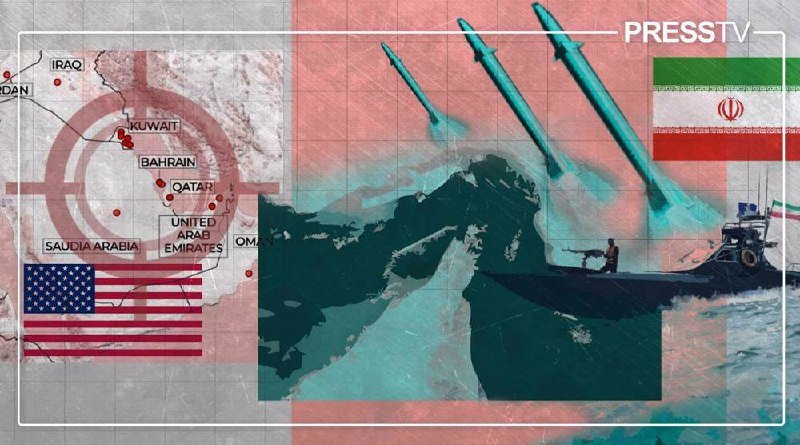
President Trump said on May 19, 2026, that he was within one hour of authorizing a military strike against Iran before deciding to postpone the operation, adding that the United States could strike again within days if Tehran does not demonstrate progress toward a negotiated ceasefire.
The disclosure, made from the White House, marks the most explicit public window yet into the decision-making process behind the administration's evolving posture toward Iran. Trump also said Chinese President Xi Jinping had given him assurances that Beijing would not supply weapons to Tehran during the standoff, a claim that could complicate already fraught US-China relations while simultaneously framing China as a potential moderating actor in the crisis.
The sequence of statements amounts to a coordinated pressure campaign: a public demonstration of force backed by a credible near-execution, followed immediately by an offer of diplomatic off-ramps. Whether that combination is designed to compel concessions or create space for negotiations remains contested.
The One-Hour Window
Trump's account places the aborted strike within a narrow operational window. Speaking to reporters, the president described a situation in which military assets were positioned and orders were being drafted before the decision to stand down. No specific targets were named in the initial disclosure, and the administration has not released the operational details that would allow independent verification of the timeline.
What is clear is that the strike — had it proceeded — would have represented a significant escalation. Previous US military action against Iranian targets has been calibrated to avoid direct strikes on Iranian territory itself. A strike on infrastructure would cross a different threshold, one that Iranian state media was quick to note with a response that mixed defiance with apparent confidence.
A channel identified as affiliated with Iran's military posted on Telegram in response to Trump's threat: "Are you serious?! Okay, go ahead and do it!" — a tone that suggests Tehran is calculating that Washington is more likely to posture than to follow through. That interpretation is itself a form of intelligence gathering, conducted in public.
The Xi Signal
The disclosure about Xi's reported assurance adds a diplomatic dimension that is difficult to read cleanly. On its face, a Chinese commitment not to arm Iran during a US-Iran confrontation would be a significant gesture toward de-escalation. Beijing has extensive commercial and energy ties with Tehran, and China has historically used its position as a major purchaser of Iranian oil as leverage of its own.
Chinese state media and diplomatic channels have not confirmed the conversation as Trump described it. The Xi assurance, if accurate, could represent a genuine diplomatic accommodation — or it could be a signal designed to fracture what Washington might prefer to present as a unified anti-Western axis. That ambiguity is itself useful to Beijing, which has maintained carefully calibrated distance from both the US and Iranian positions while retaining its economic access to both.
The Reuters report, filed at 17:10 UTC on May 19, is the most specific sourcing available for the Trump disclosures. The Al Jazeera English breaking news desk, covering the same statements, noted the Xi reference as a distinct element of the briefing, suggesting the Chinese dimension is being tracked as a separate story line in regional coverage.
Pattern Recognition
The structure of the announcement — imminent strike disclosed post-hoc, followed by a conditional threat, followed by a diplomatic conditional — fits a well-established pattern in US coercive signaling. The near-miss disclosure functions as a credibility-building exercise: it demonstrates that the option was genuinely live, which makes the ongoing threat more credible than an abstract warning would be.
Iran's response has been calibrated to undermine that credibility. The mocking tone of official Iranian-adjacent social media posts is designed to suggest that Tehran does not believe the threat is genuine, or that it can absorb whatever damage a strike would inflict without changing its fundamental position. That is itself a form of deterrence signaling, conducted through open channels.
What remains unclear from the available record is what specific demand Trump is attaching to the days-long deadline. The language of the threat — "if progress on ceasefire is not made within days" — is vague enough to encompass a wide range of outcomes. That vagueness may be intentional, allowing the administration to claim victory in a variety of scenarios, or it may reflect genuine uncertainty about what a satisfactory Iranian concession would look like.
Stakes and Trajectory
The stakes are considerable and extend well beyond bilateral US-Iran relations. A sustained military exchange would threaten the Strait of Hormoz, through which roughly a fifth of the world's oil passes. It would likely trigger renewed disruption across LNG markets and put pressure on European allies who have maintained their own, sometimes diverging, channels to Tehran. It would also complicate the ongoing diplomatic management of the Ukraine conflict, where China has positioned itself as a potential mediator — a role that becomes more difficult if Beijing is simultaneously being asked to contain Iran.
For Iran, the cost of capitulation on the nuclear file or on regional behavior would be steep, potentially exposing the government to domestic criticism of the kind that has historically constrained Iranian negotiating postures. The cost of absorbing strikes — even limited ones — would also be significant, both materially and in terms of the regime's standing.
What the current moment does not appear to include is a clear off-ramp that both sides can credibly claim as a victory. The administration's language suggests it wants negotiations on the nuclear file; Iran's stated position has been that sanctions relief must come first. That sequencing disagreement has collapsed previous diplomatic efforts. Whether the current pressure campaign produces a different outcome will depend on calculations that remain opaque from the outside.
Monexus has reported this story using Trump administration statements as the primary factual basis, supplemented by Iranian state-adjacent social media responses and Reuters wire reporting. No independent confirmation of the Xi Jinping conversation detail has been published by Chinese state media as of publication.