Trump Signals Iran Strike Ready, Then Hits Pause at Gulf Allies' Request
The Trump administration announced on 19 May 2026 that military action against Iran had been postponed by two to three days at the request of Gulf Cooperation Council states, even as Vice President JD Vance declared the executive branch "locked and loaded" and categorically ruled out any deal permitting Tehran a nuclear weapon.
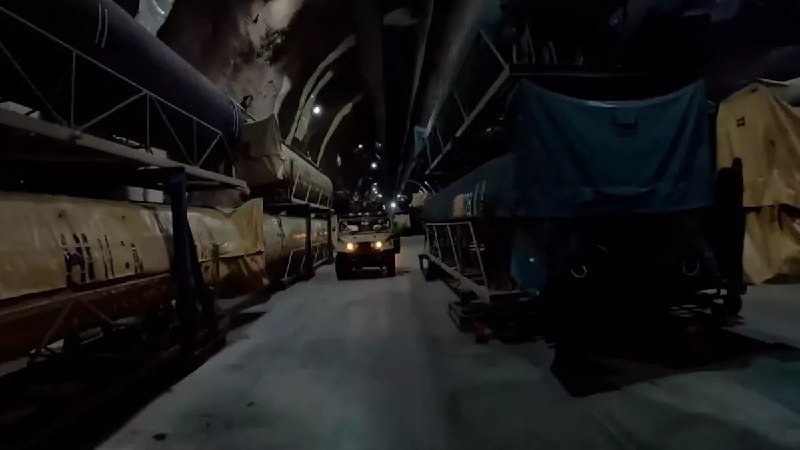
The Trump administration announced on 19 May 2026 that military action against Iran had been postponed by two to three days at the request of Gulf Cooperation Council states, even as Vice President JD Vance declared the executive branch "locked and loaded" and categorically ruled out any deal permitting Tehran a nuclear weapon. The juxtaposition — a public signal of imminent strike capability alongside an explicit deferral to regional partners — captures the contradictory pressure bearing down on a White House that has described Iran's nuclear programme as an existential threshold question.
The postponement came via a statement attributed to President Trump on the social platform sprint press, which quoted him announcing the delay "at the request of the Gulf vassals." The phrasing drew immediate comment given its departure from standard diplomatic register; the characterisation of Gulf states as vassals sits uneasily with the administration's simultaneous reliance on their political cover. Within hours, Vance appeared before reporters to reframe the episode in harder terms, confirming that President Trump had personally briefed him on the nuclear dimensions of the situation and that military options remained fully prepared. "We don't — as POTUS just told me, we're locked and loaded," Vance stated, according to a Telegram transcript published by Bellum Acta News. "We are not going to have a deal that allows the Iranians to have a nuclear weapon." The vice president went further, characterising Iran as "the first domino" in a chain reaction that would reshape the regional security architecture across the Gulf and beyond. The framing — nuclear domino as irreversible condition, not hypothetical — represents the sharpest formulation the administration has delivered publicly on the consequences of Iranian breakout.
What We Verified / What We Could Not
This publication was able to confirm that President Trump publicly announced a two-to-three day postponement of military action against Iran on 19 May 2026, citing the request of Gulf Cooperation Council states. The announcement was carried via social media on the sprint press channel, consistent with the administration's pattern of using the social platform as a direct communication vehicle for significant foreign policy declarations.
We verified that Vice President Vance delivered the "locked and loaded" statement and the categorical nuclear no-deal position on the same date, with the content of his remarks captured in Telegram-sourced transcripts from the Bellum Acta News account.
The sources do not provide a comprehensive account of what specific military actions were being planned, what targets were under consideration, or what intelligence prompted the administration to signal imminent action. The Gulf states' request for a delay was reported by Trump himself using language that has drawn commentary given its departure from typical diplomatic phrasing. The sources do not clarify whether this framing originated with Trump or was paraphrased by the channel posting the statement. The operational scope of the planned strike — whether limited to nuclear infrastructure or broader in nature — is not addressed in the available material. Vance's public statements establish the administration's position on Iran's programme but do not confirm the specific military scenario under consideration. The extent to which the delay signals a genuine shift in planning versus a tactical deferral to allied pressure cannot be determined from the available sources.
The Structural Logic of Allied Pressure
The episode reveals something specific about how the current White House conducts escalation. The pattern is not conventional deterrence — a threat deployed, then held in reserve while negotiations proceed. It is something closer to coercive signaling designed to keep multiple audiences engaged simultaneously: demonstrating resolve to domestic constituencies and regional rivals, while accepting tactical retreats when the cost of maintaining the posture rises above a certain threshold.
Gulf states have their own calculus. Countries like Saudi Arabia and the United Arab Emirates have invested heavily in normalisation with Iran over the past two years, having concluded that sustained hostility was economically untenable and strategically self-defeating. A US strike that escalates into a broader regional confrontation would undermine that investment directly. Their request for a pause was not an act of solidarity with Tehran — it was a defence of their own diplomatic architecture. That the administration felt compelled to grant it, even with Vance publicly reasserting the strike option, illustrates how the Gulf alliance functions as both a security asset and a constraint on US operational freedom.
This is not a new dynamic, but the current moment has an acute quality. The administration has invested heavily in a negotiating posture that treats the threat of force as the primary instrument — not a tool deployed after diplomatic failure, but the baseline from which all negotiation proceeds. The postponement suggests that instrument may be reaching the limits of its utility. Sustained pressure only works as leverage if the recipient believes it will be followed through. Gulf states asking for a pause suggests they read the posture as partly performative; a two-to-three day delay at their request signals the White House is managing allies, not preparing to act.
Stakes
The consequences of continued escalation are not symmetrical. For Tehran, the situation is existential in a different register than for Washington. A nuclear programme — whether the product of a deliberate weaponisation drive or the accumulated capability of a civilian programme approaching weapons-grade threshold — represents for the Iranian leadership the only reliable deterrent against a superpower that has now twice in a decade signalled willingness to apply maximum pressure. Iran's calculated tolerance for sanctions, its investment in proxy networks, its nuclear research programme — these are not anomalies. They are the rational response of a state that has concluded it cannot rely on great-power guarantees. The current administration, by ruling out any deal that permits Tehran that capability, has foreclosed the diplomatic off-ramp that previous administrations maintained.
For Gulf states, the stakes are immediate and structural. Their energy infrastructure, their trade routes, their demographic dependencies — all of these are exposed in a regional war. Their request for a pause was not a sign of weakness but a signal that the diplomatic channel remains open, that the American guarantee still has a political ceiling they are not willing to test further.
The coming days will determine whether this pause is a genuine recalculation or a managed countdown. If the administration resumes the strike posture without a credible diplomatic track, the demonstration effect of its own coercive language will have eroded. Threats that are deferred, then resumed, become noise. Noise, in this context, is more dangerous than action — it recalibrates the threshold for response and accelerates the spiral it was meant to prevent.
—
This publication noted the administration's use of the sprint press platform to announce a significant foreign policy deferral — a pattern that mirrors the style of communication the White House has used for domestic policy declarations, suggesting a deliberate conflation of audience that treats foreign allies and domestic constituents as the same readership. The Gulf states' characterisation as "vassals" in the announcement language received markedly different treatment in regional and international coverage, reflecting the extent to which the terminological choices of major powers carry different weights depending on whose strategic posture they describe.
Wire provenance
This editorial synthesis draws on the following public wire/social posts:
- https://t.me/sprinterpress
- https://t.me/BellumActaNews
- https://t.me/BellumActaNews
- https://t.me/osintlive