Trump's Two-Month X Silence Ends With a Political Execution
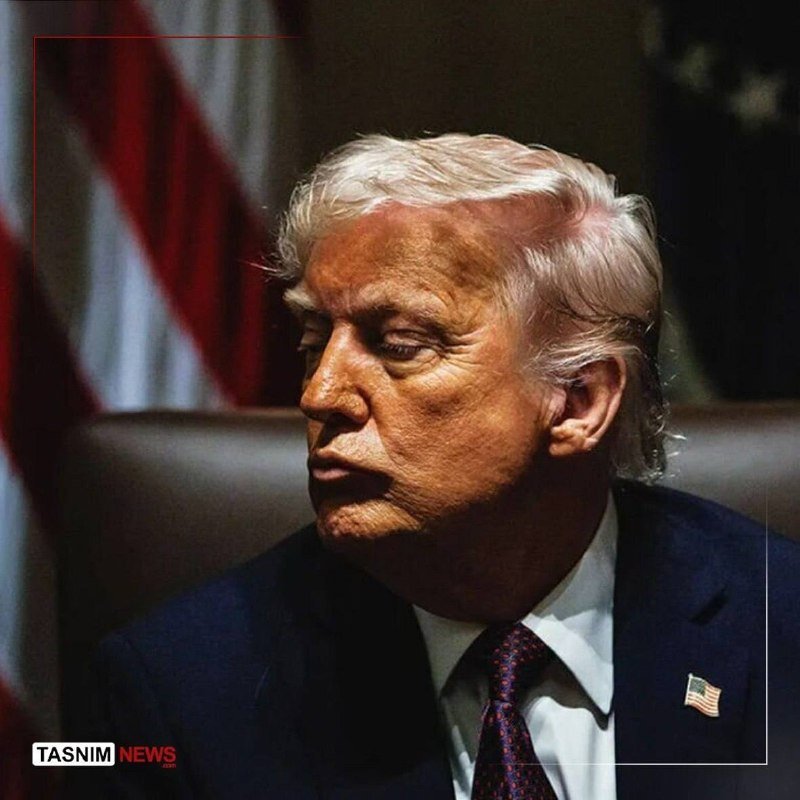
On 19 May 2026, Donald Trump posted to X for the first time in sixty days. The subject was not the war in Iran, which his administration had announced and which has consumed American military resources at scale. The subject was Thomas Massie — a Republican congressman from Kentucky who, according to the post, had fraudulently claimed an endorsement he did not possess. Two months of silence on American democracy's most politically significant social media account, then, and the罢 break it was a political execution of a sitting member of Trump's own party.
This is not noise. It is signal.
The pattern is well-established enough to have become a genre unto itself: the Trump broadside follows a consistent grammar. Pick a target. Assign a transgression — preferably one that is verifiable, or at least verifiable-adjacent. Release on a platform where the original framing cannot be interrupted by editorial context. Let the ecosystem absorb, amplify, and contest. By the time counter-framing arrives, the opening position has already shaped the terrain. Massie, a libertarian-leaning congressman who has occasionally dissented from the Trump-aligned wing on questions of foreign policy and government surveillance, fits the profile precisely. The alleged fraudulent endorsement — a dispute about whether Massie claimed Trump's backing for a position he did not in fact hold — is the kind of granular grievance that provides a plausible surface while serving a larger function: reminding every Republican in Congress what happens to those who step out of line, even slightly, even on peripheral matters.
The timing is the more instructive element. Trump had been silent on X since the administration announced its Iran posture. The silence itself had become a subject of analysis — was this deliberate, a form of signal discipline? Was the platform relationship fraying? Was the old megaphone now subordinate to more controlled communication channels? The answers matter less than the fact that observers were asking. Two months of X absence transformed the account from a routine broadcast tool into a geopolitical object — something whose activation itself carried meaning.
Breaking that silence to attack Massie is not a contradiction of the Iran moment. It is a reminder that domestic political consolidation does not pause while foreign conflicts escalate. If anything, wartime has historically accelerated internal party discipline — enemies without creating urgency within. Trump attacking Massie while American forces are engaged in the Middle East sends an implicit message to every Republican on the Hill: loyalty is not a peacetime virtue. It is the price of participation in a moment that demands total alignment.
The structural logic is not complicated. A wartime administration benefits from two reinforcing dynamics: heightened public attention to national security questions, which tends to compress dissent, and a media environment in which dissent on foreign policy is reframed as disloyalty or distraction. Trump's return to X was calibrated to land at the intersection of those two dynamics — not the Iran war itself, which would require careful framing, but a domestic political act of consolidation that reads, in the context of the war, like a reminder of where power actually sits.
This is what platform politics looks like in 2026. The account is not a communication tool in any ordinary sense. It is a stage, a weapon, and a test of loyalty simultaneously. Every post is both message and enforcement mechanism. When the account goes dark, the absence is noted, analyzed, and eventually weaponized by opponents. When it returns, the return itself is news. Trump's team understands this better than anyone operating in American politics, which is why the two-month silence was almost certainly intentional — a way of demonstrating that the platform, and by extension the man, chooses when to speak. Breaking that silence for a relatively minor dispute with a congressman is itself a statement: nothing is beneath this attention, and nothing is off-limits to this targeting.
The Massie incident also exposes something about how congressional Republican politics operates under this administration. Massie is not a Democrat. He is not a media figure with a large anti-Trump audience. He is a backbencher with a specific and somewhat idiosyncratic voting record. The fact that he was selected for this particular public execution — on a day when the administration's Iran posture was still being digested by allies and adversaries alike — tells you something about the current calibration of threat within the GOP. The threat is not primarily from the opposition. It is from the margins of Trump's own coalition, from those who might hesitate, object quietly, or signal unease at the pace and scope of executive action. Massie's offense, whatever precisely it was, appears to be that he may have overstepped the implicit boundary on where a loyal Republican can stand without explicit permission.
What remains unclear is whether this approach consolidates or frays the coalition over time. Wartime party discipline is historically effective in the short term — the rally-around-the-flag effect is documented, if limited. But Massie's specific sin — a disputed endorsement, a procedural boundary violation — is the kind of thing that, repeated across enough members, generates resentment that calcifies. The question is whether that resentment finds a vehicle, or whether it remains diffuse and silent. On present evidence, the latter remains more likely. But the fact that we are asking this question about a congressman from Kentucky who allegedly claimed an endorsement he did not have is itself a measure of how far the Republican internal environment has shifted.
Trump returned to X on 19 May 2026. He returned as he always does — not to inform, but to establish. The war in Iran continues. American forces are engaged. And the president spent his first post-silence post settling a score with a member of his own party. That is not a contradiction. In the grammar of this administration, it is an answer.
Wire provenance
This editorial synthesis draws on the following public wire/social posts:
- https://t.me/DDGeopolitics
- https://t.me/rnintel