Trump Walks Back Iran Strike, Signals Openness to Nuclear Diplomacy
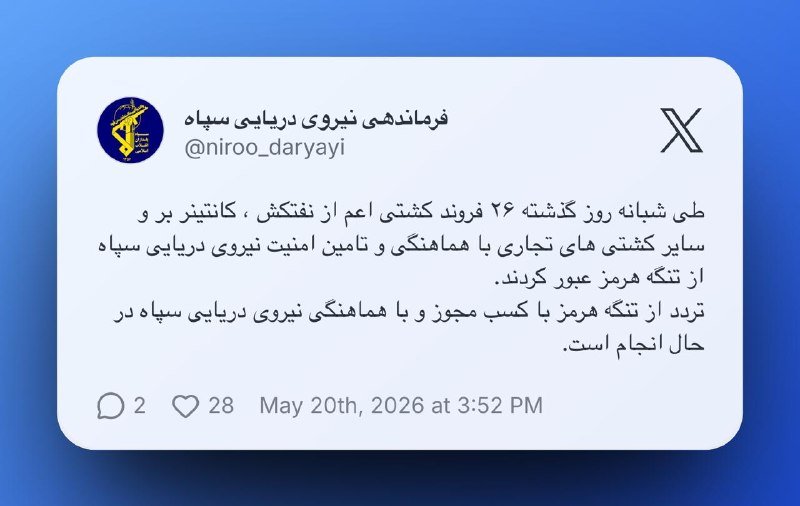
The Trump administration confirmed on 18 May 2026 that it had authorized a military strike against Iran and then cancelled the operation, reversing course after direct interventions from Gulf Cooperation Council members. The SCMP reported that Trump told associates he had called off a strike planned for the following day at the request of Gulf allies. Within hours, the President told reporters gathered at the White House that there was a "good chance" of reaching a nuclear agreement with Tehran—a pivot that immediately raised questions about the coherence of the administration's Iran policy and the leverage any diplomatic off-ramp would provide.
The reversal is significant on several levels. A sitting US President authorizing and then abandoning a kinetic strike within a 24-hour window is unusual under any circumstances. That the administration disclosed the existence of the planned operation—rather than classifying it as a covert action—suggests an interest in managing the signal sent to Tehran and to domestic political audiences simultaneously. The question is whether that signal amounts to strength, confusion, or something in between.
The Strike That Wasn't
The sequence of events remains partially opaque. According to the SCMP account, Trump told associates he had agreed to a strike before Gulf-state leaders pressed him to hold fire. Reuters separately reported that the President characterized the aborted operation in terms that left open whether it represented a diplomatic concession or a strategic recalculation. What is clear is that the intervention came from the GCC states—Saudi Arabia, the UAE, Qatar, Kuwait, Oman, and Bahrain—which have their own interests in avoiding an escalatory cycle on their doorstep.
The Gulf states' calculus is not difficult to reconstruct. A US-Iranian exchange, even a limited one, would destabilize energy markets, complicate their own ongoing diplomatic channels with Tehran, and potentially draw them into a wider regional confrontation they have worked to contain since the 2021 Oman-mediated confidence-building talks. Their request to Washington to stand down reflects a regional order that is more networked and more sensitive to escalation than the binary frames of Washington versus Tehran typically suggest.
Iranian state-aligned outlets were quick to characterize the abortive strike differently. Tasnim News, a outlet operating in the orbit of Tehran's foreign-policy apparatus, ran an analysis arguing that Trump's stated reasons for standing down were pretextual and that the real calculation lay elsewhere. That framing warrants scrutiny: Tehran's interests are served by portraying any US restraint as capitulation or evidence of internal division. Neither outcome should be accepted on Iranian-state media authority alone, but the counter-narrative does highlight that Washington's credibility as a coercive instrument depends partly on how it manages the disclosure of operations it chose not to execute.
The Diplomatic Pivot
Within hours of the abortive strike becoming public, Trump offered a notably different posture. "Good chance" language is familiar diplomatic signal-padding, but its timing matters. The President was speaking to reporters after briefing allies on the strike abort and before any formal nuclear negotiating channel had been announced. The juxtaposition raises the question of whether the nuclear deal signal was a contingency plan already prepared, a genuine improvisation, or an effort to manage multiple audiences simultaneously.
Axios's reporting on US-Iranian contacts—confirmed independently through secondary sourcing in regional outlets—indicates that back-channel discussions have been active for several months, predating the most recent tensions. If accurate, that would mean the administration was running parallel tracks all along: coercive pressure sufficient to satisfy Gulf allies and domestic constituencies, and diplomatic contact sufficient to preserve an off-ramp. The abortive strike then becomes less a reversal than a recalibration of the pressure track.
The structural logic of this approach has precedent. Every administration since George W. Bush has found itself oscillating between maximum pressure and negotiated relief when it comes to Iran. The nuclear deal framework—Joint Comprehensive Plan of Action, or JCPOA—was itself the product of such an oscillation: sanctions pressure peaked, and the Obama team calculated that a verified freeze-and-relief arrangement served US interests better than indefinite containment. Whether the Trump team is genuinely pursuing a similar calculus or simply improvising its way through a complex crisis is a question the available evidence cannot yet definitively answer.
Regional and Structural Implications
The Gulf states' intervention illustrates a pattern that has become more visible since the Ukraine war reshuffled great-power relationships. Middle Eastern actors increasingly operate with their own diplomatic agency rather than simply reflecting Washington preferences. Saudi Arabia, the UAE, and Qatar have each maintained independent channels to Tehran, to Moscow, and—increasingly—to Beijing. They requested the strike be called off not because they are deferential to US judgment but because their own assessments of regional stability diverged from the White House's.
This matters for the nuclear question specifically. The JCPOA's collapse in 2018 under the first Trump administration created a situation in which Iran's uranium enrichment programme advanced well beyond the limits that deal had imposed. Any renewed accord would have to grapple with a different technical baseline than the one that existed in 2015. It would also have to address a sanctions architecture that has been significantly expanded since then—a task requiring not just executive willingness but congressional engagement that the current White House has not yet demonstrated it can secure.
Israel and Saudi Arabia, the two regional powers with the most direct interest in the outcome, have historically incompatible preferences when it comes to the scope of any deal. Riyadh has signalled openness to normalized relations with Israel contingent on a Palestinian track that remains stalled, and has separately indicated interest in a regional security architecture that includes Iran. Tel Aviv, by contrast, has consistently argued that any deal must address Iran's missile programme and regional proxy network—not merely its enrichment cascade. A diplomatic outcome that satisfies both capitals simultaneously is not obviously available.
What Remains Uncertain
The sources do not agree on several material points. Whether the abortive strike was genuinely authorized at the Pentagon level or represented an earlier-stage planning option remains contested in the secondary accounts. The President's own statements, as reported by Reuters, did not clarify the operational status of the planned attack. The conditions under which Gulf-state leaders made their representations to Washington—during a phone call, through intelligence channels, or in person at a summit—also remain unspecified in the public record.
The nuclear deal question carries additional epistemic uncertainty. No formal negotiating framework has been announced. The President's "good chance" characterization is consistent with an administration that has used deal-talk language strategically without intending full normalization. Whether back-channel contacts are substantive or gestural is a distinction that cannot be resolved from available reporting.
What can be said is that the abortive strike, combined with the near-simultaneous nuclear overture, reflects an administration whose Iran policy is operating on multiple registers at once: coercive signalling toward Tehran, reassurance politics for Gulf allies, and domestic political management ahead of a midterm cycle in which Middle East foreign policy remains a liability for some Republican constituencies and an asset for others. Whether these tracks can be reconciled into a coherent strategy—or will continue to produce contradictions that each side of the debate will selectively exploit—remains the central open question this episode leaves behind.
The Reuters wire led with the nuclear deal angle; Monexus chose to lead with the abortive strike as the more operationally significant development, with the diplomatic pivot treated as a consequence rather than a headline. The Tasnim analysis was consulted for counterpoint framing but was not used as a factual basis given sourcing limitations on Iranian state-adjacent outlets.
Wire provenance
This editorial synthesis draws on the following public wire/social posts:
- http://reut.rs/49VkKCG
- https://t.me/tasnimnews_en