Vance's Polish troop clarification exposes the gap between what Washington says and what Eastern Europe hears
Vice President JD Vance moved on 19 May 2026 to clarify that the United States had delayed a planned deployment of 4,000 troops to Poland, rather than reducing forces already stationed there — a distinction that highlights the persistent gap between Washington's operational language and how its Eastern European allies receive that language.
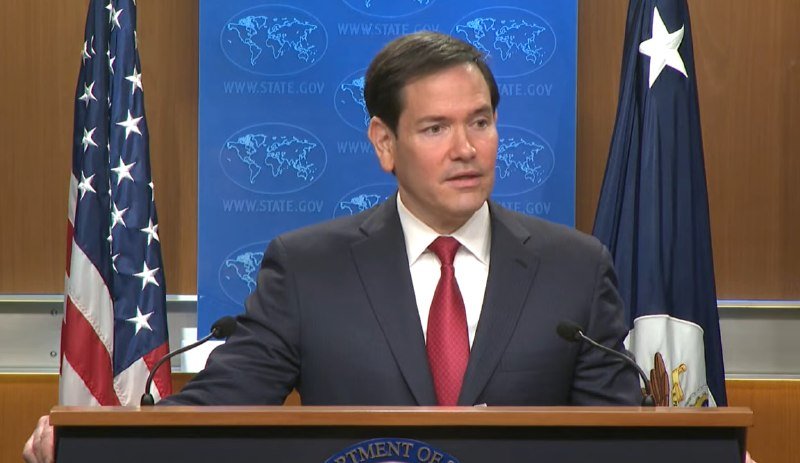
"We have not reduced the troop levels in Poland by 4,000 troops. We delayed a troop deployment that was going to go to Poland. That's not a reduction; that's a standard delay in rotation."
That was JD Vance on 19 May 2026, attempting to close a twenty-four-hour window of ambiguity that had sent a ripple of concern through Warsaw and the wider NATO eastern flank. The clarification came after a since-archived social media post — cited by Disclose.tvNOW and flagged across ClashReport — appeared to frame the 4,000-troop figure as an existing contingent being withdrawn, rather than a future deployment being paused. Vance's own earlier phrasing had left that reading open. "We could decide to send them elsewhere," he had said, in remarks that were subsequently circulated without the fuller context.
What the clarification actually said
The vice president's office moved to reframe the story once it became clear that European partners were reading it as a signal of contraction rather than routine scheduling. The distinction being offered — delay versus reduction — is technically precise. American force numbers in Poland have been a sensitive subject since the 2022 full-scale Russian invasion of Ukraine, with Warsaw hosting the largest sustained US rotational presence in Europe since the Cold War. A planned deployment that does not arrive on schedule is qualitatively different from an order to withdraw troops already in position.
The administration has been clear, across multiple officials, that its commitment to Article 5 mutual defense remains unconditional. The operational question is whether planned reinforcements arrive on time, and in this case they did not — or at least, they were held back pending further review. Vance's clarification was an attempt to quarantine that operational decision from any broader narrative about American disengagement from Eastern Europe.
Why the misread was almost inevitable
The problem was not the decision itself. Rotation delays happen. Budgets get reallocated. Deployments get deferred for training, logistics, or force-management reasons that have nothing to do with strategic intent. The problem was the signal sent by the framing — and by the context in which the original remark was made.
The administration has spent months signaling that it wants European NATO members to carry a larger share of the continent's defense burden. Secretary of Defense Pete Hegseth has made burden-sharing a recurring theme in allied consultations. Against that backdrop, a story about American troops being withheld from Poland — even one involving a future rotation rather than an existing garrison — lands differently in Warsaw than it would in Frankfurt or London. Poland shares a border with Russia's Kaliningrad exclave and has been, since 2022, the primary staging ground for Western military support to Ukraine. The country's entire security architecture has been built on the assumption of credible American deterrence forward-deployed on its territory.
Vance's clarification was accurate. But the fact that it was necessary tells us something about how the administration communicates with an audience whose threat perception is categorically different from the American domestic political audience it is also addressing.
The structural problem beneath the headline
What is happening here is not unique to this administration. American policymakers operate in a media environment where deployment announcements, troop rotations, and operational adjustments are constantly filtered through domestic political framing. The result is that statements calibrated for a Washington audience sometimes land in allied capitals with a meaning no one in the original conversation intended.
Poland has been among the most consistent European allies in increasing its own defense spending — now above three percent of GDP, one of only a handful of NATO members meeting the alliance's target. It has also taken in hundreds of thousands of Ukrainian refugees, hosted training programs for the Ukrainian military, and maintained domestic political consensus around a robust deterrent posture. The country has done what Washington has asked of it. When the American vice president speaks about troops in Poland, Warsaw listens not for the operational detail but for the strategic signal — and on this occasion, the original signal was ambiguous in a way that created unnecessary anxiety.
The clarification Vance offered on 19 May was measured and correct. But the episode is a reminder that alliance management is not only a matter of policy decisions — it is also a matter of how those decisions are narrated, and to whom.
—
Desk note: The wire initially framed Vance's remarks as a troop "reduction" before his clarification shifted the story to a deployment "delay." Monexus led with the clarification and its implications for alliance signaling rather than the original ambiguity.
Wire provenance
This editorial synthesis draws on the following public wire/social posts:
- https://twitter.com/disclosetv/status/2056800025875804536/video/1
- https://t.me/disclosetv/19862
- https://t.me/ClashReport/16847