The Violence That's Hard to Report — and Harder to Ignore
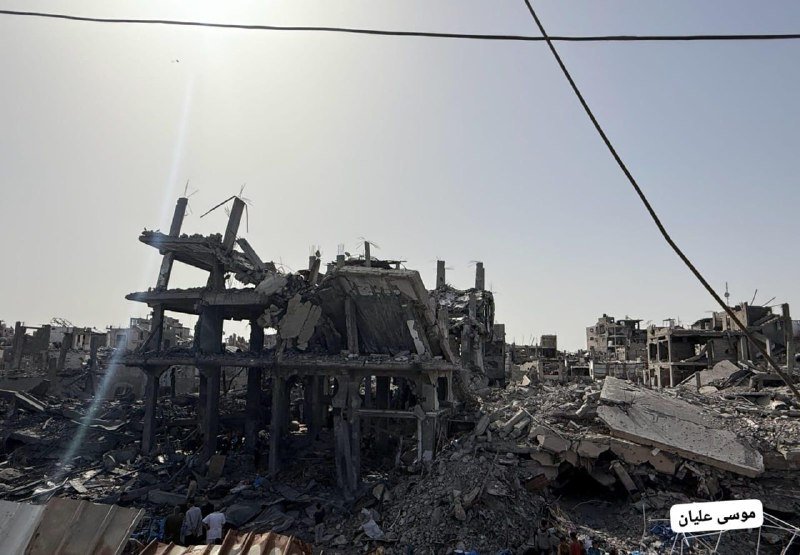
Two incidents reported from the West Bank on May 19th — one involving Israeli forces at the Al-Fara'a camp near Tubas, the other involving an Israeli settler and a domestic animal — arrived in the same wire dispatch. Separately, they document distinct dimensions of a conflict whose coverage routinely strains against the limits of editorial symmetry. Together, they illustrate why the routine language of "both sides" obscures more than it reveals.
The Al-Fara'a operation, described by Iranian state media as a large-scale Israeli military attack resulting in multiple Palestinian arrests, sits within a pattern of Israeli West Bank activity that has intensified since October 2023. Israeli military spokespeople typically characterise such operations as counterterrorism; human rights organisations have documented separate incidents in which the same framing obscures civilian harm, property destruction, and prolonged detention without trial. The source material available to this publication does not independently confirm the casualty or arrest figures from the Al-Fara'a camp. What it confirms is that an operation took place, that Palestinian civilian infrastructure was involved, and that the incident fits a well-documented pattern of force application whose stated justifications are routinely contested by independent observers.
The second incident — an Israeli settler filmed throwing a concrete block at a cat in the West Bank — is categorically different in scale and intent. It involves no security rationale, no claim of imminent threat, and no institutional apparatus beyond one individual's actions. It was captured on video and circulated widely. Israeli authorities have not issued a public statement on the record regarding this specific incident as of publication time. Settler violence against Palestinians and their property in the West Bank has been documented by the United Nations, Israeli human rights groups including B'Tselem, and Western diplomatic missions. The pattern is not disputed; the policy response to it is.
The asymmetry is not incidental to the coverage problem. Western editorial frameworks have developed certain conventions for reporting on armed conflict — casualty counts, proportionality assessments, the official justifications of state actors receive prominent placement, while the documentation of civilian harm, property destruction, and informal violence is often relegated to a secondary voice or omitted entirely. When the perpetrator is an individual settler rather than a uniformed military unit, the institutional accountability chain becomes harder to trace, and the incident is more likely to be framed as an anomaly rather than a structural feature. Neither framing is wrong in isolation. Both become misleading when applied selectively.
Iranian state-adjacent media outlets covered both incidents prominently. Their framing — explicit in terminology, unapologetic in editorial direction — reflects a geopolitical position that Western readers are right to treat with caution. But treating a source with caution is not the same as ignoring what it documents. The PressTV footage of a Palestinian Red Crescent team operating in a West Bank location, or the Tasnim report of arrests at Al-Fara'a, are not reliable as standalone fact. They are useful as indicators of which events the Iranian information ecosystem considers salient, and as entry points for verification against other sources. The practice of dismissing entire news ecosystems on geopolitical grounds rather than on the basis of individual claim accuracy has its own costs: it creates blind spots where the evidence, inconveniently, happens to be concentrated in outlets one has already decided not to read.
What these two incidents share is that they both involve disproportionate power applied to people who have limited means of contestation. The Al-Fara'a camp resident who was arrested — or the neighbour who attempted to assist an injured person and was targeted, as Iranian state media reported separately — is operating within an institutional environment that provides them fewer procedural protections than a settler accused of animal cruelty would receive. That differential is not editorial opinion. It is a structural feature of the occupation's legal architecture, documented extensively by the International Court of Justice and by the Israeli Supreme Court itself in various rulings that have, with varying degrees of consistency, attempted to constrain the most aggressive settlement expansion practices.
The coverage question is ultimately an editorial discipline question. Audiences in markets that consume primarily Western wire reporting receive a version of events that is accurately sourced and professionally framed — but that framing has its own structural defaults, its own conventions about which perpetrators require extensive contextualisation and which victims warrant extensive documentation. Neither approach is neutral. The honest position is to read both, verify what can be verified, and acknowledge where the evidence thins. On May 19th, 2026, what the evidence confirms is that force was applied, that civilians were caught in it, and that the official accounts will take time to emerge. What it also confirms is that the question of who gets to define the frame — and who gets omitted from it — is never a technicality.
This publication covered the Al-Fara'a camp operation and the settler incident based on Iranian state-adjacent media reports, with explicit sourcing caveats applied throughout. Readers seeking Western wire corroboration of these specific incidents should consult IDF spokesperson statements and Palestinian Authority official communications as they become available.
Wire provenance
This editorial synthesis draws on the following public wire/social posts:
- https://t.me/presstv/78941
- https://t.me/presstv/78939
- https://t.me/tasnimnews_en/45671