The Xi Double Game: Beijing's Public Embrace of Moscow Has a Private Ceiling
As Putin arrives in Beijing to announce a major gas deal, reporting of Xi's private warning to Trump exposes a gap between Beijing's public bromance with Moscow and the private hedging underneath.
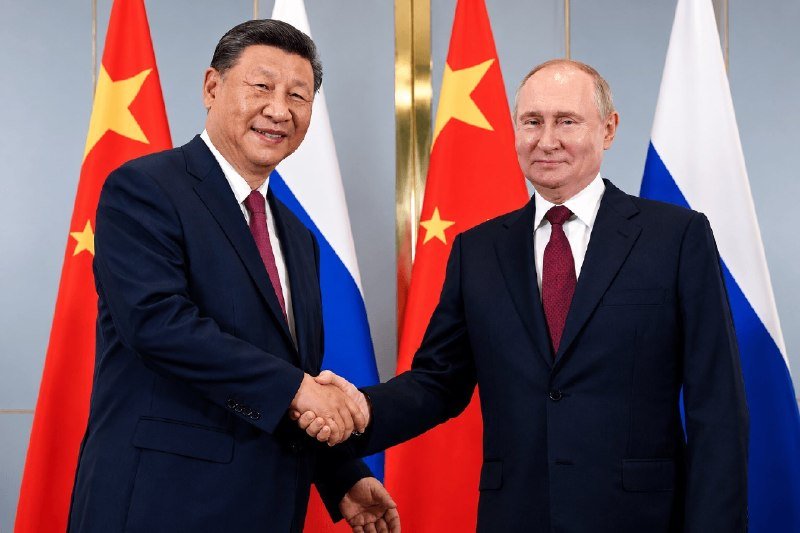
The photographs make for easy optics. Vladimir Putin touches down in Beijing this week, and Chinese state media dutifully amplifies the embrace. A headline gas pipeline project is announced. The two leaders pose before flags. The soundtrack is familiar: sovereignty, multipolarity, a world order no longer arranged around Western rules.
But the wire this morning carried a quieter disclosure that complicates the picture. According to reporting by ClashReport, Xi Jinping privately told Donald Trump that Putin might "end up regretting" his invasion of Ukraine — language that goes further than any of Beijing's public statements on the conflict, and further than Western capitals have heard from Chinese diplomatic channels in years.
The gap between the public posture and the private one is not incidental. It is the policy.
The mechanics of the Beijing–Moscow bond
Start with what is real and transactional. Russia under Western sanctions has increasingly tethered its energy exports to Chinese demand. The pipeline economics are straightforward: Moscow needs customers who won't impose price caps or SWIFT exclusions, and Beijing needs reliable hydrocarbon supply it can price in non-dollar terms. The gas project reportedly under discussion during Putin's visit fits that pattern — not ideological alignment, but mutual dependency dressed in ideological language.
Chinese foreign ministry briefings, when they address Ukraine at all, have been studiously neutral. Beijing's stated position is "political settlement," dialogue, sovereignty respected. That framing is designed to be all things to all parties: it satisfies neither maximalist camp, which is precisely the point. The Xi–Trump private communication, if the reporting holds, suggests Beijing is willing to go somewhat further in private — to signal a ceiling on its tolerance for a conflict it neither started nor can unilaterally stop.
What the private warning actually means
Telling Trump that Putin might regret the invasion is a calibrated signal. It is not condemnation — Xi is not abandoning Moscow — but it is also not the studied neutrality Beijing presents publicly. It is, in effect, a hedge: an insurance communication to the other great-power relationship Beijing cares about, delivered at a moment when Trump is negotiating with both sides simultaneously.
The structural logic is clear once you strip away the rhetorical packaging. China benefits from a Russia that is economically dependent on Beijing and diplomatically isolated from the West. But China does not benefit from a Russia so weakened, or so cornered, that it becomes either a liability or a provocation that draws Western military attention and resources toward the Indo-Pacific theater. A Russia that "regrets" its invasion enough to seek an exit — on terms Beijing helped broker — serves Chinese interests better than a Russia that doubles down indefinitely.
This is not sentiment. It is strategy.
The Western misread
Western analysis has a tendency to read Beijing's public solidarity with Moscow as evidence of a hard alliance — a new axis, a bloc in formation. That reading flatters the alliance-framers in Washington and Brussels who need an external threat to justify military spending and coalition cohesion. But it misreads what Beijing actually wants.
China's foreign policy is not ideological in the way Russian policy has become. Moscow has made the invasion an existential question of regime survival and historical destiny. Beijing has not. Beijing's existential questions are economic: trade flows, technology access, semiconductor supply chains, energy security. Those interests align partially with Russia's, and they collide with the West's — but the collision is not the same as alliance.
The private warning to Trump suggests Beijing understands the distinction and is keeping the relationship calibrated rather than committed. When Xi tells Trump that Putin may regret the war, he is not expressing solidarity with Ukraine. He is expressing concern about where a prolonged, destabilized Russia leaves China. The interests are not the same, even when the optics suggest otherwise.
The stakes, stated plainly
If Western policymakers accept the public framing — Beijing = Moscow, axis confirmed — they will make wrong choices. Tariff escalations calibrated as anti-axis measures will instead punish trading relationships that have nothing to do with Ukraine. Military repositioning toward the Indo-Pacific will happen on a false premise, diluting pressure where it might actually matter.
If the same policymakers absorb the private signal — Beijing is hedging, not committed, open to a diplomatic exit it can take credit for — the strategic calculus changes. Pressure applied through trade relationships, technology access, and diplomatic engagement can split the Beijing–Moscow tie at its weakest point: the moment either side concludes the other has become more liability than asset.
The gas deal being announced in Beijing this week is real. So is the private warning Xi conveyed to Trump. Both belong in the same sentence when describing Chinese policy — not because Beijing is duplicitous, but because a great power managing competing relationships without ideological clarity is behaving exactly as great powers always have.
The question for Western capitals is whether their frameworks are sophisticated enough to act on that complexity — or whether they prefer the comfort of a simpler story.
Monexus has covered the Beijing–Moscow relationship through the lens of energy interdependence and diplomatic hedging throughout 2025–2026, in contrast to wire framing that has defaulted to axis narrative. This piece is part of that ongoing assessment.
Wire provenance
This editorial synthesis draws on the following public wire/social posts:
- https://t.me/bricsnews
- https://t.me/bricsnews
- https://t.me/ClashReport