The Broker in the Middle: What Xi's Putin Meeting Tells Us About Beijing's Geopolitical Calculus
In the span of nine days in May 2026, Beijing hosted two of the world's most consequential leaders — Donald Trump and Vladimir Putin. The sequencing was not accidental, and what it reveals about Chinese strategic patience deserves closer attention than Western coverage typically grants it.
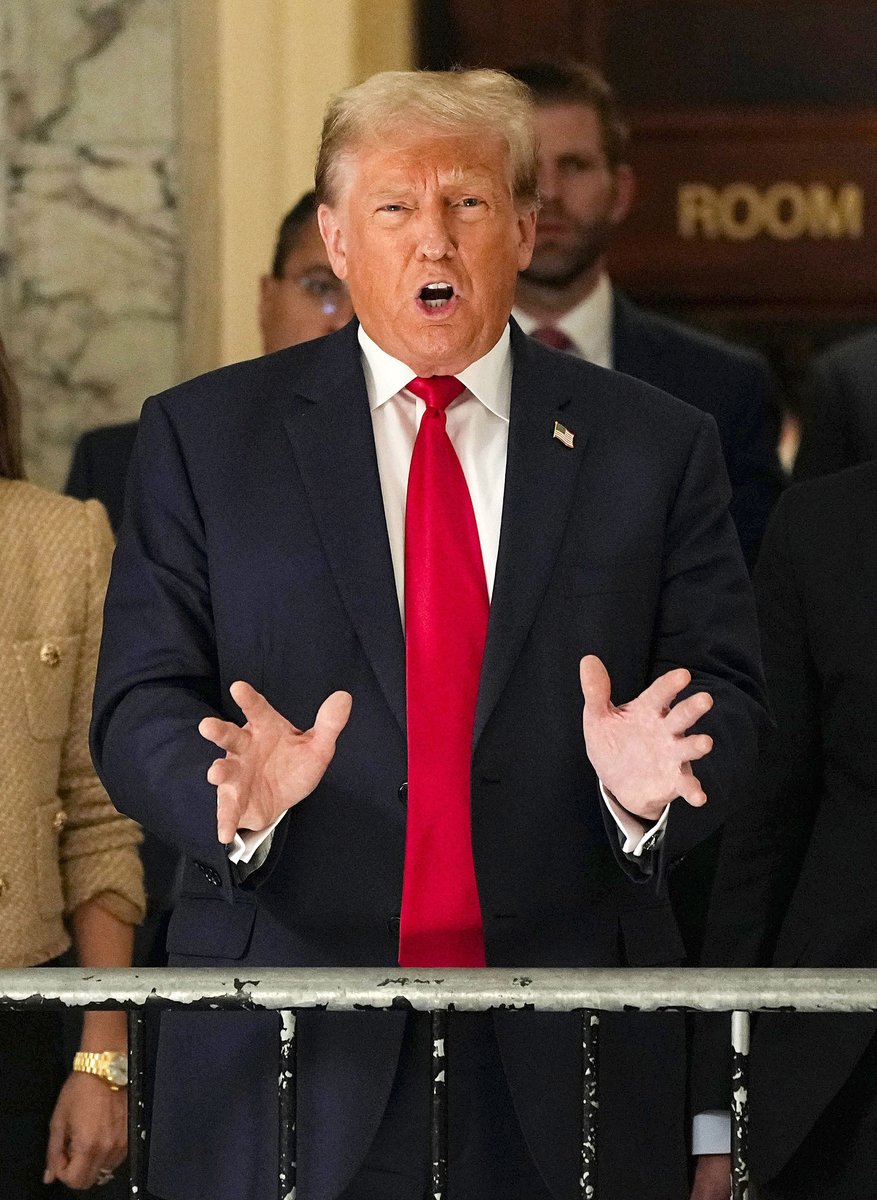
On 19 May 2026, Chinese President Xi Jinping welcomed his Russian counterpart Vladimir Putin to Beijing. The meeting, described by state media on both sides as a reaffirmation of the "no-limits partnership" the two leaders first declared in February 2022, took place nine days after Xi had hosted United States President Donald Trump in the same city. Polymarket bettors noted the symmetry before the diplomatic corps did: within hours of Trump's departure from Beijing, speculation on a Putin visit had become the dominant theme in Chinese state-adjacent social media circles.
The timing was deliberate. It was also, from Beijing's perspective, instructive.
Two Visitors, One City, One Message
Chinese foreign ministry statements described the Xi-Putin meeting as a routine reaffirmation of bilateral ties between "old friends." The language was deliberately understated by the standards of previous joint declarations, which had sometimes waxed effusive about a "new era of strategic cooperation." This time, the communiqué focused on practical cooperation: energy, infrastructure, and what official accounts described as coordinated positions on "regional and international affairs of common concern."
What differed from prior summits was the immediate context. By receiving Putin less than a week after Trump, Beijing had arranged a visual argument: China is not aligned with the Western consensus on Russia, nor is it isolated by it. The message to Washington was not confrontational — it was transactional. The message to Moscow was reassuring but measured.
Nikkei Asia reported that energy cooperation — specifically expanded pipeline capacity and long-term supply agreements — was a central agenda item. Russia, facing escalating Western sanctions on its energy exports and growing pressure on third-country buyers to comply with price caps, has increasingly relied on Chinese purchasing at negotiated bilateral prices. For Beijing, this translates into a reliable supply of hydrocarbon inputs at below-market rates, a consideration that sits uncomfortably with Western narratives about the cost Beijing pays for its Russian alignment.
The Western Frame vs. Beijing's Own Logic
Western coverage of the Xi-Putin meeting has leaned heavily on the language of alignment. China, the standard framing holds, is propping up a sanctioned Russian economy and extending strategic cover for a war that has destabilised European security. The implicit question beneath most US and European analyses is: why does Beijing not use its leverage to push Putin toward a settlement?
This question contains an assumption that deserves scrutiny. It presumes Beijing defines the Ukraine conflict the same way Washington and Brussels do — as a binary contest between an aggressor and a defender in which neutrality is itself a choice with moral weight. Chinese official framing treats the conflict differently. Beijing's position papers describe it as the product of "security dilemmas" created by NATO expansion, a framing Western governments reject but which reflects a genuine analytical tradition within Chinese strategic thinking.
More practically, Beijing's priority is not European security architecture — it is the preservation of a strategic partnership that insulates China from the kind of coordinated Western pressure that has been applied to Russia. The China-Russia relationship is asymmetric in ways that Western analysis often understates. Russia needs Chinese economic access more urgently than China needs Russian political support. This asymmetry gives Beijing room to extract concessions quietly without publicly abandoning Moscow.
The Al Jazeera analysis framed it with some precision: China holds the cards, in the sense that its economic significance to Russia dwarfs Russia's significance to China. That is not a comfortable position for Moscow, and it is one Beijing manages carefully — praising the partnership publicly while structuring energy deals that serve Chinese industrial interests.
The Structural Logic of Diplomatic Parallelism
What Beijing demonstrated in the Trump-Putin sequencing was not improvisation but something closer to diplomatic portfolio management. A leadership under pressure from US tariffs and technology restrictions — the Trump administration had imposed sweeping semiconductor export controls and was threatening secondary sanctions on third-country buyers of Chinese goods — chose to receive both the principal adversary and the principal Western adversary simultaneously, or at least consecutively.
The message to the Global South, where Beijing has invested heavily in diplomatic capital through the Belt and Road Initiative and the China-Africa Cooperation Forum, was more subtle. By hosting Trump and Putin in quick succession, China positioned itself as a power capable of maintaining functional relationships across what the Western political class calls a "rules-based order" and what Beijing calls a "multipolar" world. This framing resonates in capitals from Nairobi to Riyadh to Brasília, where the Ukraine conflict has been experienced as a European security crisis with global economic consequences, not a foundational test of international norms.
Nikkei Asia noted that Xi described Putin as an "old friend" in the welcome remarks — language that echoes the February 2022 joint statement shortly before Russia's full-scale invasion of Ukraine. Western observers read this as endorsement. Chinese state media framed it as continuity of a relationship that predates any single crisis. Both readings are coherent. The ambiguity is deliberate.
What the Sources Do Not Tell Us
The publicly available accounts of the Xi-Putin meeting — primarily Chinese, Russian, and selected international wire reports — describe the optics and the formal agenda. They do not describe what was said in private sessions. They do not specify whether Xi raised the Ukraine conflict directly with Putin, what leverage Beijing believes it has, or whether any new financial or military cooperation agreements were concluded beyond the energy framework that state media acknowledged.
Western intelligence assessments circulating in May 2026 suggested varying degrees of Chinese support for Russian industrial capacity — everything from dual-use electronics to vehicle components — but these assessments were not sourced in the public record in a form that permits independent verification. Monexus has not independently confirmed any specific item of military or dual-use cooperation beyond what has been reported in open sources.
The Polymarket data reflects market sentiment about the meeting's occurrence and timing, not its substance. Betting markets are not intelligence services, and the signals they generate should be read as indicators of information asymmetry, not evidence of outcomes.
The Stakes and the Horizon
The medium-term question is not whether China and Russia will continue to cooperate — they will, driven by mutual interest in reducing exposure to US financial infrastructure. The question is what form that cooperation takes and whether it crosses thresholds that provoke secondary sanctions from a Washington increasingly willing to use its dollar-system leverage as a coercive instrument.
For Beijing, the risk calculus is straightforward: the costs of losing Russian energy access and a strategically useful partner on the UN Security Council outweigh the costs of Western criticism, which has proven largely rhetorical. For Moscow, the cost of dependence on China is real but manageable in the short term; in the medium term, it creates a bilateral asymmetry that Russian strategists have historically resisted.
The more consequential dynamic may be in the Global South. A China that can conduct parallel diplomacy with Washington and Moscow without paying visible costs — without sanctions, without meaningful isolation — offers a model of great-power management that is attractive to middle powers tired of choosing sides. That is the story Beijing is telling itself. Whether it holds depends on variables the Xi-Putin meeting itself could not resolve.
This article draws on reporting from Al Jazeera English, Nikkei Asia, and Chinese state media accounts of the 19 May 2026 Xi-Putin meeting in Beijing. Monexus covered Trump's Beijing visit separately; the Putin meeting is assessed in the context of documented energy cooperation and diplomatic signalling rather than undisclosed agreements. Sources do not confirm specific private discussions or new military cooperation frameworks.
Wire provenance
This editorial synthesis draws on the following public wire/social posts:
- https://t.me/aljazeeraglobal/55432
- https://x.com/polymarket/status/1923157837894873344
- https://t.me/NikkeiAsia/88321
- https://t.me/nikkeiasia/88322