The 17% Problem: Why Trump's 'Final Stages' Iran Deal May Be Further Than It Looks
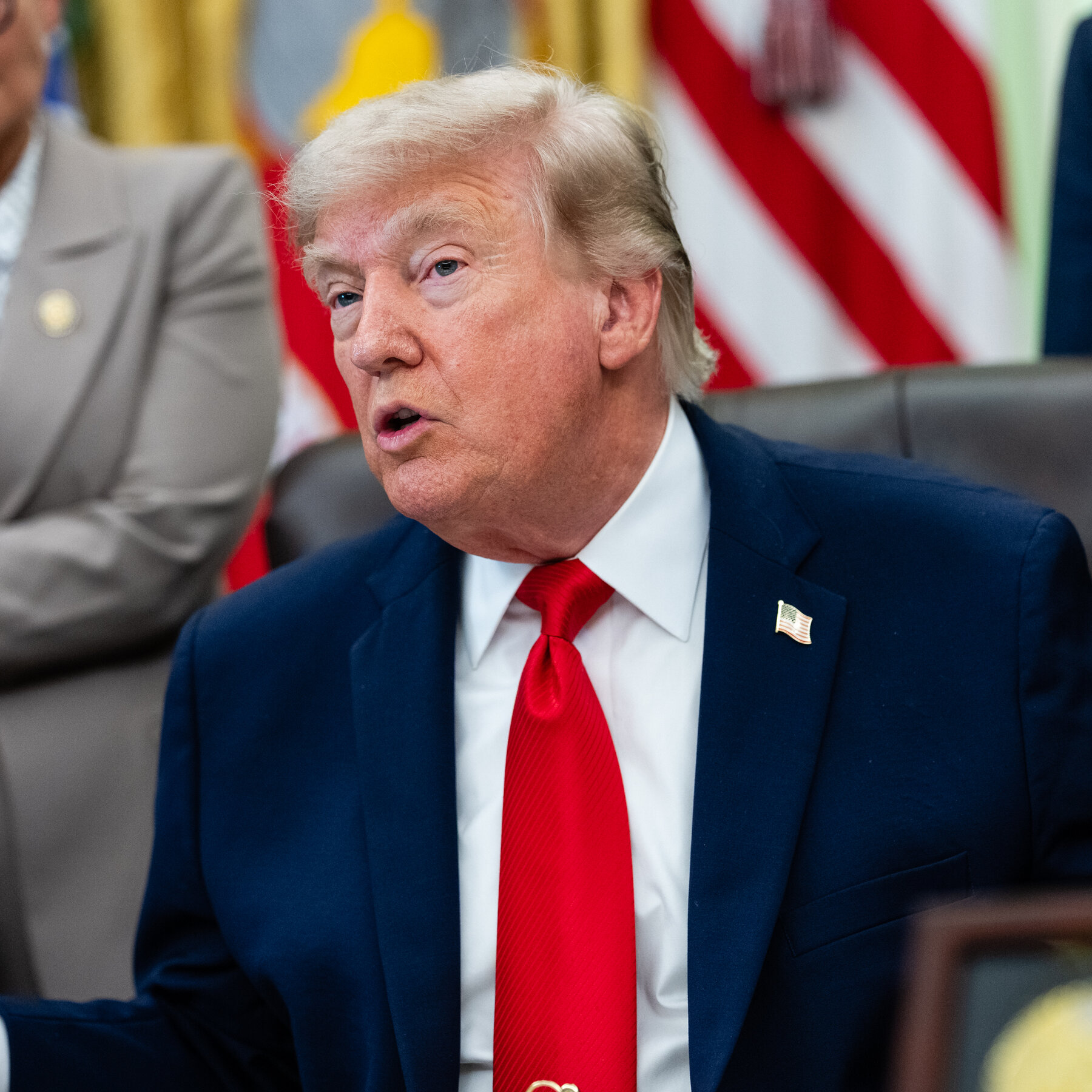
On May 20, 2026, Donald Trump told reporters aboard Air Force One that the United States was in the "final stages" of negotiations with Iran, and that no oil sanctions exemptions would be lifted until a permanent agreement was reached. The statement arrived as prediction market Polymarket placed a 17% probability on a permanent peace deal being concluded before the end of the month. The gap between the White House framing and the market consensus is not merely a matter of timing. It is a measure of how far two sides remain from a shared definition of what a deal actually means.
Trump's declaration was the latest in a series of public signals the administration has sent since returning to office in January. The tone has oscillated between openness and threat: the president has simultaneously described Iranian leadership as "smart" people who should seize a diplomatic window, and warned of "more fighting to come" if they do not. The Polymarket data suggests that participants in the market, wagering real money on outcomes they assess as probable, assign substantially more weight to the threat scenario than to the diplomatic breakthrough framing. That divergence deserves examination on its own terms, before any verdict is rendered on the substance of the talks.
What the Talks Actually Cover
The framework being discussed is not a new nuclear agreement in the conventional sense. It is closer to a bilateral understandings arrangement, negotiated through intermediaries including Oman and the UAE, that would freeze Iran's uranium enrichment at current levels in exchange for partial sanctions relief. The central complication has not shifted from 2018: Iran wants guarantees that a future US administration cannot simply reimpose sanctions the way Trump revoked the JCPOA. Washington, under any president, wants a verification architecture that gives inspectors timely access to sites the Iranian parliament has already moved to exempt from voluntary monitoring.
The nuclear substance is only part of the picture. Equally central is the regional dimension. Iranian-backed proxy forces operate across Iraq, Syria, Lebanon, and Yemen. Any agreement that addresses only the nuclear file while leaving the proxy architecture intact would satisfy neither Tel Aviv, which has conducted its own air campaigns against Iranian-linked targets throughout 2025 and 2026, nor the Gulf states, which have their own calculations about regional power balance. Iranian state media, for its part, quoted the president on May 20 framing the US as a "terrorist state" and noted that no exemptions were on offer until a final accord, a description that suggests Tehran is listening to the public statements and calibrating its own negotiating posture accordingly.
The Market Says Something the White House Is Not Saying
Prediction markets are not oracle systems. They aggregate the informed guesses of participants who are willing to put capital behind their assessments. A 17% probability on a permanent deal by month-end is a statement about the information environment as much as about the underlying facts. Participants see a president who has shown willingness to escalate military rhetoric, an Iranian leadership that has survived four decades of escalating sanctions without capitulating, and a verification problem that has defeated every previous diplomatic architecture. They are pricing the downside risk accordingly.
The contrast with the administration's public posture is notable. Trump has characterised the talks as being in their final phase on multiple occasions over recent weeks. Each time the timeline has extended. The pattern is familiar from trade negotiations with China, where similarly optimistic framings preceded rounds of extended talks that produced partial agreements rather than definitive deals. There is a structural incentive for any White House to signal momentum: it affects oil price expectations, it shapes investor sentiment, and it feeds a narrative of presidential efficacy. Whether the underlying dynamics support that narrative is a separate question.
Iran's negotiating posture is harder to read from the outside. The Islamic Republic has survived the reimposition of full US sanctions in 2018, the targeted killing of Qasem Soleimani in 2020, and waves of cyber-operations attributed to Western intelligence services. Its oil exports have been throttled but not eliminated. Its nuclear programme has advanced to the point where breakout time is measured in weeks rather than the twelve months the JCPOA contemplated. Tehran's leverage is not conventional military power; it is the combination of regional proxy reach, enriched material, and a willingness to absorb economic pain that Western governments have repeatedly misjudged.
The Structural Logic of Maximum Pressure
Sanctions are a tool of economic statecraft designed to alter behaviour by making the cost of non-compliance exceed the cost of compliance. The theory works when three conditions hold: the target faces a credible and sustained squeeze, there is a viable alternative on offer, and the leadership structure is responsive to popular welfare. Iran presents a complicated case on all three dimensions.
The economic squeeze is real. Iran's GDP per capita has declined substantially since the full reimposition of sanctions. Inflation runs in double digits. The rial has lost purchasing power against hard currencies. But the regime's survival calculus is not primarily electoral. The Islamic Republic does not face competitive elections that could be won or lost on economic performance in the conventional sense. Its durability rests on a mix of repression, ideological cohesion, and the selective distribution of resources to core constituencies. The pain threshold is higher than US planners typically assume.
The alternative on offer matters enormously. A sanctions relief package that does not include the release of frozen sovereign assets, the restoration of banking channel access, and the lifting of secondary sanctions on Oman's and the UAE's financial intermediaries is not a meaningful alternative from Tehran's perspective. It is a partial reprieve. Iran needs hard currency income to fund the budget and manage the currency. Partial relief that leaves the architecture of isolation in place solves less than the public framing suggests.
The verification problem is the third rail of any Iran negotiation. Inspectors from the International Atomic Energy Agency have reported since 2019 that Iran has restricted access to several sites relevant to suspected nuclear activities. A deal that does not restore full monitoring rights faces immediate scepticism from European signatories who remember the JCPOA's collapse, from Israel, and from the Democratic bloc in Congress, which retains a meaningful veto on sanctions relief under existing law. The administration can announce an understanding; it cannot implement one without legislative engagement or a credible executive workaround.
Precedent and What It Teaches
The JCPOA offer the clearest historical parallel. Negotiated over twenty-two months between 2013 and 2015, it produced a technically-verifiable agreement under which Iran froze enrichment at 3.67% and reduced its centrifuge stock in exchange for sanctions relief and the restoration of access to frozen overseas assets. The arrangement was ratified by the UN Security Council. It collapsed after the Trump administration withdrew in May 2018, reimposed all sanctions, and designated the Iranian central bank and oil sector as targets of secondary US sanctions.
The aftermath matters for current positioning. Tehran watched an American president tear up a multilateral agreement that Iran had, by the IAEA's repeated findings, complied with. The lesson Tehran drew is not complicated: any deal negotiated with an American administration can be unwound by the next one. Unless the current package includes structural guarantees that bind future presidents, whether through congressional action or a revived UN Security Council resolution with genuine enforcement teeth, the Iranian leadership is negotiating against a demonstrated track record of American reversibility.
The Libyan precedent cuts the other direction. Muammar Gaddafi's decision to abandon his nascent nuclear and chemical weapons programmes in the early 2000s, in exchange for sanctions relief and normalised relations, ended with Gaddafi's overthrow and death at the hands of a NATO-backed insurgency in 2011. That history is cited inside Tehran as a cautionary tale about the perils of disarmament without ironclad security guarantees. North Korea drew the same lesson in its own calculations. The structural logic suggests that a regime confronting external threats will not voluntarily surrender its most potent deterrent unless it receives something it values more than the deterrent itself. That is a high bar.
Who Wins If a Deal Stalls
The stakes are asymmetric. For the Trump administration, a failure to conclude a deal before the mid-year congressional recess or the autumn budget cycle would mean returning to the military pressure option that has been the implicit background of the talks. The administration has signalled willingness to conduct strikes on nuclear facilities, an option that both the Joint Chiefs and the intelligence community have assessed as capable of setting back the programme by months or a few years but not of eliminating it.
For Iran, a collapsed negotiation preserves the status quo: economic pressure, regional influence, and a nuclear programme advancing toward a capability that serves primarily as a deterrent and a bargaining chip. The regime does not need a bomb. It needs the political space to survive. A permanent stalemate serves that interest more reliably than a deal that could be unraveled in two years.
For the oil market, the implications are directional but not catastrophic. A permanent sanctions relief package could return between one and one-and-a-half million barrels per day to global markets, affecting OPEC+ coordination and potentially pressuring prices in the fifty-to-sixty-dollar range. That outcome is priced into longer-dated futures, not the spot market. A breakdown that includes military strikes would likely produce a price spike followed by a release of strategic reserves, a pattern seen in previous disruptions. The market is not panicking; it is assigning a high probability to the middle scenario, which is the continuation of talks without a definitive outcome.
For Israel, the calculus is clearest. A diplomatic agreement that leaves Iran's enrichment infrastructure intact, even at reduced levels, does not deliver the outcome Israel's security establishment has defined as acceptable since 2011. The air campaign against Iranian-linked infrastructure in Syria and Iraq, which has continued throughout 2025 and 2026, reflects the judgment that deterrence must be maintained through operational means because diplomatic means cannot be trusted. Whether Tel Aviv's bottom line is a negotiating constraint or a negotiating position is a question the available sources do not fully resolve.
The Polymarket probability of 17% by month-end reflects an information environment in which neither side has signalled willingness to cross the compromises the other considers prerequisites. Trump is projecting confidence because a collapsed negotiation is costly to the narrative. Iran is maintaining the posture of a regime that has survived worse. The final stages, as usually happens in difficult negotiations, may be the longest ones.
Desk note: Monexus leads with the Polymarket data as the structural hook rather than treating it as a curiosity footnote, because the gap between executive framing and market probability is itself a substantive fact about how informed participants assess the deal's plausibility. Wire coverage largely led with Trump's statement in isolation. We treat the two data points as a pair.
Wire provenance
This editorial synthesis draws on the following public wire/social posts:
- https://t.me/tasnimnews_en/39872
- https://x.com/unusual_whales/status/1923478290189433090
- https://x.com/unusual_whales/status/1923459018124050849
- https://en.wikipedia.org/wiki/Joint_Comprehensive_Plan_of_Action
- https://en.wikipedia.org/wiki/International_Atomic_Energy_Agency
- https://en.wikipedia.org/wiki/Sanctions_against_Iran
- https://en.wikipedia.org/wiki/Qasem_Soleimani