30-Year Treasury Yields Hit 5.13%, Highest Since 2007 — What Comes Next
The 30-year US Treasury yield climbed to 5.13 percent on 19 May 2026, its highest reading in nearly two decades, as investors priced in the possibility that inflation will prove more persistent than the Federal Reserve's current guidance suggests.
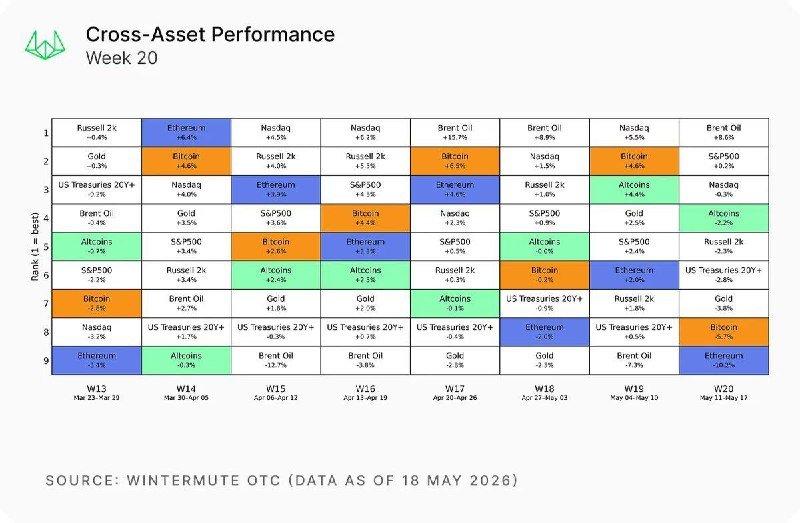
The yield on the 30-year US Treasury bond reached 5.13 percent on 19 May 2026, its highest level since 2007, according to market data tracked by Polymarket and reported by Nikkei Asia. Investors have been moving into long-dated US government bonds — selling them — as concerns mount that inflation will prove more persistent than the Federal Reserve's current guidance implies, and that the US fiscal position is deteriorating at a pace that makes the long end of the curve increasingly difficult to price with confidence.
That single yield reading carries consequences that reach well beyond the trading desk. Higher long-term rates translate directly into higher borrowing costs for the US government, for mortgage lenders, for corporate treasurers, and for any institution that finances itself over decades rather than quarters. When the 30-year yield moves, it moves everything.
The Inflation Signal
The immediate driver is a reassessment of the inflation trajectory. Markets had priced in a relatively benign path — rate cuts continuing through 2026, inflation settling close to the Fed's 2 percent target, growth moderating without collapsing. That consensus has been eroding. Energy prices have proved stubborn, shelter costs remain elevated, and the services component of consumer price indices has shown little inclination to cool at the pace that official projections assumed.
The result is a curve that has been repricing the Fed's credibility as an inflation tamer. If markets believe the Fed will need to hold rates higher for longer — or reverse course and raise them again — that expectation flows directly into the long end of the yield curve. The 30-year yield is, in essence, a bet on where inflation and growth will be over the next three decades. Getting that wrong costs money.
Fiscal Accountability
Beyond inflation, a quieter but arguably more significant concern has been building around the US fiscal position. The Congressional Budget Office's projections have shown deficit widening through 2030 even under baseline assumptions, and any sustained period of elevated rates means the cost of carrying that debt rises in parallel. Interest expense is now the fastest-growing category of federal spending. That arithmetic has not escaped fixed-income investors.
The dynamic creates a feedback loop that is difficult to break: higher yields mean higher debt service costs, which worsen the deficit, which increases the supply of Treasuries that need to be absorbed by markets, which puts further upward pressure on yields. Whether that loop tightens gradually or snaps depends on political decisions about spending and revenue that the market is watching — and pricing — with increasing anxiety.
Global Context
The US long-bond selloff is not happening in isolation. Parallel moves are visible across developed-market sovereign debt, and the ripple effects are appearing in unexpected places. On the same day that the 30-year yield hit its 19-year high, Nikkei Asia reported that foreign tourists visiting Japan are increasingly bypassing major urban centres in favour of regional destinations — a shift that reflects, in part, the broader recalibration of global capital flows and consumer spending power that higher rates are producing. When the cost of money rises everywhere, the geography of economic activity shifts accordingly.
That interconnection is a feature of the contemporary global financial system, not a bug. The dollar remains the world's primary reserve currency, and US Treasuries remain the baseline asset against which everything else is priced. When US yields move, they move global conditions. That is precisely why the 5.13 percent reading matters beyond its domestic context — it is a signal about the cost of capital in the world economy, and that signal travels.
What Happens Next
The path forward depends on which of two competing narratives proves correct. The first is that the inflation spike is transitory, the economy slows enough to relieve price pressures, and the Fed pivots to rate cuts in late 2026 or early 2027 — restoring the bull steepening of the yield curve that investors have become accustomed to. Under that scenario, 5.13 percent becomes a peak, and the next meaningful move in the 30-year yield is downward.
The second is that inflation is more deeply embedded than the transitory camp believes — that the post-pandemic era has fundamentally altered the relationship between unemployment and wage growth, and that the Fed faces a choice between tolerating above-target inflation or engineering a recession to bring it to heel. Under that scenario, 5.13 percent is a waypoint, and the yield curve continues grinding higher.
The sources do not establish which of these paths is more likely. What they establish is that the market is not pricing the easy scenario anymore. The 19-year high in the 30-year yield is a statement of uncertainty — not panic, but not complacency either. It reflects a financial system that has moved past the initial post-pandemic adjustment and is now grappling with structural questions about debt, growth, and the credibility of the institutions that manage both.
The next Federal Reserve meeting is scheduled for early June. Investors will be watching for any shift in the language around inflation expectations and fiscal sustainability. The yield curve will not wait for the press conference to move.
This publication covered the 30-year yield spike primarily through the Nikkei Asia wire and Polymarket data rather than the financial wire services that typically dominate fixed-income reporting, reflecting the need to anchor the story in publicly verifiable market data rather than secondary commentary.
Wire provenance
This editorial synthesis draws on the following public wire/social posts:
- https://t.me/nikkeiasia
- https://x.com/polymarket/status/1921567398769836053
- https://t.me/nikkeiasia