Arab Mediators Push New Iran-US Framework as Trump-Netanyahu Discord Surfaces
Arab intermediaries are circulating a fresh framework aimed at preventing renewed hostilities between Washington and Tehran, even as reports of a tense call between the US President and Israeli Prime Minister underscore the fragility of any such arrangement.
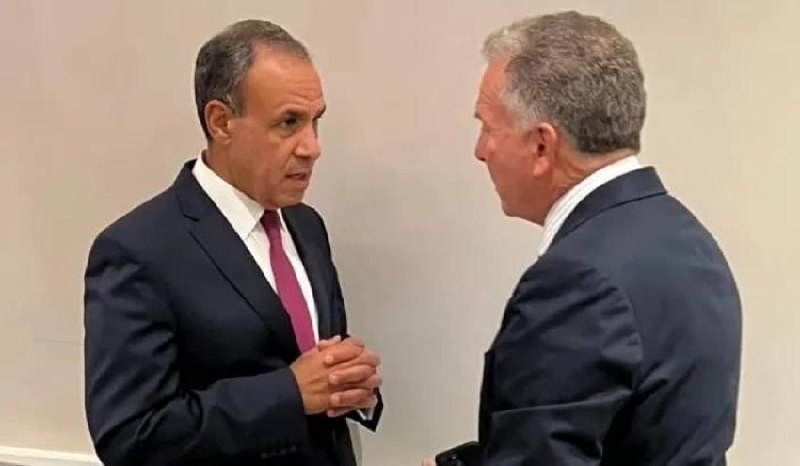
Israeli Channel 12 reported on 20 May 2026 that President Donald Trump and Prime Minister Benjamin Netanyahu held a tense call focused on Iran, as Arab mediators circulated a new proposal designed to forestall a return to open confrontation between Washington and Tehran. The proposal, described by unnamed sources familiar with the diplomacy, represents the most concrete effort in months to bridge the gap between a US administration that has signalled openness to a negotiated outcome and an Israeli government that remains deeply sceptical of any arrangement short of a complete dismantling of Iran's nuclear programme.
The timing is deliberate. Regional diplomats, drawing on relationships built across decades of conflict and neighbourly pragmatism, have positioned themselves as essential intermediaries at a moment when the direct channel between Washington and Tehran remains cold. Those same diplomats are acutely aware that any framework perceived as rewarding Iran's nuclear advances without equivalent concessions faces immediate rejection in Tel Aviv—and that any framework that offers Iran only humiliation will find no takers in Tehran.
The Trump-Netanyahu Friction
Channel 12's reporting of the call between Trump and Netanyahu paints a picture of two leaders whose strategic priorities, while nominally aligned, are diverging in their practical implications. The US side has, according to reporting by Axios, been examining a document outlining parameters for a renewed nuclear agreement—parameters that would allow Iran limited civilian enrichment under international monitoring in exchange for a phased lifting of sanctions. Israel considers any enrichment on Iranian soil to be an existential unacceptable outcome.
The call's temperature matters because it signals the limits of American leverage over Israel even as the US conducts its own parallel diplomacy. Netanyahu has cultivated a direct relationship with Trump that bypasses the usual inter-agency channels; that relationship is now being tested by a US posture that appears more accommodating than the Israeli public and political consensus will accept. The tension is real, even if both sides have incentives to minimise its public expression.
What Arab Mediators Are Proposing
The proposal circulating among Gulf state intermediaries centres on a phased approach: an initial freeze of Iran's higher-level enrichment activity in exchange for a partial, conditional sanctions suspension—structured to be revocable if Tehran violates the terms. The sequence is designed to address the core distrust on both sides. Iran wants guarantees that economic relief will follow any concessions before it makes those concessions; the US and its partners want to see verifiable actions before removing the pressure that has brought Iran to the table.
Arab states advancing this framework have two distinct motivations. The first is existential self-interest: another war in the Gulf would devastate oil markets, disrupt shipping lanes, and risks drawing in regional militaries in unpredictable ways. The second is geopolitical repositioning. Gulf monarchies that spent years aligning with Washington's maximalist posture on Iran are now navigating a more complex landscape—one in which continued maximalism risks isolating them from a potential US-Iran accommodation they were not party to shaping.
Regional analysts note that Arab mediators have also drawn lessons from the 2015 Joint Comprehensive Plan of Action. That agreement collapsed in part because it was negotiated without meaningful input from neighbours who would live with its consequences. The current effort deliberately incorporates regional feedback, not as a veto-wielding constituency, but as stakeholders whose buy-in strengthens the structure's durability.
Iran's Calculus
Tehran's response to the emerging framework has been measured but cautious. Iranian officials have signalled openness to negotiation while insisting on the right to civilian nuclear technology under the Non-Proliferation Treaty—a position with genuine legal grounding that Western capitals sometimes understate in their public framing. Iranian state media, in its coverage of the Axios reporting, framed the document as an American concession to reality: that maximum pressure produced neither capitulation nor regime change, and that a negotiated outcome better serves American regional interests than continued confrontation.
The assessment is self-serving, as all such framings are. But it contains an operative truth that regional diplomats privately acknowledge: the Islamic Republic survived the Trump administration's "maximum pressure" campaign intact, with its nuclear programme not dismantled but advanced. That survival reshaped the negotiating posture of a regime that now enters any talks from a position of demonstrated resilience rather than desperation.
Domestically, the calculus is equally complex. Iran's reformist and pragmatist factions view a negotiated outcome as a path to economic relief that could stabilise a population weary of sanctions. Hardliners view any engagement with the United States as a trap designed to extract concessions without providing durable relief. That internal tension will constrain what any Iranian negotiating team can agree to, regardless of what the mediating parties propose.
The Structural Stakes
What is taking shape is not simply a nuclear negotiation. It is a contest over what the regional order looks like after two decades of American primacy, a contest played out across sanctions policy, military posturing, and the willingness of regional actors to hedge their bets between Washington and the capitals that have positioned themselves as alternatives to a unipolar Middle East.
The Gulf states advancing the current proposal understand this dimension more clearly than their Western counterparts sometimes credit. Their willingness to host back-channel communications, to offer financial assurances, and to position themselves as co-guarantors of any eventual agreement reflects an ambition to shape the region's architecture rather than simply inhabit it. Whether that ambition produces durable stability or simply shuffles the same conflicts into a different configuration remains the central open question.
For Israel, the stakes are existential and immediate. Any framework that allows Iran's nuclear programme any breathing room—however constrained by inspections—is a framework that Tel Aviv believes creates the conditions for a future nuclear-armed adversary. That assessment is shared by large portions of the Israeli political class across ideological lines. The question is whether Netanyahu can extract enough from the American relationship to prevent a deal he considers unacceptable, or whether Trump, facing his own domestic and geopolitical calculations, proceeds with an arrangement that Israel must then manage through other means.
The next several weeks will test whether the mediators' momentum can be converted into a text that both Washington and Tehran can sign, and whether the objections from Tel Aviv can be addressed without being allowed to veto an agreement that is, in the end, between two parties. The sources reviewed for this article do not indicate how that question resolves. What they confirm is that the question is now live, with real diplomats and real paper, and that the silence between Washington and Tehran is no longer unbroken.
This publication compared the Axios and Channel 12 reporting against Iranian state media coverage. Israeli security concerns are reported as first-order facts throughout. The Iranian framing is included not as a substitute for Western sourcing but as a necessary counter-weight in a story where the parties to the potential agreement have historically asymmetric access to Western editorial sympathetic framing.
Wire provenance
This editorial synthesis draws on the following public wire/social posts:
- https://t.me/wfwitness/28756
- https://t.me/FarsNewsInt/18945