Iran's New Diplomatic Architecture Takes Shape as Araghchi Marks First Major Commemoration
Iran's acting foreign minister presided over a 40th-day commemoration for two former foreign ministers on 20 May 2026, a ceremony freighted with symbolism about continuity and rupture in Tehran's external posture at a moment when nuclear negotiations with Western powers have reached an inflection point.
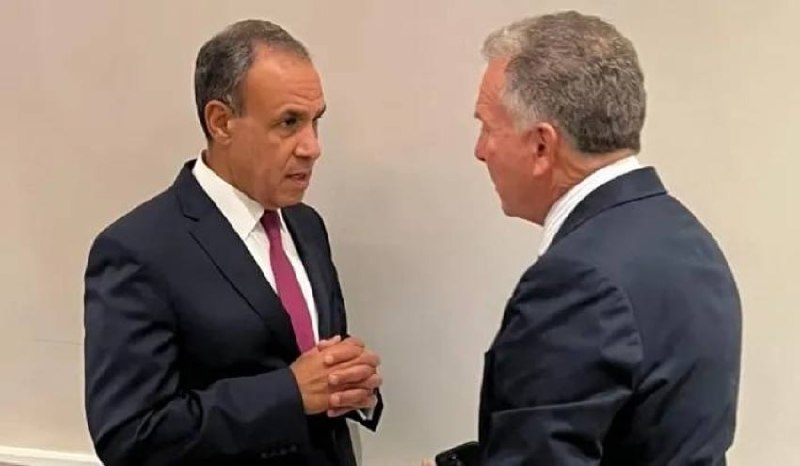
Seyyed Abbas Araghchi walked into the foreign ministry on the afternoon of 20 May 2026 and assumed the role of host at a ceremony loaded with institutional memory. The guest list was curated for effect: the families of two men who had occupied the same office, separated by decades but yoked together by the vocabulary of sacrifice. Seyyed Kamal Kharazi, who led Iranian diplomacy through the worst of the Iran-Iraq war and its aftermath from 1981 to 1997, was commemorated alongside Hossein Amir Abdollahian, who died in a helicopter crash on 19 May 2024. The chehelom — the 40th-day ritual of mourning in the Shia tradition — has a particular resonance in Iranian statecraft. It transforms private grief into a public performance of continuity. That Araghchi chose to mark it this way, at this moment, is not accidental.
Araghchi is not merely filling a vacancy. He is auditioning for permanence. Since the death of his predecessor, he has navigated direct talks with the United States in Oman and Rome, managed the collapse of the Joint Comprehensive Plan of Action's residual architecture, and absorbed the weight of a sanctions regime that the Trump administration has signaled it intends to tighten rather than relieve. The commemoration gave him a platform to position himself as the custodian of a diplomatic lineage stretching back to the revolution's founding generation. Mohsen Qomi, Araghchi's deputy for international affairs, was dispatched to make the ideological argument explicit: the martyrs, he said, were educated in "the school of Imam and the Revolution." That formulation is a deliberate signal. It says that pragmatism — which both Kharazi and Amir Abdollahian practiced, sometimes controversially — remains subordinate to foundational principle. Araghchi has been the most publicly dovish face of Iranian diplomacy in years. The ceremony reminded observers that his ideological moorings are not in doubt.
The Lineage Question
Iranian foreign ministers do not usually survive political transitions comfortably. Kharazi served under both Akbar Hashemi Rafsanjani and Mohammad Khatami — a reformist stretch in a conservative structure that increasingly constrained him. His tenure ended amid tensions with the parliament of the time, a foreshadowing of the institutional friction that continues to shape Iranian diplomacy. Amir Abdollahian, by contrast, came up through the parliament and the Islamic Revolutionary Guard Corps's diplomatic apparatus. He was respected in Gulf capitals and in the resistance axis, less so in European foreign ministries. His death left a gap that Araghchi, a career diplomat with direct nuclear negotiating experience, was best placed to fill — but filling and inheriting are different things.
The ceremony's structure — placing Kharazi and Amir Abdollahian side by side as co-equal figures — drew a line of continuity that flattens the policy disagreements both men had with each other's approaches. That is the point. Iranian state commemorations do not do nuance. They do inheritance narratives. The message Araghchi delivered, by hosting the event and allowing the framing to stand, was that he is the current embodiment of a tradition that predates and will outlast him. Whether that tradition is Khamenei's maximalist posture or something more capacious remains the open question his tenure is designed to obscure.
What the Timing Tells Us
The chehelom fell on 20 May 2026, roughly 24 months after Amir Abdollahian's death and approximately five years after Kharazi passed away. That two commemorations were combined onto a single afternoon is partly logistical — Araghchi's schedule, the families' preferences — but also politically convenient. A ceremony for only the former reformist-era foreign minister would have created optics the current establishment prefers to avoid. A ceremony for only Amir Abdollahian would have foregrounded his IRGC-aligned approach at a moment when Araghchi is trying to project diplomatic flexibility. Combining them produces a composite ancestor figure that serves the current government's needs without fully endorsing either predecessor's specific legacy.
Western analysts watching the ceremony will note what it did not contain: any direct reference to ongoing nuclear talks, any acknowledgment of the diplomatic pressure Washington has applied since April 2026, any softening of the resistance-axis language that Qomi deployed. The ceremony was a inward-facing event. It was designed for domestic consumption first, with the international signal arriving by omission — Iran is stable, its institutions are intact, its diplomatic continuity is not contingent on the good will of foreign capitals.
The Araghchi Problem
There is a structural tension in Araghchi's position that no ceremony can fully resolve. He is the most capable diplomat Iran has produced in a generation, and he is simultaneously the figure most associated with the JCPOA's eventual failure. The European parties to the 2015 deal — Britain, France, Germany — remember him as a partner who delivered on technical commitments while the political architecture crumbled above him. The Americans who sat across from him in Muscat and Rome view him as a necessary interlocutor and an unreliable counterpart in roughly equal measure. His own president, Masoud Pezeshkian, has oscillated between endorsing Araghchi's negotiating posture and yielding to the supreme leader's explicit rejections of compromise.
The commemoration offered Araghchi a moment of uncontested authority. In the ceremony's framing, the internal debates that paralyze his policy — how far to offer on centrifuge research, whether to accept sunset clauses, how to frame the military dimensions question — simply do not exist. Kharazi and Amir Abdollahian are remembered as men who served Iran. Araghchi is positioning himself as the next name in that sentence. Whether the sentence ends with success or failure depends on variables no 40th-day ceremony can settle.
The sources offer limited visibility into what Araghchi's internal critics within the IRGC-aligned hardliner bloc make of his continued tenure. Qomi's statement about the school of Imam and Revolution was, among other things, a message to those critics: Araghchi is ideologically sound, however flexible his negotiating posture. Whether that message lands with the audience it is intended for is a question the ceremony's choreography cannot answer. The next test — another round of indirect US-Iranian talks, reportedly scheduled for June 2026 — will.
This desk covered the ceremony through the Iranian state wire framing, which foregrounds continuity and ideological inheritance. Western wire services have not yet published independent reporting on the event; Monexus will update when Reuters or AP carry their own coverage.
Wire provenance
This editorial synthesis draws on the following public wire/social posts:
- https://t.me/FarsNewsInt/215432
- https://t.me/FarsNewsInt/215424
- https://t.me/mehrnews
- https://t.me/FarsNewsInt/215418