The Beijing Counter-Summit: How Xi and Putin Drew a Red Line Around Dollar Dominance
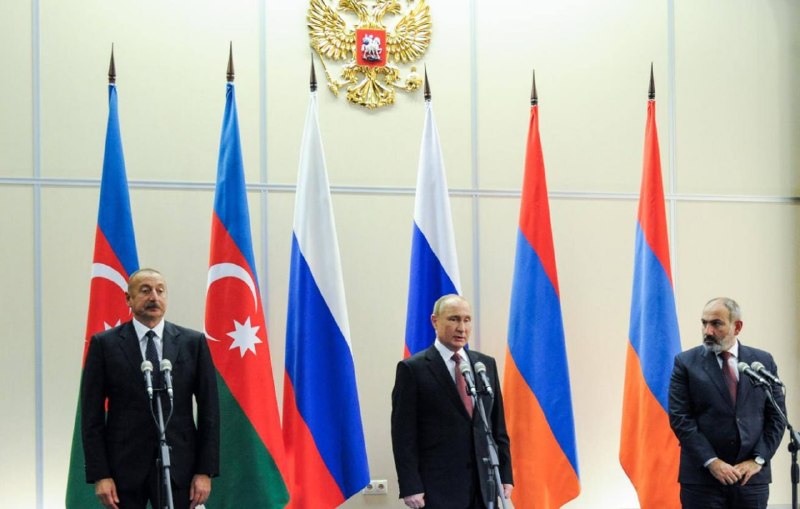
On the morning of 20 May 2026, the drums that greet visiting heads of state rolled through Tiananmen Square as Vladimir Putin walked a red carpet in Beijing. Xi Jinping stood waiting at the Great Hall of the People, and the pageantry that followed — the 21-gun salute, the formal talks, the joint dinner — was, on its surface, the ritual of two leaders who have met more than thirty times over the past decade. But the timing was the message. Putin arrived in the Chinese capital just days after a tense diplomatic exchange between Xi and Donald Trump in Washington, and the sequencing was not accidental. Beijing wanted the world to see that when the pressure mounts, Russia and China stand together.
The visual contrast was deliberate and, for audiences in Washington, not comfortable. Where Trump's negotiating posture with Xi had been transactional and performative — including the widely noted moment in which Trump reportedly glanced at a document aides identified as Xi Jinping's personal dining preferences — the Xi-Putin summit in Beijing projected something altogether different. Here was cohesion, choreography, and a shared grievance about the structure of the global order. The tariffs Washington had imposed in the preceding weeks; the threats directed at Iran; the broader campaign of maximum pressure that the Trump administration had styled as a reset of American power — all of it was implicitly on the table in the Great Hall of the People.
What emerged from the summit was a set of energy agreements and a joint diplomatic posture that, taken together, amount to something approaching a structured alternative to the dollar-denominated global trading system. The specific deals — covering gas pipeline expansion, crude oil flows, and liquefied natural gas contracts — matter in their own right. But the more significant fact is the direction of travel: two of the world's three largest energy producers are deepening their integration at a moment when the United States is simultaneously threatening secondary sanctions on any country that continues purchasing Iranian oil and pressing its NATO allies to reduce reliance on Russian energy. China and Russia are building a contiguous economic space that progressively sidesteps the dollar, the SWIFT payment system, and the American financial infrastructure that Washington has historically used as an instrument of coercion.
The Geometry of the Week's Diplomacy
The events of 20 May did not occur in isolation. They were the culmination of a week in which three separate diplomatic arcs had been moving in parallel, and only in Beijing did they briefly converge. Trump had spent the preceding days oscillating between belligerence and ambiguity on Iran, telling assembled journalists on 20 May that American strikes on Iranian nuclear facilities had been decisive — "We hit them very hard" — before adding, almost in the same breath, that further action remained uncertain — "We may have to hit them even harder — but maybe not." The same day, according to a post on the social platform formerly known as Twitter, Trump had taken a visual interest in Xi Jinping's menu during their earlier meeting, a detail that prompted no shortage of mockery in diplomatic circles but that also reflected something genuine about the transactional register in which the Trump administration approaches its relationships with Beijing.
Trump's public reaction to the Xi-Putin summit, reported by TSN.ua on 20 May, was predictably combative. But the sharper signal came from Beijing. Xi Jinping's welcome of Putin was not merely ceremonial. The Chinese Foreign Ministry, through its official channels, framed the summit as a demonstration of what "strategic coordination" between major powers looks like — a formulation designed to counter the American narrative that the Sino-Russian relationship is merely one of convenience. Chinese state media, including Xinhua and Global Times, gave extensive coverage to the energy agreements and to the two leaders' shared emphasis on "multipolarity," a term that in diplomatic shorthand means the replacement of American unipolarity with a distributed system of competing great-power spheres.
The structural significance of this positioning becomes clearer when viewed against the backdrop of the US-China trade war that has defined the first half of 2026. American tariffs on Chinese goods have now exceeded anything imposed during the first Trump administration or the Biden years. Chinese retaliatory measures have targeted American agricultural exports, semiconductors, and energy. In this environment, the Xi-Putin summit functions as an insurance policy: Beijing is demonstrating to Washington that it has alternative markets, alternative suppliers, and an alternative diplomatic partner capable of absorbing at least some of the pressure that American sanctions and tariffs are designed to apply.
What the Energy Deals Actually Mean
It is worth specifying what was actually agreed in Beijing, because the specifics matter more than the symbolism. According to reporting from Nikkei Asia, the summit produced new or expanded agreements across three areas: the Power of Siberia 2 pipeline, which would route Russian gas through Mongolia to northern China; increased crude oil shipments under existing long-term contracts; and a framework for liquefied natural gas cooperation that includes potential joint investment in Arctic LNG projects. These are not paper commitments. They require years of infrastructure investment, regulatory alignment, and sustained political commitment from both sides.
The pipeline dimension is particularly significant. Power of Siberia 2, if completed, would make China the primary export route for Russian gas in a way that comprehensively replaces the European market that Moscow lost following the invasion of Ukraine. For Russia, this represents the most consequential long-term strategic shift in its energy architecture since the Cold War. For China, it represents a degree of leverage over Russian energy policy — and by extension over the Kremlin's overall geopolitical posture — that Beijing did not possess five years ago. The dependency is not symmetric. Russia needs the Chinese market more urgently than China needs Russian gas, and both sides understand this. The agreements Beijing has negotiated reflect that asymmetry in their terms.
The currency dimension is harder to quantify but no less real. Russian and Chinese officials have for several years been progressively increasing the share of bilateral trade settled in rubles and renminbi rather than dollars. The trajectory has accelerated since the imposition of sweeping American sanctions on Russian financial institutions in 2022. The energy contracts signed on 20 May are likely to include further provisions for local-currency settlement, reducing the exposure of both sides to dollar-denominated sanctions regimes. This is not a full de-dollarization — the scale of global trade that can be conducted outside the dollar system remains limited — but it is a directional shift with consequences for the long-term architecture of global finance.
The Iran Angle
No account of the Beijing summit can sidestep the shadow cast by the Iran question. Trump, speaking on 20 May, described American military action against Iranian nuclear facilities as successful in its immediate impact — "We hit them very hard" — while leaving the overall trajectory of negotiations ambiguous. Earlier in the day, according to the Jahan Tasnim news agency, Trump had stated that his administration was "in the final stages of negotiations with Iran." These are contradictory signals, and they may be deliberate: a pattern of oscillating between pressure and conciliation that the Trump team appears to view as a negotiating tactic rather than a contradiction.
What does this have to do with Beijing? China is Iran's largest trading partner and, critically, its largest oil customer. The question of whether Beijing will continue purchasing Iranian crude oil — and at what volume — is a variable that exercises the Trump administration enormously. Secondary sanctions on Chinese banks and companies that handle Iranian oil revenues have been a recurring instrument of American pressure. China, for its part, has never formally acknowledged that it purchases Iranian oil, even as the volumes suggest otherwise. The Xi-Putin summit, by reinforcing the message that Beijing is capable of standing up to American pressure and building alternative supply chains, signals that China is not inclined to capitulate to secondary sanctions demands. It also signals to Tehran that China remains a reliable partner — one whose commitments are not contingent on American approval.
Reading the Multipolar Moment
The summit in Beijing on 20 May 2026 represents something more than the sum of its parts. It is a data point in a broader pattern that analysts of international relations have been tracking for the better part of a decade: the progressive weakening of the institutions, norms, and informal arrangements that have underpinned American hegemonic power since the end of the Cold War. The dollar's role as the world's reserve currency; the dominance of American-controlled payment infrastructure; the network of alliance relationships that gave Washington the ability to impose coordinated sanctions — all of these have been eroding not because of a single decisive event but because of cumulative decisions by multiple states to reduce their exposure to American coercive power.
China and Russia are the most consequential actors in this process, but they are not the only ones. The Gulf states have been quietly expanding the role of the renminbi in oil pricing. India has been increasing its purchases of Russian crude and settling them in currencies other than the dollar. Southeast Asian economies have been building payment infrastructure that bypasses SWIFT. The dollar remains dominant — it will remain dominant for the foreseeable future — but the direction of travel is toward a more fragmented monetary landscape. The Xi-Putin summit accelerates that fragmentation by deepening the integration of the two largest non-Western energy producers.
The weaknesses in this reading deserve acknowledgment. The Sino-Russian partnership, for all its current momentum, contains structural tensions that have not disappeared. China has been careful not to provide Russia with the kind of lethal military assistance that would trigger catastrophic secondary sanctions from Washington. Beijing's economic relationship with the United States — enormous in scale, even amid the tariff war — remains too significant to be casually discarded. Xi Jinping has consistently sought to preserve a degree of strategic ambiguity in his relationship with Moscow, maintaining lines of communication with Washington even as he deepens ties with Putin. The partnership is real, but it is also bounded by interests that do not always align.
Whether the summit in Beijing marks a turning point or simply another step along an existing trajectory is a question that the coming months will answer. What is clear is that the diplomatic geometry of the early twenty-first century is becoming more complex, more contested, and less deferential to the assumptions that governed it for three decades after the Soviet Union collapsed. The Xi-Putin handshake in the Great Hall of the People was a statement about that complexity — and about the limits of Washington's ability to manage it through pressure alone.
Wire provenance
This editorial synthesis draws on the following public wire/social posts:
- https://t.me/ClashReport/124321
- https://t.me/JahanTasnim/89234
- https://x.com/sprinterpress/status/1923456789012345678
- https://t.me/TSN_ua/56789
- https://t.me/nikkeiasia/45678