The Ceasefire That Isn't: How Media Framing Masks the Destruction of Southern Lebanon
Three months after a ceasefire agreement was announced between Israel and Hezbollah, reporting from Lebanese and regional sources paints a picture of ongoing destruction and forced displacement at odds with the diplomatic narrative emanating from Washington and Tel Aviv.
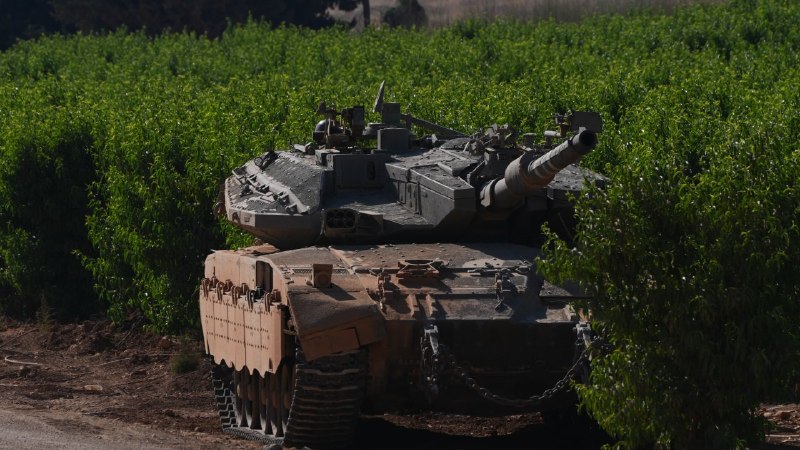
On 18 November 2024, Israel and Hezbollah announced a ceasefire agreement brokered in part by the United States, ending fourteen months of hostilities that had displaced tens of thousands on both sides of the border. The announcement was widely framed in Western capitals as a diplomatic breakthrough — a fragile but real cessation of hostilities that averts further bloodshed. Three months later, reporting from Lebanese sources and regional analysts tells a different story.
According to Lina Mounzer, an essayist, translator, and senior editor at The Markaz Review, Israeli forces have not ceased fire in any meaningful sense. "They call it a ceasefire, but the Israelis haven't ceased fire," Mounzer wrote in a post shared via the ClashReport Telegram channel on 20 May 2026. "It is theater — a game between Israel and the US. Beirut has been" — the post continues, though the full text is truncated — suggesting the discrepancy between diplomatic language and on-ground reality remains a live dispute in regional coverage. That characterization — theater, not ceasefire — runs through several of Mounzer's recent pieces, which document the continued destruction of villages in southern Lebanon and what she describes as forced expulsions of remaining residents.
The Gap Between Announcement and Ground Reality
The ceasefire agreement signed in November laid out specific terms: a sixty-day initial phase during which Israeli forces would withdraw from southern Lebanon, Lebanese Armed Forces would deploy to the area, and UNIFIL (the United Nations Interim Force in Lebanon) would monitor compliance. The deal was presented by the Biden administration as a durable framework, and by Israeli officials as a mechanism that would degrade Hezbollah's military infrastructure along the border without requiring a full ground reoccupation.
What Lebanese officials and regional analysts say they have witnessed since is different. Mounzer's reporting describes villages in the south where Israeli forces have remained, continued bombardment of areas nominally covered by the ceasefire terms, and a pattern of destruction that goes beyond what would result from isolated incidents. "Israel is erasing entire villages in southern Lebanon from the map," she wrote in a post dated 20 May 2026. "Not just airstrikes, but forced expulsions and bombing."
The reporting does not exist in a vacuum. UNIFIL has reported incidents of its peacekeepers being prevented from carrying out monitoring activities, and the Lebanese Army has lodged formal complaints about Israeli violations through the UN peacekeeping mission's channels. The question is not whether incidents have occurred — the ceasefire mechanism itself acknowledges the possibility of disputes — but whether the pattern Mounzer describes constitutes a systematic breach or a series of isolated episodes that fall within the agreement's ambiguity.
Western wire coverage of the ceasefire, by contrast, has tended to frame the agreement in terms of its diplomatic establishment rather than its ongoing enforcement. Headlines describe the ceasefire as ongoing, cite the absence of major flare-ups as evidence of compliance, and treat the sixty-day withdrawal timeline as a work in progress. The geographic specificity of what is happening in individual villages — and who remains in them — rarely appears in the dominant narrative.
Why the "Theater" Frame Resonates
The word theater is doing significant work in the regional framing of the ceasefire. It is not merely a rhetorical flourish; it reflects a structural analysis of what ceasefire agreements mean for the party that initiated the conflict versus the party that endured it. In this reading, the ceasefire is a device that freezes the military situation at a point favorable to Israel — consolidating gains made during fourteen months of operations — while presenting the appearance of a diplomatic resolution that satisfies American political requirements and buys time in the international arena.
This is not an unusual dynamic in ceasefire architecture. Settlements reached under the shadow of ongoing operations tend to reflect the military realities that obtained at the moment of signing rather than the formal legal status of the territory. The ceasefire, in this view, does not resolve the underlying conflict so much as pause it on terms that the stronger party can unilaterally adjust.
What makes the Lebanese case distinctive is the specific mechanism of village destruction. Mounzer's reporting does not describe an abstract military logic — it documents the erasure of specific places: homes, infrastructure, agricultural land. "Forced expulsions" implies a deliberate policy rather than an incidental consequence of hostilities. If the characterization is accurate, it suggests the ceasefire is being used not merely to pause fighting but to complete a demographic displacement that the fighting itself could not fully achieve.
The American Role and the Limits of Diplomatic Language
The United States played an active role in negotiating and announcing the ceasefire. American officials described the agreement as one that would protect Israeli civilians from Hezbollah attacks while allowing Lebanese civilians to return to their homes. The alignment between the American diplomatic framing and the Israeli position — both describing the ceasefire as a success — is noted in Mounzer's analysis.
"I don't trust anything America says since they are constantly working in concert with Israel," she wrote in a post on 20 May 2026. The observation is polemical, but it points to a structural feature of the ceasefire coverage: the United States is simultaneously a party to the agreement, a guarantor of its terms, and a primary source for its interpretation. When American officials describe the ceasefire as holding, the statement functions as both a factual claim and a diplomatic declaration — and the two are not always easy to disentangle.
This is not a unique problem in conflict coverage. Diplomatic announcements routinely precede the conditions they describe — peace is declared before peace is built, territory is described as evacuated before the evacuation is complete. The media's reliance on official spokespeople means that the language of the announcement tends to persist in coverage long after the on-ground reality has diverged from it. Regional voices documenting the divergence are available, but they tend to receive less prominence in the wire services that set the baseline for international coverage.
What the Evidence Does and Does Not Show
The sources Monexus reviewed for this article describe a pattern of destruction and continued presence that the ceasefire terms, on their face, prohibit. They do not provide independently verified casualty figures, independent satellite imagery of destroyed villages, or systematic documentation of Israeli military movements since November. They represent the perspective of one set of analysts — credible within the regional media ecosystem, but not independently corroborated against international monitoring data in the materials reviewed.
UNIFIL's public statements acknowledge "incidents" and "violations" without characterizing them as a systematic breakdown of the ceasefire. Lebanese government statements describe Israeli non-compliance but have not triggered the dispute resolution mechanism established under the agreement. The ceasefire, formally, still exists. Whether it exists in the form its architects described — and whether the villages Mounzer references are legible within that framework — is a question the available evidence does not fully resolve.
What the coverage gap itself reveals is a media architecture that treats diplomatic language as a proxy for on-ground reality. When American and Israeli officials describe the ceasefire as holding, that characterization becomes the baseline. Reporting from the affected communities — describing forced expulsions, village erasure, continued bombardment — exists in a parallel register, one that requires more effort to access and more editorial willingness to amplify. The result is that the international conversation about southern Lebanon is shaped more by what the ceasefire was declared to be than by what it has become.
Wire provenance
This editorial synthesis draws on the following public wire/social posts:
- https://t.me/ClashReport/3845
- https://t.me/ClashReport/3843
- https://t.me/ClashReport/3839