The Coal Comeback: How Middle East Chaos Derailed Asia's Clean Energy Pivot
The Strait of Hormuz disruption following the Iran conflict has exposed a brutal truth: when geopolitics collides with energy transition timelines, fossil fuels always win the short game.
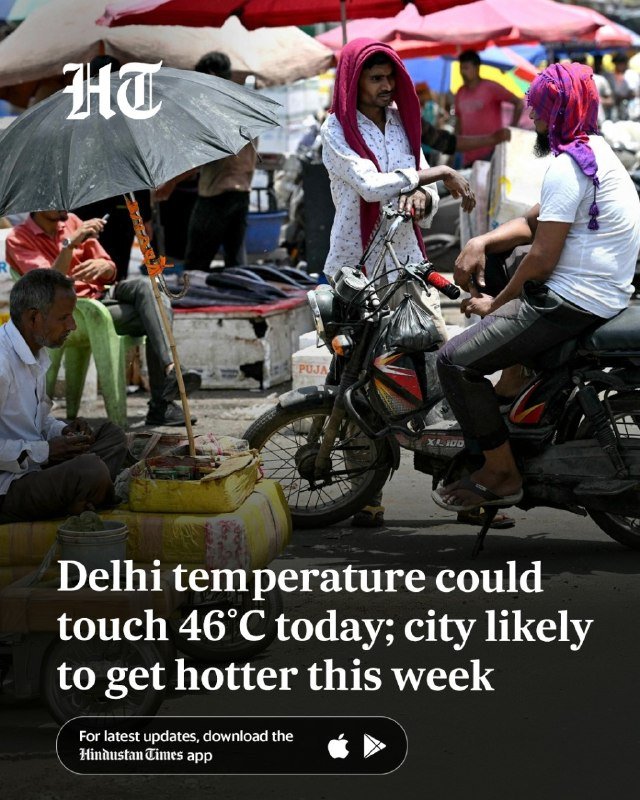
There is a particular bitter irony in watching Delhi and Jakarta dust off coal expansion plans in the same week they announce accelerated renewables targets. The Strait of Hormuz, that narrow maritime chokepoint through which roughly a fifth of the world's oil flows, has become yet another arena of Middle Eastern conflict. And Asia — the continent that was supposed to lead the clean energy century — is paying the price.
India, the world's third-largest consumer of liquefied petroleum gas, faces a supply gap of roughly 400,000 barrels per day, according to analysis from Nikkei Asia published on 20 May 2026. That is not a shortfall that rooftop solar arrays will bridge in the next decade. It is a gap that gas turbines and coal plants are already filling.
The immediate cause is the Strait of Hormuz disruption resulting from the Iran war. The knock-on effects — higher energy costs, supply chain vulnerabilities, and the politically toxic option of energy rationing — have forced governments across Asia to make a calculation that climate advocates hoped the region had moved beyond: survival now, or promises later.
The Short-Term Trap
The energy transition literature is fond of speaking in decades. Net-zero targets for 2050, interim milestones for 2030, quarterly progress reports from the International Energy Agency. The framing assumes a certain predictability in global energy markets — a predictability that conflict reliably destroys.
What the Strait of Hormuz disruption has exposed is the degree to which Asia's energy security was quietly assumed rather than structurally guaranteed. India and Southeast Asian nations had made genuine progress on solar and wind capacity in the early 2020s. But that progress rested on continued access to global LNG markets and the assumption that Hormuz would remain open. Both assumptions have collapsed simultaneously.
The result is a classic supply-shock dilemma. Governments face two choices: accept economic contraction and social disruption, or pivot to whatever energy sources can be mobilized fastest. Coal wins that race. It is available domestically in India, Indonesia, and Vietnam. It does not require lng terminals that take years to permit and build. It runs on infrastructure that already exists.
This is not a story about Asian governments secretly preferring coal. It is a story about the structural impossibility of running a modern industrial economy on intermittent renewables alone — at least on the timescales that geopolitics enforces.
The Credibility Problem
Here is the harder truth that clean energy advocates are reluctant to articulate: every time Asia is forced back toward fossil fuels by external shocks, it undermines the credibility of the entire transition framework.
The West set targets. The West demanded that emerging economies skip the dirty development phase. When those same emerging economies hit a supply crisis and scramble for coal, the response from Western capitals — many of which are themselves extending coal plant lifetimes and greenlighting new gas infrastructure — rings hollow.
India's 400,000-barrel LPG shortfall is, in isolation, a manageable logistics problem. But it arrives in a context where India's stated clean energy ambitions now look like aspirational marketing rather than operational commitments. Jakarta's coal moratorium, announced with considerable fanfare in 2023, is quietly being reviewed. These reversals are not irrational. They are the rational response of governments facing genuine energy poverty risk.
The structural problem is that the international framework for energy security assumes peaceful access to global markets. When that assumption breaks — as it has now broken in the Gulf — the framework has nothing to offer except reproached commitments and future targets that grow more distant each year.
The Geopolitical Substructure
It is tempting to frame this as a climate story. It is, in part. But the deeper structure is about who controls the energy infrastructure that industrial civilization requires — and what happens when that infrastructure becomes a theater of war.
The Strait of Hormuz has always been a geopolitical flashpoint. What the current disruption reveals is the degree to which Asian economies — the very economies that were supposed to drive 21st-century growth — remain hostage to energy corridors that they do not control and cannot protect.
India's LPG shortage is partly a function of shipping routes that funnel through a waterway dominated by regional powers with contested interests. Southeast Asia's pivot back toward coal is partly a function of energy independence instincts that grow stronger every time a supply chain proves vulnerable.
The clean energy transition was always framed as an opportunity for late-developing economies to leapfrog the fossil fuel era. That framing ignored the extent to which fossil fuel infrastructure is also energy security infrastructure. Countries that built coal plants in the 1990s and 2000s were not just polluting — they were building strategic reserves of domestic energy that could not be disrupted by a missile strike on a tanker corridor.
What Comes Next
The immediate trajectory is not encouraging. The Strait of Hormuz disruption shows no signs of resolution. India's LPG shortfall will persist until alternative supply routes — potentially involving US or Australian LNG at significantly higher cost — can be scaled. Southeast Asian governments are in the uncomfortable position of explaining to domestic constituencies why climate commitments must yield to heating and cooking fuel shortages.
The longer-term question is whether this disruption is a temporary shock or a permanent recalibration. If the Strait of Hormuz remains compromised for years, Asia's energy planners will be forced to make structural investments in domestic fossil fuel capacity — investments that will run for decades and crowd out renewable deployment.
If, on the other hand, the strait's functioning is restored within a reasonable timeframe, there is a window for Asia to return to accelerated clean energy pathways. But each disruption erodes institutional memory and political will. Governments that built emergency coal capacity do not demolish it quickly.
The clean energy century was always going to be harder than its advocates promised. What the current crisis reveals is that the hardest part is not the technology or the capital — it is the geopolitical stability that energy transition timelines implicitly assume. Asia is learning, in real time, that you cannot transition to a stable energy future when the present is on fire.
Monexus covered this story through the Nikkei Asia wire, framing the LPG shortfall and coal pivot as a regional energy security crisis. The dominant wire framing emphasized the immediate supply disruption; this piece contextualizes that disruption within the structural tension between energy transition commitments and geopolitical vulnerability.