Europe's Ben-Gvir Reckoning: Two Governments, One Message
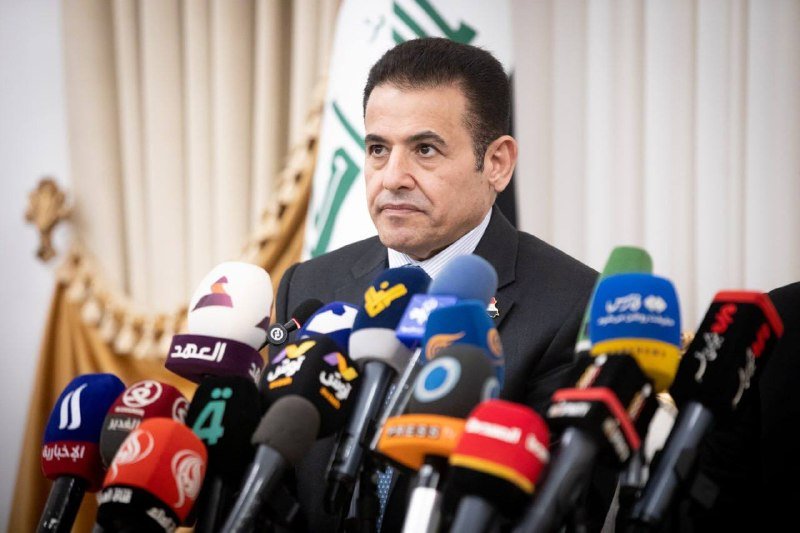
On 20 May 2026, two European governments issued diplomatic rebukes to Israel that were sharp enough to be notable on the same day — and coordinated enough to suggest they were not coincidental. Italian Prime Minister Giorgia Meloni summoned the Israeli ambassador to Rome and demanded an immediate apology from Security Minister Itamar Ben-Gvir for his treatment of detained Gaza flotilla activists. Spanish Prime Minister Pedro Sánchez went further, publicly committing to push for European Union-wide sanctions against Ben-Gvir, calling the footage of the minister's conduct toward participants of what the sources describe as an aid blockade incident "humiliating."
The simultaneity matters. Two capitals with different coalitions, different electoral calculations, and historically different weightings on Middle Eastern policy arrived at the same threshold — formal diplomatic protest and the explicit invocation of a multilateral response — on the same evening. That is not standard Brussels hand-wringing. It is a signal.
The Flotilla Incident and Its Aftermath
The immediate trigger is straightforward enough to reconstruct from the thread material: Ben-Gvir, who oversees Israel's domestic security apparatus, was involved in the detention and treatment of activists aboard a Gaza-bound aid vessel. The sources describe footage in which the minister appears tohumiliate participants. That footage, once in public circulation, created a diplomatic liability that Jerusalem could not easily absorb through standard deflection. Meloni's government — not known for reflexive solidarity with the Palestinian cause — nonetheless found the optics untenable enough to summon an ambassador and demand an apology. That is unusual. Italian-Israeli relations are warm, and the Meloni administration has generally backed Jerusalem's security posture. The decision to go public with a formal demand suggests either that the footage was more damaging than the controlled Israeli narrative allowed for, or that Rome calculated that absorbing the cost of a public rebuke was preferable to being seen accepting it quietly.
Madrid's Position — and What Sanchez Is Actually Doing
Sánchez's intervention is more politically exposed. The Spanish Prime Minister framed his commitment explicitly in European terms: he will "strive to ensure that all of Europe imposes sanctions against Ben-Gvir." The phrase "strive to ensure" is careful language. It does not promise results — it promises effort. That distinction matters in EU foreign policy, where unanimity requirements mean that sanctions against a sitting Israeli minister are genuinely difficult to achieve. Spain holds the rotating presidency of the Council of the European Union through mid-2026, which gives Madrid a procedural platform to schedule discussions, circulate working documents, and frame the agenda. Sánchez is using that platform.
Whether the outcome matches the intent is a separate question. EU sanctions against Israeli officials have been discussed before — discussed and not delivered, largely because a sufficient coalition of member states has calculated that the diplomatic cost of targeting sitting ministers outweighs whatever leverage it might generate. Hungary, in particular, has made clear it would block any such measure. The unanimity requirement is a structural obstacle, not a political preference. Sanchez knows this. The statement is as much about domestic Spanish politics — a constituency that includes a significant left flank of the governing coalition and an electorate with strong sympathies for Palestinian humanitarian causes — as it is about European foreign policy.
The Diplomatic Geometry
What makes this noteworthy is not the sanctions prospect itself, which is uncertain at best. It is the diplomatic geometry it reveals. Italy and Spain, acting in concert on the same day, are drawing a line that the current European consensus has struggled to articulate: that certain conduct toward detained civilians, documented on camera and publicly visible, falls outside what the EU considers acceptable behaviour from a partner government's officials. That line has been implicit for some time. Making it explicit — through ambassadorial summons and public commitment to multilateral consequences — shifts the terms of the debate.
Israel's response will be telling. A formal apology from Ben-Gvir would be politically costly for a minister whose base includes voters for whom defiance of European criticism is a selling point. A refusal to apologize keeps the diplomatic row open and gives Sanchez something to work with in Brussels. The middle ground — a partial acknowledgment, framed as procedural rather than substantive — is possible but has been made harder by the public nature of the initial demands.
Stakes and Forward View
The long-run significance is in what this says about European credibility on humanitarian norms. The EU has spent years signalling concern about Gaza without converting that concern into meaningful leverage. The gap between statement and sanction has become a fixture of the relationship — Jerusalem has learned to absorb European criticism as a cost of doing business, not as a constraint on behaviour. What Italy and Spain did on 20 May is an attempt to close that gap, or at least to signal that the gap has a boundary. Whether it does depends entirely on what happens next in Brussels. Sanchez has put himself on record. The rotating presidency gives him a procedural tool. The unanimity requirement gives him a ceiling.
The sources do not yet indicate whether other member states have been consulted, whether a formal working group has been established, or whether the issue will appear on an upcoming Foreign Affairs Council agenda. What is clear is that two governments have decided to move the question from the diplomatic back-channel into the public frame — and that decision itself changes the politics of what comes next.
Wire provenance
This editorial synthesis draws on the following public wire/social posts:
- https://t.me/bricsnews