Hezbollah's anti-armor campaign in southern Lebanon signals a deliberate escalation calculus
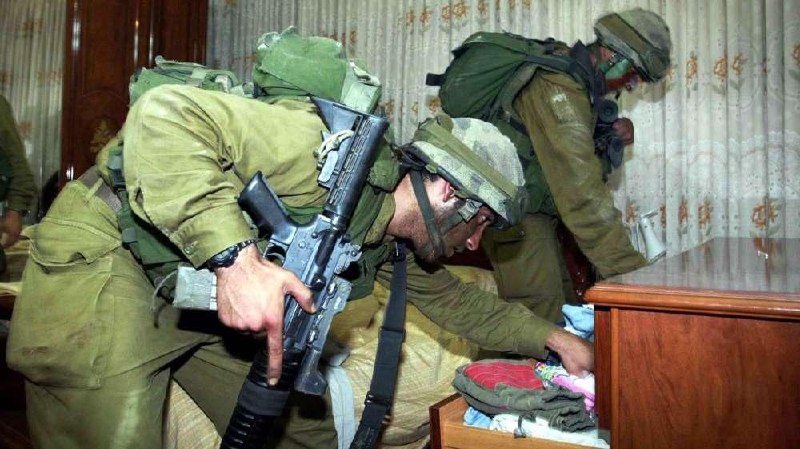
Hezbollah announced four separate successful engagements against Israeli armor in the vicinity of Hadada, a town in southern Lebanon, on the afternoon of May 20, 2026. The statements, issued via the group's official Telegram channels between 17:49 and 18:21 UTC, described precision strikes against Merkava battle tanks and D-9 armored bulldozers advancing through the area — with the group asserting it achieved hits in each reported engagement. The sequence of announcements, delivered in rapid succession, reads less like battlefield dispatches and more like a deliberate signal: Hezbollah has the intelligence, the reach, and the willingness to contest Israel's ground maneuver in ways that carry immediate tactical consequences.
What makes these engagements notable is not merely their frequency but their selectivity. Each statement describes a specific target — a tank column near a stadium, another near Al-Baraka, a D-9 bulldozer accompanying armor in the Barka Hadatha area — and asserts a confirmed hit. That specificity matters. A group that issues inflated casualty reports or vague claims of "enemy concentrations" loses credibility quickly; Hezbollah's communications apparatus, whatever one thinks of its political orientation, maintains a track record of verifiable precision in this kind of reporting. The fact that all four claims fall within a narrow forty-minute window suggests coordination, not opportunism — a single operational plan executed against multiple vectors of Israeli advance.
The armor-targeting doctrine
There is a logic to Hezbollah's focus on armored vehicles that goes beyond symbolic resistance. D-9 bulldozers, operated by Israeli engineering units, have been central to the creation of buffer zones and the demolition of structures along the frontier. Merkava tanks provide the protective envelope that allows those units to operate. By attacking both, Hezbollah degrades Israel's ability to conduct the slow, methodical ground consolidation that a sustained occupation would require. This is not about winning a conventional battle; it is about making the cost of holding ground prohibitive in a way that shows up in Israeli strategic calculations.
Israeli military doctrine has long treated armor as the backbone of force projection in open terrain. Losing that backbone — even incrementally — forces commanders to choose between reducing exposure (which limits operational reach) and accepting higher casualties (which generates political pressure at home). Hezbollah appears to be betting that repeated, verified strikes against that backbone will eventually force Tel Aviv to recalibrate its willingness to sustain ground presence in the south.
The Iranian dimension
Hezbollah's statements originate from Telegram channels associated with Iranian state media — Al Alam and Jahan Tasnim. That provenance is worth acknowledging directly, because it shapes what we can and cannot take at face value. Iranian state-adjacent sources have an interest in portraying Hezbollah as effective and in suggesting that the resistance axis has the initiative. But the specific, timed nature of these reports — four distinct operations in under an hour — is the kind of detail that tends to be harder to fabricate than vague claims of victory. Independent confirmation from Western wire services or Israeli military spokespeople is not yet in the thread, which means the verification ledger for casualty figures and material destruction remains open.
What the sourcing does establish is that the Islamic Republic watches this front closely and amplifies Hezbollah's reporting as part of a broader informational posture. That posture is itself a signal: Tehran wants its allies and its adversaries to know that the northern front is active, that the costs of Israel's Lebanon operations are accumulating, and that the resistance architecture remains capable despite pressure from sanctions and targeted strikes on Iranian military assets in Syria.
Escalation geometry
The immediate danger is not that a single day of tank strikes will trigger a full-scale Israeli ground offensive — that calculus involves far more variables than anti-armor effectiveness. The danger is accumulation. Each successful engagement raises the bar for what Israel can claim as progress. If armor takes hits, if units are forced to withdraw or reduce advance speed, the political narrative in Tel Aviv becomes harder to manage. An Israel that cannot point to territorial gains without pointing to losses cannot sustain the justification for continued operations.
On the Hezbollah side, the calculus runs differently. Every strike that achieves a confirmed hit against Israeli armor is a data point in a larger campaign — not just a military operation but an information operation directed at multiple audiences. Lebanese civilians who have watched their border villages caught in crossfire see confirmed damage to Israeli equipment as evidence that the resistance is protecting them, even imperfectly. Regional audiences see it as evidence that the Israeli military is not invincible. Domestic Israeli audiences see it as evidence that the northern front remains unresolved, that the war has not ended, that the hostages still held have not been freed by ground operations.
The stakes are asymmetric. For Hezbollah, each successful strike is a marginal win in a long campaign of attrition. For Israel, each strike that degrades armor and delays consolidation is a marginal loss in a campaign that requires territorial holding to justify. That asymmetry does not guarantee escalation — but it does guarantee that neither side has an obvious off-ramp that does not involve accepting losses they have so far been unwilling to absorb.
What remains uncertain is whether the operational tempo documented on May 20 represents a new phase — a deliberate shift to more aggressive anti-armor operations — or a temporary spike tied to specific tactical circumstances. The thread does not contain Israeli military statements or independent verification of the claimed hits. Hezbollah's Telegram reports may be accurate, exaggerated, or selectively framed; without corroboration from a neutral or Western source, the precise military reality remains contested. What is not contested is that the front is active, that both sides are operating, and that the pattern of engagement is consistent with a prolonged and deliberate contest for the southern Lebanese borderlands rather than a winding-down of hostilities.
The bottom line is straightforward: Hezbollah demonstrated on May 20 that it retains the capability and the willingness to impose costs on Israeli armor operating in southern Lebanon. Whether that capability will escalate, stabilize, or diminish depends on political decisions in Tel Aviv and Beirut that the battlefield reports alone cannot resolve. What the reports make clear is that the northern front remains a live, dangerous, and unresolved dimension of a conflict that shows no sign of ending on anyone's preferred timetable.
Wire provenance
This editorial synthesis draws on the following public wire/social posts:
- https://t.me/alalamarabic
- https://t.me/JahanTasnim