Hezbollah Drone Strike Wounds IDF Armored Brigade Commander in Southern Lebanon
An Israeli armored brigade commander was seriously wounded by a Hezbollah explosive drone in southern Lebanon on 20 May 2026, according to Israeli and regional media reports — the latest in a pattern of precision strikes testing Israel's northern defenses.
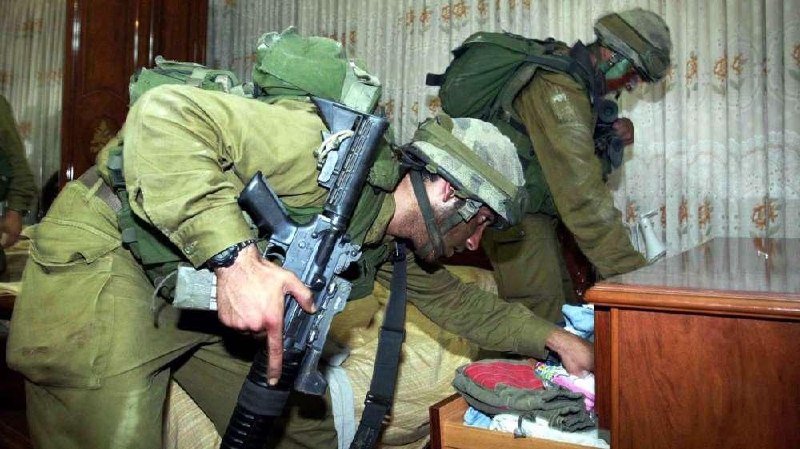
Israeli media reported on 20 May 2026 that Colonel Meir Biderman, the commander of the Israel Defense Forces' 401st Armored Brigade, was seriously injured in Debel, southern Lebanon, after an explosive drone launched by Hezbollah penetrated his position. The reports, carried by Channel 14 and other Israeli outlets, described the injury as significant but did not provide further clinical detail. Regional outlets including The Cradle Media and PressTV confirmed the account, citing the same Israeli reporting.
The targeting of a field-grade armored commander marks a qualitative escalation in Hezbollah's campaign along the Israel-Lebanon frontier. Brigade-level officers in active combat zones are typically among the more heavily protected personnel in any military hierarchy; their exposure to precision strike assets signals either a tactical breakthrough in target acquisition or a shift in Hezbollah's rules of engagement for assigning strike priorities.
The Strike and Its Immediate Aftermath
Colonel Biderman commands one of the IDF's primary armored formations — the 401st Brigade, historically equipped with Merkava tanks and tasked with heavy offensive operations. That a figure of his rank found himself within range of a Hezbollah loitering munition in southern Lebanon speaks to the persistent permeability of the border zone despite Israel's ongoing air-defense superiority.
The IDF has not issued a formal statement on the incident as of this publication. Israeli military spokespeople routinely decline to confirm or deny individual personnel injuries during active operations, citing operational security protocols. Hezbollah's media apparatus has not yet published its own account of the strike; the group's military communications arm typically releases footage or communiqués only after confirming battle damage assessments, a process that can take hours.
The injury to Biderman adds to a string of targeted strikes against Israeli military personnel in recent weeks. Israeli officials have acknowledged that the northern front remains actively contested, with the stated war objective of displacing Hezbollah forces from the border area still unmet. Military analysts note that the sustained tempo of Hezbollah drone and rocket activity has forced Israel to rotate defensive and offensive assets more frequently than operational planners anticipated.
Hezbollah's Precision-Strike Capability
The strike in Debel underscores a structural reality that has reshaped the tactical calculus on the northern front: Hezbollah has invested heavily in drone delivery systems capable of navigating defensive perimeters and striking point targets with lethal effect. The group's explosive drones — often described in Western reporting as "loitering munitions" — can hover over terrain, identify military concentrations, and descend on a target before ground-based air defenses can react.
This capability did not emerge overnight. Hezbollah developed its unmanned aerial systems over two decades, incorporating designs drawn from Iranian sources and, according to regional military assessments, its own engineering adaptations. The group has staged demonstrations of these systems in commemorative military parades, and Lebanese media have periodically reported on Hezbollah drone facilities in the Bekaa Valley.
Israeli defense analysts have repeatedly warned that Hezbollah's drone arsenal represents the most significant asymmetric threat to armored formations in open terrain. A tank column advancing into prepared defensive positions faces exposure to both anti-armor guided munitions and precision drone strikes — a two-axis problem that forces commanders to balance operational tempo against force protection requirements. Colonel Biderman's injury suggests that balance remains difficult to strike.
The Northern Front and Ceasefire Negotiations
The incident lands in a politically sensitive context. Israel has engaged in periodic ceasefire discussions brokered by mediating governments, with the stated objective of establishing a stable buffer zone and returning displaced civilians to northern communities. Hezbollah has conditioned any cessation of hostilities on a parallel end to Israeli operations in Gaza — a linkage Tel Aviv has rejected as unacceptable.
High-ranking military casualties complicate the political arithmetic on both sides. Israeli leadership faces pressure to demonstrate operational effectiveness along the northern border while simultaneously managing public expectations about a conflict that has persisted far beyond initial timelines. For Hezbollah, successful strikes against senior Israeli officers reinforce the group's core messaging: that sustained resistance inflicts real costs on the IDF and that any ceasefire must reflect battlefield realities.
It remains unclear whether the Biderman strike was planned in response to specific developments in the negotiating track or represents the routine operational tempo Hezbollah has maintained since October 2023. The sources reviewed for this article do not establish a direct causal link between recent diplomatic activity and the timing of the attack. What is clear is that the strike occurred on the same day as renewed diplomatic messaging from mediating parties, suggesting the group calculated that the political moment would absorb the blow without fundamentally altering the negotiating dynamic.
Stakes and Forward View
The wounding of a brigade commander carries three distinct orders of consequence. Operationally, it removes an experienced armored commander from the field during a period of active engagement — a loss whose significance depends on how quickly the IDF can fill the command vacuum. Institutionally, it reinforces within the IDF's officer corps the reality that senior leadership faces personal exposure on the northern front, potentially affecting risk calculations at higher echelons. Politically, it provides Israel's government with an unambiguous signal that diplomatic pressure alone has not altered Hezbollah's willingness to prosecute the fight on its own terms.
Whether the strike alters the trajectory of ceasefire talks depends on how the mediating governments and both parties choose to frame it. Mediators inclined to push for urgency may cite the incident as evidence that the situation demands a political resolution before further escalation. Those inclined to defer may treat it as another data point in an ongoing attrition pattern rather than a threshold event.
What the sources reviewed for this article do not yet establish is the full extent of Biderman's injuries, the IDF's chain-of-command response, or Hezbollah's specific assessment of battle damage. Israeli military sources have not confirmed the severity classification as reported by Channel 14. Those details, once available, will determine whether this incident registers as a tactical inconvenience or a strategic inflection point for the northern front.
—
Monexus covered this story through the lens of Hezbollah's precision-strike capabilities and their implications for Israeli operational planning. The wire framing, where present, emphasized the personal injury to a senior officer rather than the systemic vulnerability the strike reveals. This article foregrounds the structural pattern — drone-enabled target acquisition against armored formations — that the personal-injury framing tends to obscure.
Wire provenance
This editorial synthesis draws on the following public wire/social posts:
- https://t.me/presstv/78456
- https://t.me/thecradlemedia/29483
- https://t.me/thecradlemedia/29482
- https://t.me/ClashReport/8934