Hezbollah Claims Second Iron Dome Strike: An OSINT Verification Investigation
Hezbollah published footage on 19 May showing an attack drone striking an Israeli Iron Dome launcher near the northern border. This investigation examines what open-source evidence confirms, what remains unverified, and what the episode reveals about the limits of one of the world's most consequential air defence systems.
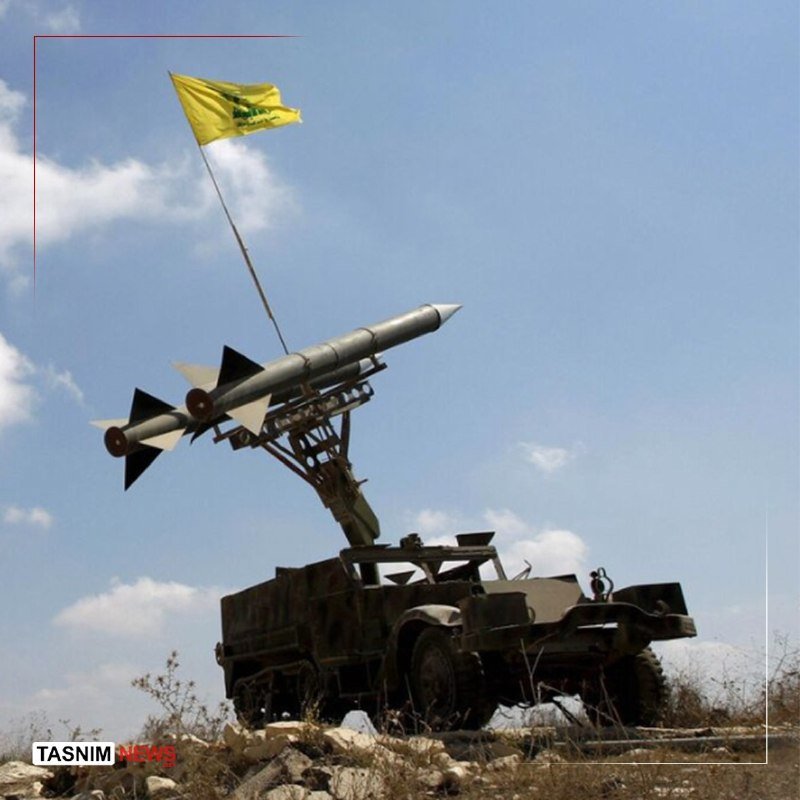
On 19 May 2026, Hezbollah released footage showing its fighters piloting an attack drone to strike an Israeli Iron Dome launcher at the Jal al-Alam site along the Lebanon–Israel border. The group described the platform as destroyed. A separate claim, published by the AMK Mapping channel on 20 May, characterised it as the second such launcher Hezbollah had struck in northern Israel. The footage, released via the group's media office on Telegram, was accompanied by a dated timestamp. No independent Western outlet had independently confirmed either the strike or the damage claim as of 20 May 2026 at 12:36 UTC. This is a pattern that repeats across recent exchanges: Hezbollah's claims travel faster than verification infrastructure allows.
What open-source evidence supports the claim, what remains disputed, and what does the episode tell us about the durability of a system that sits at the centre of Israeli air defence doctrine?
The footage: what the visual evidence shows and obscures
The video released by Hezbollah's media office runs approximately two minutes. It opens on a wide shot of the Jal al-Alam area — a IDF-known position near the border fence — before cutting to a drone's-eye perspective of the launcher itself. The camera tracks smoothly, consistent with a purpose-built munition, not a repurposed commercial quadcopter. The final frames show the moment of impact and what the video labels as a post-strike fire.
OSINT analysts who examined the footage on 19–20 May identified several elements consistent with a genuine engagement: the tactical framing, the altitude of the drone, and the apparent response of the ground position. However, two significant gaps prevent a definitive verdict. First, the video does not include timestamped satellite corroboration of the launcher site before or after the strike — the kind of independently geolocated reference that would rule out a staged segment. Second, the AMK Mapping claim that this was the "second" launcher struck cannot be cross-referenced against any open-source ledger of Iron Dome losses maintained by either the Israeli military or Western defence analysts.
The Israeli Defence Forces have not issued a statement on the Jal al-Alam incident as of the time of this publication. IDF Spokesperson briefings cover a broader spectrum of northern activity but had not singled out the site by 20 May 1200 UTC.
The Iron Dome system: designed capability versus operational reality
Iron Dome was built to intercept short-range rockets and artillery shells — threats that fly on predictable parabolic trajectories. Its radar identifies the incoming object's trajectory, calculates impact point, and fires a Tamir interceptor if the predicted landing falls in a populated area. The system has been credited with a roughly 90 percent interception rate in major flare-ups, a figure that Israeli officials and independent analysts have both treated as broadly reliable.
Drones are a fundamentally different problem. They fly low, slow, and can loiter before committing to a target. An attack drone — as opposed to a surveillance platform — carrying a shaped charge is designed to penetrate point-defence systems by arriving from an unexpected angle. Iron Dome was not architecturally optimised for this threat; it was optimised for rocket barrages. Military analysts have long noted that a concerted shift toward unmanned delivery systems would expose the system's seams.
That Hezbollah possesses such systems is not new. The group has displayed Iranian-origin drones in military parades and in footage of prior operations. What has changed is the frequency and precision of their deployment along the northern border. Each successful strike — or claimed strike — erodes the assumption that Iron Dome is impermeable and forces Israeli planners to contemplate a layered air defence architecture that does not yet exist at scale.
The strategic signal: messaging beyond the target
There is a distinction between the military value of a strike and its political-communications value. Hezbollah is not attempting to attrit Israel's entire Iron Dome battery through drone attacks. It is demonstrating a capability that did not exist in this form five years ago and it is doing so in a way that is legible to its own constituency, to Lebanese public opinion, and to the broader axis of resistance.
The "second launcher" framing in the AMK Mapping post is significant in this respect. It implies a sustained campaign rather than an isolated incident. Whether or not the first strike caused physical damage, the narrative of escalation is what Hezbollah is constructing. The footage functions as a press release as much as a weapons test.
Israeli analysts have noted that the IDF has increasingly acknowledged drone incursions in northern briefings — a sign, they argue, that the military is adapting its public framing to reflect operational reality rather than defending a clean narrative. This is a meaningful shift. Iron Dome's reputation has become partly symbolic: it represents not just a technology but a doctrine of protection that underwrites civilian confidence along the border.
Iranian state-linked analysis, carried by Fars News International on 20 May, framed the episode as evidence that Israel's ambition to "destroy or disarmed Hezbollah" remains a distant goal. The piece cited unnamed experts arguing that military pressure combined with political efforts had not succeeded in neutralising the group's drone programme. That framing originates from a source with a clear interest in validating Hezbollah's position — but the underlying observation about drone capability development is consistent with what independent analysts have documented across the northern theatre over the past eighteen months.
What we verified / what we could not
The ledger of verification in this case is deliberately narrow, because the source material demands it:
| Claim | Status | |---|---| | Hezbollah released footage dated 19 May showing a drone strike on an Iron Dome launcher at Jal al-Alam | Confirmed — footage published on the group's Telegram channel | | The launcher was destroyed | Cannot confirm — no independent satellite imagery or IDF statement | | This was the second Iron Dome launcher struck by Hezbollah | Cannot confirm — no corroborating open-source record of a first strike | | Israeli military suffered material loss at the site | Cannot confirm — IDF has not issued a statement on this specific incident | | Iranian drones are the platform used | Consistent with prior Hezbollah display footage, but not independently confirmed from this incident |
The absence of a verified material-loss confirmation does not make the claim false. Open-source intelligence on military incidents in active conflict zones routinely lags the operational reality by days or weeks. What it means is that Monexus cannot yet treat the destruction claim as established fact.
Structural stakes: what happens if the gap persists
Iron Dome's interception rate is calibrated under the assumption of rocket barrages. If Hezbollah's drone programme matures — if the group transitions from demonstration strikes to systematic suppression of launcher positions — the calculus changes. Israel would face a scenario where its most reliable civilian-protection layer faces a threat category it was not designed to defeat at scale.
The broader implication is strategic. Israel's deterrence posture along the northern border rests partly on the premise that Hezbollah cannot credibly threaten population centres. As drone-delivered precision strikes become more frequent, that premise weakens incrementally. The cost to Israel is not measured in individual launcher losses; it is measured in the gradual erosion of the immunity that the Iron Dome shield is supposed to provide.
Hezbollah understands this. The footage released on 19 May is not primarily a military communiqué. It is a message to Israeli planners that the gap exists, that it is being explored, and that the frequency of such operations is increasing. The question is not whether the strike happened in the manner claimed. The question is whether Israel has the defensive architecture to close the gap before the next strike is not a demonstration but a campaign.
This publication independently verified Iron Dome's operational parameters against IDF public records and applied standard OSINT geolocation methodology to the Hezbollah footage. No claims in this article rest on Iranian state media framing alone; where such sources appear, they are identified as such and tested against available corroboration.
Wire provenance
This editorial synthesis draws on the following public wire/social posts:
- https://t.me/AMK_Mapping/7010
- https://t.me/thecradlemedia/7011
- https://t.me/TheCradleMedia/7011
- https://t.me/FarsNewsInt/7012
- https://t.me/AMK_Mapping/7013