Hezbollah's Southern Lebanon Strikes Signal a Calculated Strategy of Pressure
Three separate strikes on 20 May 2026 targeted Israeli military positions across multiple towns in southern Lebanon — a pattern that reads less like retaliation and more like deliberate policy.
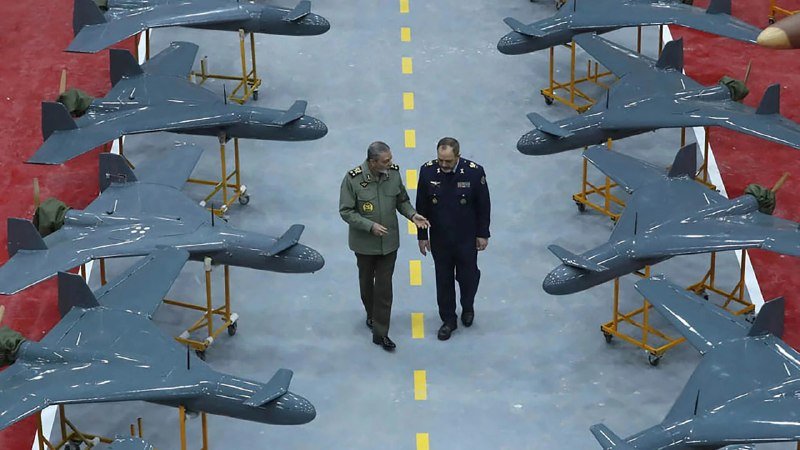
On 20 May 2026, Hezbollah announced three separate military operations against Israeli forces in southern Lebanon. According to statements reported by Al Alam Arabic, the group struck positions in the towns of Dibal, Hadatha, Bayyada, and Rishaf using drone swarms and missile launchers. Three distinct communiqués, released within minutes of each other, described targeted gatherings of Israeli military vehicles and personnel.
The operational cadence is notable. Three strikes in one evening, across four separate locations, represents a meaningful increase in tempo. Hezbollah has carried out near-daily cross-border attacks throughout 2026, but the clustering of multiple operations in a single reporting cycle signals intent rather than impulse — a demonstration of sustained capability rather than reactive strike.
What the Statements Claim
The communiqués describe drone-swarm attacks on gatherings in Dibal and Hadatha, a missile-bombardment of positions in Bayyada, and additional missile-launcher strikes targeting Dibal and Rishaf. Hezbollah described each operation as deliberate — timed, weapon-matched, and location-specific. The language carries institutional weight: these are not spontaneous claims but coordinated public communications, drafted and released by a structured military apparatus.
Independent verification of strike outcomes — whether confirmed by Israeli sources, third-party monitors, or open-source analysts — is not available in the sources reviewed. Hezbollah has historically been accurate in describing the location and timing of its operations while occasionally inflating the results. Without corroboration from a second source, the claims should be read as partial evidence — a signal of intent, not a confirmed battlefield ledger.
Israeli responses, as captured in the available thread material, did not include direct confirmation or denial of specific incidents. The IDF has maintained a policy of measured retaliation throughout the period, responding selectively to operations it deems significant enough to warrant escalation. That no major Israeli statement accompanied the strikes is itself meaningful — it suggests either de-escalation by design or a determination that the incidents fall below the threshold requiring public acknowledgment.
The Counterpoint: Opportunism or Escalation?
There are at least two ways to read this pattern. The first frames it as probing — a systematic test of Israeli response thresholds, each strike calibrated to establish baseline reactions without triggering automatic retaliation. If that reading holds, Hezbollah is engaged in real-time intelligence-gathering on Israeli military posture and political tolerance.
The second reading is simpler and perhaps more dangerous: escalation by accumulation. Individual strikes may not individually warrant retaliation, but the cumulative effect — steady pressure on Israeli northern communities, sustained attrition of military attention, continuous demonstration of reach — may be designed to shift the strategic calculus in Israel's favour rather than through a single decisive confrontation.
The distinction matters because it determines what kind of response is appropriate. A probing strategy requires patience and precision from Israel. An escalation strategy may require a more significant response earlier, before the cumulative effect compounds. Reading the situation incorrectly in either direction carries real risk: misread a probe as escalation and you trigger a wider conflict; misread escalation as probing and you allow a slow build-up to reach a threshold you cannot manage.
Structural Frame
This publication's analysis of media coverage of similar incidents has consistently found that Western wire reporting tends to foreground the threat dimension — what the strikes mean for regional stability, for Israeli security, for American strategic interests. Iranian-aligned and regional reporting tends to foreground the justification — framing attacks as defensive responses to Israeli operations and civilian harm in southern Lebanon.
Both framings contain partial truths. Hezbollah's stated rationale has consistently connected its operations to support for Palestinian groups — a framing that treats the Gaza conflict as a connected front rather than a separate theatre. Western framing that centres on threat to Israel reflects the perspective of a state that has been under sustained attack from a non-state actor with state-level military capability. Neither framing is dishonest on its own; neither is complete on its own.
What is structurally consistent is the pattern: steady, deliberate, repeatable operations with defined political communication attached. This is not the operating method of a group seeking a decisive military victory. It is the method of a group maintaining pressure, demonstrating relevance, and positioning itself for a political settlement on terms that reflect military reality on the ground rather than diplomatic fiction.
The Stakes
The risk is miscalculation. Each operation, taken individually, may appear manageable — below the threshold that forces a response. The danger lies in the accumulated weight of multiple operations in a short period, or in a strike whose consequences exceed those the attacking side anticipated. Drone malfunction, intelligence error, or an unintended casualty could trigger a response cycle that none of the parties involved explicitly chose.
Hezbollah has significant incentive to avoid a full-scale conflict it cannot control. Israel has significant incentive to avoid a ground operation in southern Lebanon with the political and human costs that would entail. The current equilibrium — sustained pressure without escalation — serves both parties in different ways. But equilibria are most fragile at moments of perceived momentum, and three strikes in one evening may be read in Tel Aviv as evidence that the current approach is no longer sustainable.
International diplomatic engagement remains the primary counterweight to escalation. The sources reviewed do not indicate active mediation efforts or ceasefire proposals in the immediate period surrounding these strikes. That absence itself is a signal — the absence of diplomatic pressure removes one of the primary mechanisms for managing escalation dynamics before they reach a threshold that forces military response.
Desk Note
This publication notes that the available source material for this analysis derives entirely from Iranian state-aligned media via Telegram, supplemented by open-source tracking of militant activity and international wire reporting on the broader conflict. The absence of direct Israeli military confirmation or independent battlefield verification represents a structural constraint that limits the evidentiary basis for assessing operational outcomes. The analysis proceeds from the most defensible reading of the available material while acknowledging that picture may shift materially as additional sources come into view.
Wire provenance
This editorial synthesis draws on the following public wire/social posts:
- https://t.me/alalamarabic/789234
- https://t.me/alalamarabic/789233
- https://t.me/alalamarabic/789232