The IAEA's Diplomatic Tightrope: How Nuclear Inspections Become Political Theater
Rafael Grossi's announced visit to Persian Gulf states raises questions about whether the IAEA can still function as an honest broker in a region where every inspection is read through a geopolitical lens.
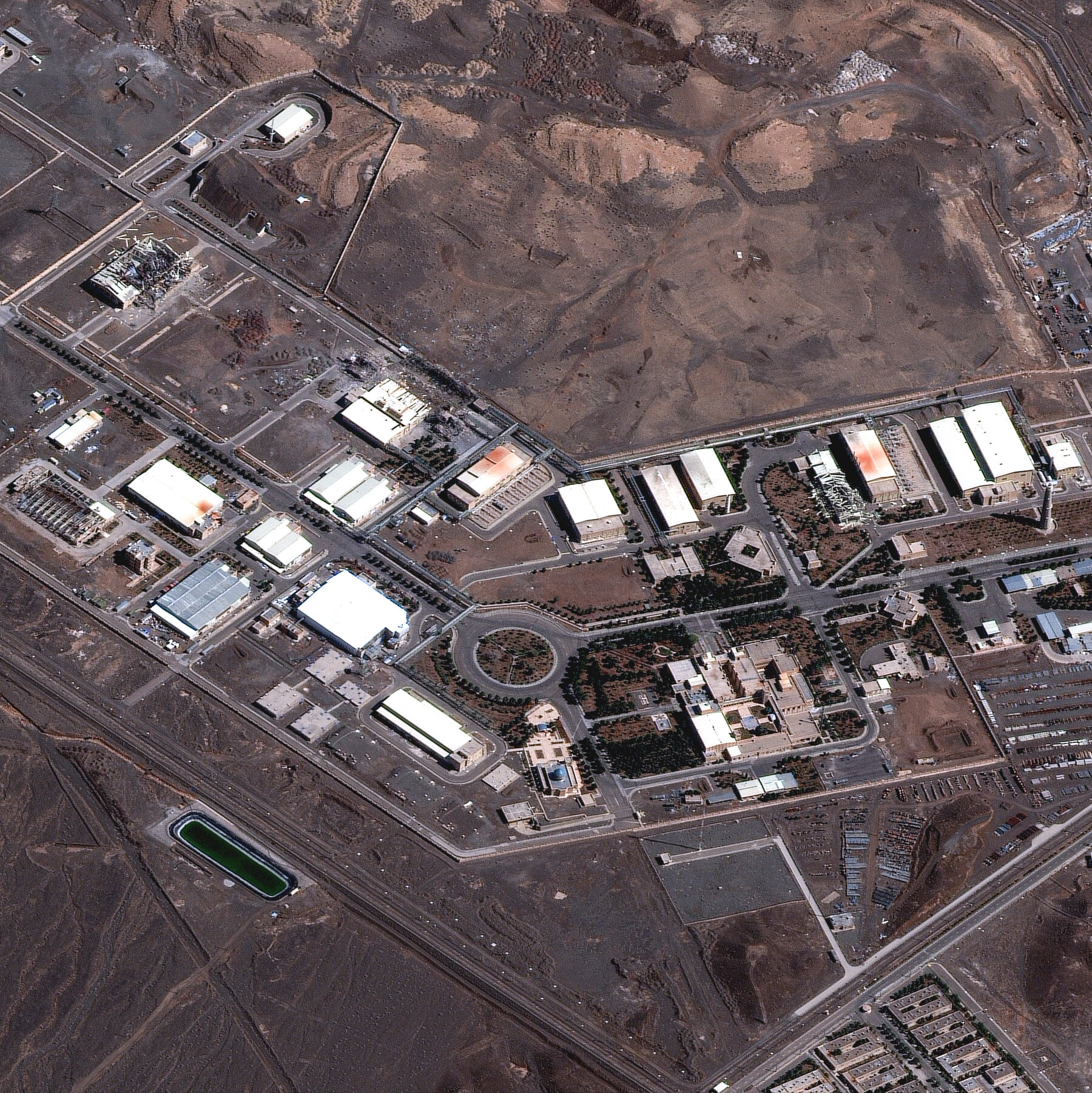
On the evening of 19 May 2026, Rafael Grossi, Director General of the International Atomic Energy Agency, announced he would travel to the Persian Gulf countries. The announcement, carried by Fars News International, was terse — the kind of statement that travels on wires and vanishes into newsfeeds without scrutiny. But terseness, in this context, is itself a kind of message.
The IAEA has long presented itself as a technocratic body: neutral, science-driven, concerned only with verifying that nuclear materials remain in peaceful applications. That self-image has always been partly fictional. The agency operates in member states that have competing geopolitical agendas; its inspections are funded by governments that have strategic interests in what those inspections find; its director general serves a board controlled by the same Western powers that view Iran's nuclear program through a lens shaped by decades of mutual hostility. The question isn't whether the IAEA is biased — it's whether the concept of an unbiased nuclear inspector was ever coherent in a world ordered by competing sovereignties and their allies.
Grossi's announcement comes at a moment when the architecture of nuclear diplomacy in the Gulf is under unusual stress. The Joint Comprehensive Plan of Action — the 2015 agreement that limited Iran's enrichment in exchange for sanctions relief — has been in varying states of collapse since the United States withdrew in 2018. Negotiations to restore it have cycled through multiple rounds without producing a binding agreement. In the background, Israeli officials have made increasingly explicit threats about their red lines on Iranian nuclear capability, while Iranian officials have responded with their own calibrated provocations. Into this environment, an IAEA director general announces a regional tour without specifying which countries, what agenda items, or what timeline for reporting back. The announcement is designed to be read, not to inform.
The Western wire framing of such visits is predictable: the IAEA is there to verify, to monitor, to do the technical work that prevents proliferation. This framing treats inspections as neutral acts — as if the presence of an inspector is inherently stabilizing rather than a political signal in itself. When the IAEA inspects Iran's facilities, it is simultaneously collecting data and performing legitimacy. The act of inspection tells international audiences that the nuclear program is being watched, which serves the interests of Western governments that want evidence of Iranian compliance. It also tells Tehran that the world is watching, which serves interests that Tehran does not share. Inspections are political instruments dressed in technical clothing.
The Persian Gulf states receiving Grossi — Saudi Arabia, the UAE, Qatar, Bahrain — are not passive bystanders in this dynamic. Each has its own relationship with the nuclear question. Saudi Arabia has indicated it would pursue enrichment if Iran did, creating a potential regional cascade. The UAE already operates nuclear power plants under IAEA safeguards, a model that Gulf diplomats point to as evidence that atomic energy and non-proliferation are compatible. Qatar hosts the infrastructure of ongoing nuclear negotiations without being a party to them. These states are acutely aware that Grossi's visit is less about monitoring their programs — which are either nascent or already under safeguards — and more about signaling to a broader audience about the future of nuclear governance in a region where the old frameworks are straining.
There is a counter-narrative, and it deserves structural weight. China and Russia have expanded their nuclear cooperation with Gulf states over the past several years, offering technology, investment, and diplomatic cover that complicates the Western-led non-proliferation regime. This is often framed in Western coverage as a threat to the rules-based order — as if the rules-based order had ever been equally applied to all parties. The Nuclear Non-Proliferation Treaty, which underpins the IAEA's mandate, was negotiated in a world where the five declared nuclear weapons states were given permanent status as legitimate possessors while non-weapon states were required to foreswear acquisition. That architecture was always political. What is changing now is that more states have the capability, the motivation, or the regional context to push back against it — and they are doing so using the same institutional language the West developed.
For the IAEA itself, this presents a legitimization crisis it cannot easily solve. The agency's communications consistently emphasize its role as a verifier of peaceful use — a framing that works when everyone agrees on what peace means. In contested contexts, that assumption collapses. Iran's nuclear program is read as existential threat by Israel and as strategic concern by Gulf states, but as defensive necessity by Tehran. The IAEA cannot adjudicate those readings; it can only produce data that feeds into them. Each inspection report is then filtered through political matrices that determine whether its findings are alarming or reassuring. Grossi is visiting the region not because the inspections will be technically different this time, but because the political need for a neutral-appearing arbiter is acute.
What remains unclear from the available record is what specific deliverables Grossi will seek from his Gulf counterparts. The sources do not specify which countries he will visit, what agreements he will seek to negotiate, or what happens if those negotiations fail. This ambiguity is not incidental — it is the point. A vague announcement generates headlines without committing the agency to specific outcomes. The IAEA, like any institution operating in contested geopolitical terrain, has learned to communicate in ways that preserve flexibility. Grossi will travel to the Persian Gulf countries. What he will say when he gets there, and who will hear it in the terms he intends, remains the kind of question that official announcements are designed not to answer.
The stakes of this visit extend beyond the immediate diplomatic choreography. If the IAEA emerges with visible agreements for expanded monitoring or safeguards inspections, it will be cited as evidence that the non-proliferation regime can still adapt to a multipolar nuclear landscape. If the visit produces no concrete commitments — or worse, visible friction between Grossi and his hosts — it will be read as evidence that the regime's authority is eroding. The agency cannot control either outcome, because its authority rests on assumptions about its neutrality that no longer command universal assent. What Monexus sees in this story is the gap between institutional self-presentation and the geopolitical realities that constrain it — a gap that has always existed, but that is becoming harder to paper over as regional powers assert greater agency in shaping the terms of their own nuclear futures.
Wire provenance
This editorial synthesis draws on the following public wire/social posts:
- https://t.me/FarsNewsInt/34982