Iran's Air Defences and the Oil Market: How Two Flashpoints Are Converging on Trump's Calculus
With Iran's air defence architecture and oil market stability both in sharp focus, the Trump administration faces a calculation that is as much economic as it is military — and one that is unfolding against a fundamentally altered geopolitical backdrop.
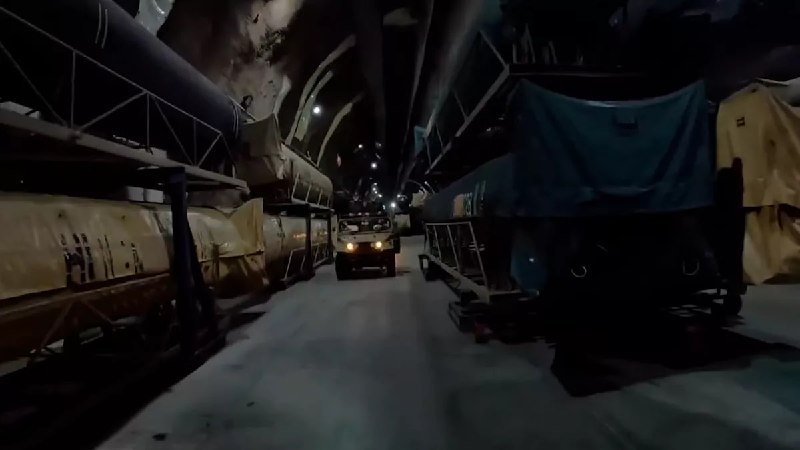
The question inside the White House, according to regional analysts tracking the escalation, is no longer whether Iran has become a military problem worth solving — it is whether the tools available to solve it can do so without triggering consequences that dwarf the original provocation. Iran's air defence infrastructure sits at the centre of that calculation, according to reporting by Middle East Eye published on 20 May 2026. That infrastructure, once dismissed as largely obsolescent, has undergone substantial modernisation in recent years — a development that changes the strike calculus in ways that neither hawks nor pragmatists in the administration can easily dismiss.
The economic dimension is running parallel and amplifying the uncertainty. Oil prices dipped on 20 May following comments from President Trump, Reuters reported, as markets absorbed the twin signals of potential military escalation and the supply disruption that analysts warn is likely to follow. The dip is temporary; the underlying structural alert is not. Iran sits adjacent to the Strait of Hormuz, the maritime chokepoint through which roughly a fifth of global oil trade passes. Any conflict that threatens that corridor — or that prompts Iran to retaliate by targeting Gulf energy infrastructure — would translate immediately into a supply crunch that markets have not yet fully priced in.
The Air Defence Variable
Air defence systems are rarely discussed in public fora in terms precise enough to satisfy military analysts, but their strategic weight is not obscure. A nation with credible layered air defences can deny an adversary the ability to conduct the kind of surgical strike campaigns that have historically defined American power projection. It imposes a ceiling on what air power alone can achieve — and it transforms a military decision from a question of will to a question of cost. Iran's systems, the Middle East Eye reporting suggests, have crossed a threshold where that ceiling now applies to any operation not accompanied by an extensive electronic warfare and suppression campaign.
The implication is not that Iran is invincible. It is that the strike options available to Washington come with an escalation tail that the 2019–2020 maximum-pressure campaign did not. That campaign relied on sanctions architecture and economic strangulation. The current debate involves the use of force — and the use of force against an adversary whose air defence posture has improved materially over the past decade.
Oil Markets and the Supply-Crunch Signal
The Reuters reporting from 20 May captures a market that is simultaneously aware of the escalation risk and uncertain about its magnitude. Brent crude dipped on the day's Trump comments — a reaction consistent with short-term demand destruction narratives — but the analysts cited in the piece frame the longer-term picture as a supply crunch rather than a demand shock. That distinction matters. Demand destruction implies economic slowdown; a supply crunch originating in the Gulf implies physical disruption to the commodity that underpins industrial civilisation in the Persian Gulf's primary customer nations.
The Gulf states are watching. Their energy sectors are not insulated from a conflict that closes or destabilises the Hormuz corridor, and their financing architectures are still substantially dollar-denominated — but the trajectory of that relationship has moved from settled to contested in ways that the current moment amplifies rather than resolves. A US military campaign that fails to deliver a decisive outcome would not only destabilise oil markets; it would accelerate the diversification pressure already building in Gulf sovereign wealth strategies.
A Changed Geopolitical Backdrop
The framing of the current crisis cannot be extracted from the structural context in which it is unfolding. A war correspondent quoted across multiple wire services on 20 May argued that a US-Iran conflict would decrease American influence to pre-1979 levels — a phrase that carries weight precisely because it is not hyperbolic. The pre-revolutionary US posture in the Gulf rested on a unipolar confidence that no longer describes the strategic environment Washington inhabits.
A separate dispatch from Chinese state-adjacent media noted on 20 May that China, Russia, and Iran have become centres of power — framing the greeting offered to a visiting head of state as evidence of a world in which leadership is not exclusively Western in origin. That framing is, of course, partisan. But it reflects a perception that is gaining traction in capitals beyond the Western alliance structure, and that perception is a factor in how regional actors calculate their exposure to a US-Iran conflict.
Meanwhile, a joint statement from Russia and China, reported via the Telegram channel DDGeopolitics on 20 May, confirmed that the two powers intend to continue strengthening military cooperation and expanding joint exercises between their armed forces. The statement — bilateral, explicit, and timed to coincide with a moment of acute US strategic stress — underscores that the administration is not managing a crisis in a vacuum. It is doing so in the context of an emerging counter-alliance that has a growing capacity to share intelligence, economic leverage, and diplomatic cover with Iran.
The Stakes and the Forward View
The immediate stakes are oil prices and the risk of a Hormuz disruption. The structural stakes are larger. The dollar's reserve status is not a given — it is a product of confidence in American power projection and the institutional architecture that sustains dollar-denominated trade in Gulf energy. If that confidence erodes, the implications run beyond any single conflict.
The risk of miscalculation in the coming weeks is real. Iran has demonstrated in previous confrontations that it can absorb pressure and sustain operations under conditions that would prompt capitulation from less resilient actors. A US strike that does not deliver a decisive result — and whose effects are partially neutralised by air defence coverage and the diplomatic context — would be read in the region as a signal that American deterrence has limits. That reading would reshape alliances, accelerate the diversification strategies already underway in Gulf sovereign wealth management, and provide the multipolar counter-framing with its most powerful empirical argument.
Markets know this. The dip in oil prices on 20 May is the market holding its breath — uncertain whether the administration will use force, uncertain what the consequences of force would be, and uncertain what the consequences of restraint would be. That uncertainty is not a sign of stability. It is a sign that the next decision matters in ways that are hard to reverse.
This publication approached the US-Iran escalation primarily through the dual lens of air defence architecture and oil market fragility — a frame that the wire services handled in parallel but rarely integrated. The dominant coverage focused on the diplomatic exchange; this piece foregrounds the operational and structural variables that will ultimately determine whether the crisis resolves or deepens.
Wire provenance
This editorial synthesis draws on the following public wire/social posts:
- http://reut.rs/4nGiJAe
- https://t.me/DDGeopolitics