Iran Bounty and the Collapse of the Trump Nuclear Deal
Tehran's announcement of a bounty on American officials caps a week of escalating threats that has undone whatever diplomatic momentum the Trump administration claimed to have built — and raises questions about whether the administration ever had a genuine deal to offer.
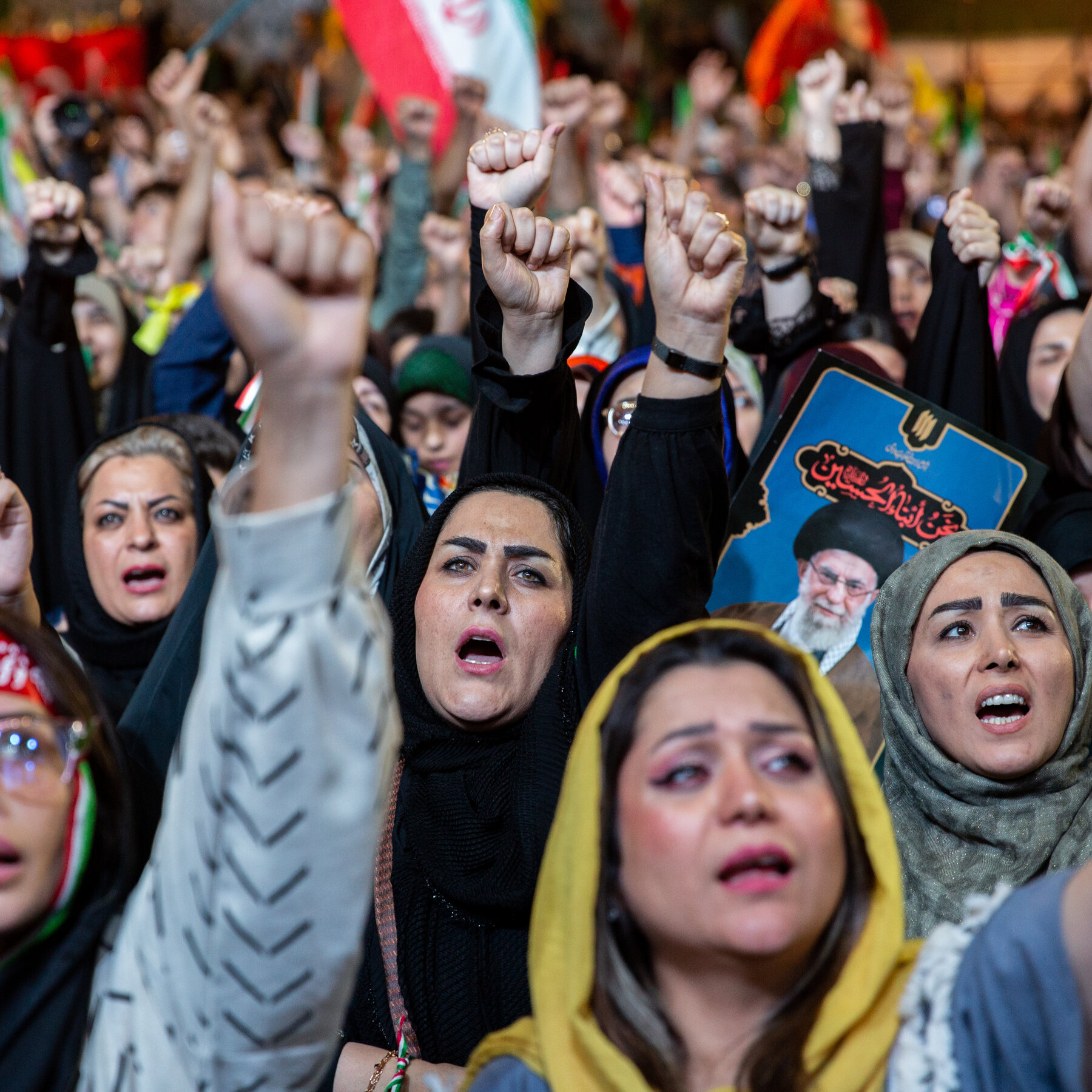
On the same day Tehran announced it would officially place a bounty on the heads of former president Donald Trump and Israeli prime minister Benjamin Netanyahu, the Islamic Republic's foreign ministry issued a statement that could serve as the epitaph for the Trump administration's most vaunted diplomatic initiative: negotiations with Iran, officials said, were effectively over.
The announcement, reported by TSN_ua on 20 May 2026, came after a week in which Iran confirmed it had already struck Israeli military infrastructure in February, publicly threatened to assassinate Trump, and resumed low-enrichment activity at the Fordow facility — a site that, under the 2015 JCPOA agreement, was supposed to remain dormant. The bounty, a figure Iran officials said would be formally announced at a press conference in Tehran, marks a dramatic escalation even by the standards of a relationship that has spent years in open hostility.
For the White House, the timing is awkward. As recently as Tuesday, Trump had told reporters that talks with Iran were in their final stages, a phrase he has used repeatedly over recent weeks to signal progress without committing to specifics. On the same day the bounty became public, an executive order signed by Trump directed the Federal Reserve to review expanding non-bank access to the US payment rails system — a move observers tied to the administration's effort to project economic leverage against adversaries, and to reward domestic crypto and fintech constituencies that have proven useful to the president's political coalition.
The question now is whether the breakdown was inevitable, or whether a miscalculation on one or both sides foreclosed an option that might have existed a month ago.
The Bounty and What It Means
Iran's decision to place a formal bounty on Trump and Netanyahu is not without precedent in the Islamic Republic's public diplomacy. Iranian state-adjacent actors have previously offered rewards for attacks on figures associated with US operations in the region. What distinguishes Tuesday's announcement is the specificity of the targets — two sitting or recently sitting heads of state — and the fact that it coincides with an active US negotiation rather than arriving as a rhetorical flourish during a settled standoff.
According to reporting by TSN_ua on 20 May 2026, Iranian officials described the bounty as a response to the killing of Iranian military personnel in US strikes in February and March. That justification, however, does not fully explain the escalation. Iranian state media has for weeks been publishing material characterising Trump's negotiating posture as bad faith — a view apparently shared by hardliners and pragmatists alike in Tehran. The negotiations, which were conducted through Omani intermediaries, reportedly broke down over the question of how quickly sanctions would be lifted and whether Iran would be required to accept international monitoring of its uranium enrichment programme at sites beyond Natanz.
The Iranian foreign ministry's statement, cited in the same TSN_ua reporting, made clear that the regime no longer views the current US administration as a credible counterpart. "They threatened. We answered," one official was quoted as saying. The language mirrors a pattern visible in Iranian state communications throughout the talks: a consistent effort to position Iran as the party responding to provocation rather than initiating it.
The White House Line
The administration has offered no formal response to the bounty as of the time of publication. Trump, speaking from the Oval Office on Tuesday, reverted to the phrasing that has become his default on Iran: talks are in their final stages. The claim, repeated across multiple platforms and picked up by political accounts on social media, has been made with sufficient regularity over the past six weeks that it has begun to function less as a statement of fact and more as a device to manage market expectations and keep the diplomatic door technically open.
Reporting by Middle East Eye on 20 May 2026 captured the Iranian rebuttal to Trump's claim. Tehran's position is that the talks are not in their final stages — they are over, at least in their current format. Iranian officials described the US approach as "piracy," a reference to the Trump administration's continuation of a maximum-pressure campaign that has included secondary sanctions on Chinese refiners processing Iranian crude and the designation of additional Iranian banking entities under executive orders issued in April.
That framing — of the United States as a coercive actor operating outside international norms — is one Tehran has used before. What is new is the directness of the response. Iranian state media has previously confined its most aggressive rhetoric to proxies and regional actors. The bounty on two American nationals, one of them a former president who may yet return to office, represents a different category of signal.
The Structural Picture
The breakdown of US-Iran talks cannot be understood purely as a failure of diplomacy. It reflects structural conditions that have been present since the Trump administration withdrew from the JCPOA in 2018 — a decision that, whatever its legal justification in the view of the administration, eliminated the architecture that had been keeping Iran's nuclear programme in a box for three years.
The 2018 withdrawal gave Iran a grievance it could rally domestic opinion around, but it also gave the Islamic Republic a reason to accelerate enrichment when it felt sufficiently pressurised. That acceleration has now reached the point where, by the International Atomic Energy Agency's own assessments, Iran has accumulated enough 60-percent enriched uranium that the breakout time to weapons-grade material has been compressed to months rather than years. The talks, in other words, were not occurring in a stable environment. They were occurring inside a crisis that the talks themselves had not resolved.
The question of what the Trump administration actually wanted from the negotiations is one observers have found difficult to answer with precision. The stated goal — a new deal that would replace the JCPOA with something more expansive — was never clearly defined in terms that would allow Iran to understand what concessions would be required and what benefits would be delivered in return. Iranian officials have consistently maintained that the administration was unwilling to offer the sanctions relief necessary to make a deal politically viable for Tehran, while simultaneously demanding that Iran accept constraints that would undermine the independence of its nuclear programme.
That tension — between wanting a deal and not being willing to pay the price of one — may explain the administration's resort to public pressure. Trump, who has made theatrical use of personal relations with foreign leaders throughout his political career, appears to have expected that his personal rapport with Iranian leadership would substitute for the harder work of compromise. It did not.
The executive order signed on Tuesday, directing the Federal Reserve to review non-bank access to US payment systems, is relevant to this picture in ways that go beyond domestic politics. Access to the dollar payment system — the SWIFT network and its successors — has been the primary tool by which the United States has enforced sanctions on Iran and other adversaries. Expanding non-bank pathways for dollar transactions, while framed as an economic-liberalisation measure, has the effect of creating channels through which some of the enforcement architecture becomes harder to maintain. Whether this represents a deliberate attempt to signal flexibility to adversaries or a domestic-political concession to the fintech lobby is not yet clear from the available reporting. What is clear is that it arrives at a moment when the enforcement architecture against Iran has already been weakened by the failure of the talks.
The Regional Context
The collapse of the nuclear talks does not occur in isolation. It happens at a moment when the broader Middle East is experiencing a degree of instability that complicates any clean division between diplomacy and confrontation.
Iran's confirmed strikes on Israeli military infrastructure in February, which Tehran has acknowledged as a response to earlier Israeli actions, represent a new level of direct Iranian-Israeli engagement. The two sides have fought a shadow war for decades through proxies — Lebanese Hezbollah, Palestinian factions, Iraqi militias, Houthi forces in Yemen. The shift to direct strikes changes the risk calculus on all sides. Israel, whose military has been engaged in operations in Gaza and has maintained a significant presence in Syria, now faces a scenario in which Iranian territory is the reference point for Iranian state actions against Israeli assets, rather than proxy networks.
Netanyahu's government has maintained a consistent position throughout the recent negotiations: any deal must include permanent constraints on Iran's enrichment programme, international inspections without advance notice, and a sunset clause that would allow for the re-imposition of sanctions if Iran cheated. Those conditions, which Iran has rejected as incompatible with its sovereignty, are not unreasonable from an Israeli perspective. But they also reflect a position that has never been viable as a starting point for negotiation, because no Iranian government — reformist or hardliner — could accept them without being depicted as capitulating to Western pressure.
The bounty on Netanyahu, while framed as a response to Israeli military actions, serves a function within Iranian domestic politics that should not be overlooked. The Islamic Republic faces an economy under sustained pressure from sanctions, a population that has demonstrated, in periodic waves of protest, that its patience for ideological rigidities is finite, and a military establishment that is under pressure to deliver results in the face of Israeli operations that have degraded Iranian assets in Syria and, reportedly, inside Iran itself. A publicly announced bounty on the Israeli prime minister provides a propaganda win at low cost — it is unlikely to produce any action, but it signals resolve to a domestic audience that has been told for years that its government is under existential threat from US-backed Israeli aggression.
What Comes Next
The available evidence suggests that the current channel of negotiation — conducted through Omani intermediaries, with occasional direct statements from the principals — is closed for now. What replaces it is less certain.
The most immediate risk is escalation along the lines already established: Iranian enrichment activity at Fordow, Israeli responses, and the continuation of a shadow war that has already demonstrated a capacity to break out into direct state-on-state strikes. The United States, under its current posture, is committed to preventing Iran from obtaining a nuclear weapon — a commitment that multiple administrations have made and that Trump has repeated — without having a clear mechanism for doing so short of military action.
A military strike on Iranian nuclear facilities would set back the programme by an uncertain period, depending on the depth and accuracy of the targeting. It would also risk triggering the very escalation that the JCPOA was designed to prevent: an Iranian response through its regional proxy networks, pressure on oil infrastructure in the Gulf, and a crisis in the international shipping lanes that would produce immediate global economic consequences. The administration has shown no appetite for that scenario, but the absence of a diplomatic off-ramp makes it harder to rule out as the only remaining option.
The alternative — accepting an Iran that has a latent nuclear capability but is not actively pursuing a weapon — is one that successive US administrations have privately discussed and publicly refused to endorse. It is also an arrangement that the current Israeli government has declared unacceptable. The space between those positions and Iran's requirement for a deal that recognises its right to enrichment under IAEA supervision has not narrowed through eighteen months of negotiation.
What is clear is that the Trump administration's characterisation of the talks as being in their final stages has collided with a different reality on the ground. Iran has decided that it is not going to get a deal that it can present to its domestic audience as a win. The United States, correspondingly, has been left with a policy that offered leverage it was unwilling to exercise and concessions it was unwilling to make. The bounty, in that context, is less an opening move than a closing statement.
The sources do not specify what figure Iran has placed on the bounty, nor have Western intelligence agencies issued formal assessments of the credibility of the threat. What is verifiable is that the announcement arrived on the same day the negotiation was declared dead by one of the parties, and that the gap between Washington's public乐观主义 and Tehran's public hostility has not been this wide since the period immediately following the 2018 withdrawal.
This publication covered the Iran talks through the lens of diplomatic collapse and regional escalation rather than the lens of American domestic politics — a choice that reflects the structure of the available reporting, which placed the break with the talks at Tehran rather than Washington.
Wire provenance
This editorial synthesis draws on the following public wire/social posts:
- https://t.me/TSN_ua/24518
- https://t.me/TSN_ua/24514
- https://x.com/middleeasteye/status/1923471890124587012
- https://x.com/unusual_whales/status/1923412087391916052
- https://t.me/CryptoBriefing/28471
- https://en.wikipedia.org/wiki/Joint_Comprehensive_Plan_of_Action
- https://www.state.gov