Iran Calls Trump's Ultimatums 'Ridiculous' — And Means It
Tehran's Foreign Ministry spokesperson rejected Washington's latest demands as absurd rather than threatening — a rhetorical shift that signals something more deliberate than defiance.
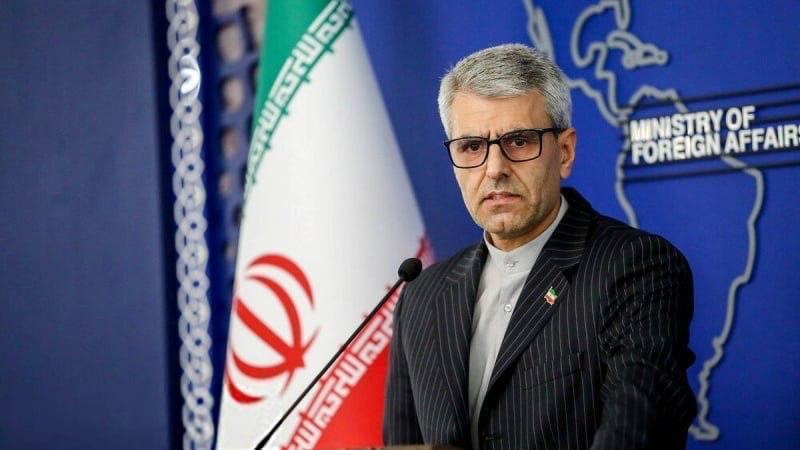
When Esmail Baqaei, Iran's Foreign Ministry spokesperson, described the Trump administration's most recent demands as "ridiculous" on 20 May 2026, he chose a word that carries more calculation than it might first appear. Diplomatic vocabularies are rarely accidental. "Ridiculous" is not "unacceptable" — a phrase that leaves room for negotiation — nor is it "dangerous," which would frame the conversation as a matter of existential stakes. It is a word designed to diminish, to strip the ultimatums of the gravity their issuers intend. And in doing so, Tehran has revealed something about how it currently views the balance of leverage in its standoff with Washington.
The statement, published via the Tasnim News Telegram channel on 20 May at 16:54 UTC, marks the latest exchange in a diplomatic exchange that has intensified since the United States resumed maximum-pressure campaigning against Tehran in early 2026. That campaign has included expanded sanctions on oil-sector intermediaries, designation listings against individuals and entities accused of supporting Iran's nuclear programme, and repeated White House declarations that a new agreement must be reached on terms the previous Joint Comprehensive Plan of Action (JCPOA) never contemplated. Iranian officials have consistently characterised these overtures as coercive, but Baqaei's response on Tuesday represented something of a rhetorical escalation — a move from rejection to ridicule.
The Anatomy of a Dismissal
To call an ultimatum ridiculous is not merely to disagree with it. It is to suggest that the party issuing the demand has either misapprehended the situation, overestimated their own leverage, or fundamentally misunderstood what they are asking for. That is a deliberate communicative act, and its audience extends well beyond the immediate counterpart in the conversation. Baqaei is speaking simultaneously to Washington, to the Iranian domestic political class, and to the broader international community that Tehran hopes will eventually prove receptive to its grievances against American policy.
Iranian state media — including Tasnim, which functions as a semi-official outlet close to the Islamic Revolutionary Guard Corps — has consistently framed Washington's approach as designed to fail. The argument, made in various forms across Iranian government communications over the past eighteen months, is that the United States is not genuinely seeking a diplomatic resolution but rather a pretext for escalating confrontation. If that framing holds in Tehran's own calculus, then calling the ultimatum ridiculous is the logical response: it signals that Iran does not take the demands seriously enough to engage with them substantively.
That reading sits in tension with what Western officials have argued publicly. American representatives have characterised the current proposals as flexible, noting that the administration has shown willingness to accept partial agreements and timeline extensions in exchange for verifiable nuclear_constraints. The gap between those representations and Tehran's characterisation of them as "ultimatums" is not merely semantic — it reflects fundamentally different assessments of what a workable deal would look like and who holds the stronger position in the negotiation.
What the 'Ridiculous' Frame Conceals
The choice of language matters in diplomatic exchanges, but so does what it brackets out. By describing the demands as ridiculous, Baqaei avoids engaging with their substance. He does not specify which elements of the American position he finds absurd, nor does he offer an alternative framework for what a negotiated outcome might look like. That absence is itself informative. It suggests that Tehran is not currently in a phase where it wishes to signal openness to compromise — that the political calculus inside Iran favours holding firm rather than making the first significant concession.
That calculus has internal dimensions. Iran's president, Masoud Pezeshkian, has repeatedly expressed preference for a return to the JCPOA framework, but he operates within a political system where hardliners retain significant influence over national security decisions. Any move toward significant concessions would face opposition from factions that have characterised the original nuclear deal as a strategic mistake. Baqaei's dismissal functions, in part, as a signal to those domestic constituencies: Tehran is not about to capitulate under American pressure.
It also functions as a message to regional partners. Iran has cultivated relationships across the Middle East — with Hezbollah, with Iraqi paramilitary groups, with the Houthis — that give it leverage beyond formal diplomatic channels. By dismissing Washington's ultimatums as absurd, Tehran signals confidence that the network of regional relationships it has built provides it with sufficient insulation from economic pressure to outlast the current American approach.
The American Calculation
The Trump administration's position, as outlined in repeated public statements from senior officials in 2026, is that the nuclear programme must be constrained permanently and that sunset provisions — the time-limited restrictions that were a feature of the original JCPOA — are no longer acceptable. The administration has argued that Iran used the years of sanctions relief under the original deal to expand its enrichment capacity and develop delivery systems that the agreement never adequately addressed.
That argument has found traction in parts of the Gulf region, where Saudi Arabia and the UAE have been watching the negotiations with evident concern. Gulf states have publicly welcomed American pressure on Iran while privately expressing anxiety that an unresolved standoff could destabilise the region further. Their interest is in a deal — any credible deal — that removes the nuclear question from the table. Tehran's dismissal of Washington's current demands does not advance that interest.
The administration, for its part, has shown limited appetite for the kind of direct, high-level engagement that characterised the final months of the original JCPOA negotiations in 2015. There have been no announced plans for a presidential envoy to travel to Tehran, and back-channel communications — which intelligence sources have indicated are ongoing — have not produced visible results. The ultimatum approach, in this context, appears designed to either force a shift in Tehran's position or to build the domestic and international case for more aggressive action should negotiations fail entirely.
What This Means Going Forward
Baqaei's statement on 20 May does not close a door — Iranian officials rarely make statements that close doors entirely — but it narrows the immediate pathway toward a negotiated resolution. The language of ridicule suggests that Tehran has decided the current American administration is not a credible negotiating partner, at least not on the terms currently on offer. That assessment could change, but it will not change because Washington adds additional sanctions or issues further public demands.
The more consequential variable may be the domestic politics inside Iran. Pezeshkian's government has shown, on multiple occasions, that it is capable of pragmatic gestures when the political environment permits. Whether that environment permits a significant diplomatic move before the end of 2026 depends on factors that remain difficult to assess from the outside — the strength of hardliner opposition, the performance of an economy under continued sanctions pressure, and the evolution of regional dynamics, particularly in Syria and Yemen, where Iranian-linked forces continue to operate.
The next several weeks will test whether Tuesday's dismissal was a opening position in a longer negotiation or the beginning of a more prolonged confrontational phase. What is clear is that Tehran has decided to push back — firmly, publicly, and in terms that leave little room for misinterpretation. Whether that resolve proves sustainable will depend on pressures that neither Baqaei nor any other Iranian official fully controls.
This publication framed Baqaei's dismissal as a calculated rhetorical move rather than a reflexive reaction — a framing that distinguishes it from wire coverage that led with the provocative language alone.
Wire provenance
This editorial synthesis draws on the following public wire/social posts:
- https://t.me/tasnimnews_en/45782