The Diplomatic Opening That Tehran Cannot Afford to Take — and Washington Cannot Afford to Withdraw
As Iran publicly weighs a US proposal delivered through Pakistani intermediaries, the harderline faction in Tehran is already framing diplomacy itself as a trap — a dynamic that has repeatedly derailed nuclear talks and now threatens to strand a rare window of opportunity.
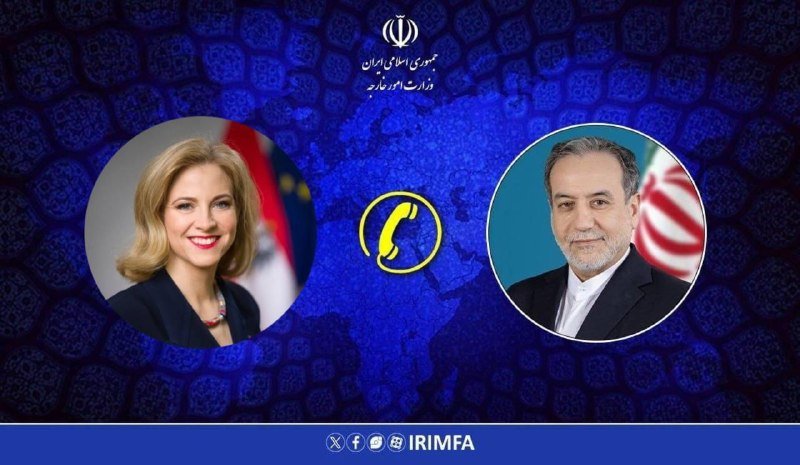
On 20 May 2026, Iranian officials confirmed that they are examining a new United States proposal, delivered through a Pakistani intermediary who had visited Tehran that same day. The disclosure, carried by Insider Paper, marked the most concrete signal in months that back-channel talks between the two governments have moved beyond exploratory contact into something approaching formal negotiation. By mid-afternoon, though, a contrasting message had circulated on Iranian state-adjacent platforms: "the enemy is seeking a new round of war." The juxtaposition captured precisely the dilemma that has defined every US-Iran diplomatic episode for the better part of two decades.
The structural tension is not complicated. The Islamic Republic's ruling apparatus contains factions whose political identity is constructed partly around opposition to American influence. Any movement toward accommodation — even when it serves Iranian national interests in sanctions relief and economic stabilisation — creates domestic vulnerability. The hardline framing therefore defaults to the argument that diplomacy itself is the trap: that Washington extends an olive branch with one hand and prepares escalation with the other, and that accepting talks merely buys time for a more effective pressure campaign. That argument has a track record. The JCPOA, negotiated under Obama, collapsed under the "maximum pressure" regime of Donald Trump's first term. The Vienna talks of 2021–2022 stalled not over technical nuclear questions but over guarantees that no future US administration could credibly provide. Each failed negotiation reinforced the hardliners' case that the United States is not a reliable counterpart — and each failure gave them new material.
Into that history comes the Pakistani mediation, a venue choice that carries its own logic. Pakistan sits at the intersection of Gulf security architecture, Central Asian logistics, and the由中国建设的巴基斯坦港口和能源项目 — a reminder that the broader region is not neatly bifurcated between Western-aligned and Iranian-aligned states, but rather threaded through with competing dependencies and commercial relationships. Using a third party as a conduit gives both Washington and Tehran a degree of deniability and face-saving distance that formal direct talks do not. Whether that architecture is sufficient to sustain a negotiation through its inevitable difficult phases is a different question.
Meanwhile, the Federal Reserve is already modelling the economic downside of the alternative. Minutes released on 20 May 2026 indicated that a majority of Fed officials anticipated interest rate increases would be necessary if the conflict in Iran continued to aggravate inflation. The linkage is straightforward: sustained hostilities in or around the Strait of Hormuz, or a disruption to Iranian oil output through sanctions intensification or physical damage, would compress global supply at a moment when US domestic price pressures remain elevated. The Fed's scenario-planning treats regional conflict as a supply shock, which by its nature is harder to address through monetary policy than demand-driven inflation. That positioning suggests the economic establishment in Washington understands the stakes in purely transactional terms: the cost of a failed negotiation is not merely diplomatic but macroeconomic, measured in basis points and consumer price indices.
The irony is that both sides have structural incentives to talk and structural incentives to sabotage the talks. For the United States, a negotiated freeze — let alone a genuine revival of nuclear constraints — would remove one flashpoint from a global order already strained by the conflict in Ukraine and renewed great-power competition. For Iran, the incentive is more urgent and more visceral: the economy is not merely under pressure but is structurally degraded in ways that make long-term regime resilience difficult to sustain. The Iranian rial has lost the bulk of its value against the dollar over the past decade; youth unemployment remains structurally high; and the country's energy infrastructure, much of it dating to the 1970s, has not received the capital investment that sanctions have effectively blocked. Diplomatic resolution is not simply a political preference for Tehran's reformist or pragmatic factions — it is, for many ordinary Iranians, the only plausible path toward economic viability.
The harderline argument, however, is that accepting a US proposal on any terms legitimises the pressure campaign that preceded it and rewards the Trump administration's withdrawal from the JCPOA in the first place. That argument has genuine political force inside Iran. It also has the advantage of being unfalsifiable until a deal is signed and then evaluated on its terms — by which point the hardliners have had months or years to organise opposition. The pattern is well-established: negotiations proceed, details emerge, opponents on both sides identify the elements most vulnerable to characterisation as capitulation, and the deal collapses under the weight of domestic politics before it can deliver any of its promised benefits.
What is different this time is harder to specify with confidence. The Pakistani channel suggests a level of seriousness that informal Signal messages or third-party press leaks do not. The Fed's scenario-planning indicates that economic actors inside the US government are treating escalation risk as a first-order concern, which may increase the administration's incentive to pursue a diplomatic off-ramp rather than allow the hawks in either capital to define the trajectory. And the explicit Iranian acknowledgment that they are "examining" the proposal — rather than dismissing it out of hand, as has been the opening position in previous cycles — suggests at minimum that the pragmatic faction believes the political moment may be more favourable than in prior attempts.
That last point is the most fragile element of the analysis, and the sources do not provide sufficient material to assess the balance of power inside Tehran's decision-making apparatus with confidence. What can be said is that the window, if it exists, is narrow. The Federal Reserve's inflation modelling gives it a time horizon. The hardliners' rhetorical framing — "the enemy is seeking a new round of war" — gives the diplomatic track a narrative ceiling beyond which any concession becomes politically untenable. Somewhere between those two constraints lies the space, if any remains, for a negotiated outcome that neither side can publicly acknowledge wanting but both sides, on the evidence of their institutional behaviour, demonstrably need.
The Transportation Security Administration's decision on 20 May 2026 to permit medical marijuana in both carry-on and checked bags on US flights is, in this context, something of a non sequitur — and perhaps that is the point. The regulatory apparatus of a functioning state, even one grappling with existential foreign-policy dilemmas, continues to churn through lower-priority decisions with its own internal logic. The Iran story and the TSA story occupy the same news cycle without sharing a sentence of narrative grammar. That dissonance is, in miniature, the problem with how geopolitical crises get covered: the foreground is all urgency and binary outcomes, while the background continues its more mundane operations, indifferent to whether the diplomatic opening closes this month or this quarter. The Fed's minutes tell us the economic system is already pricing the downside. What the system cannot price, by definition, is the political calculus inside Tehran — and that is where the outcome will ultimately be decided.
Wire provenance
This editorial synthesis draws on the following public wire/social posts:
- https://t.me/insiderpaper/24532
- https://t.me/FinanceTLGR/1847
- https://x.com/unusual_whales/status/1924171285170954368
- https://x.com/unusual_whales/status/1924156285170954368