Iran Declares Controlled Maritime Zone in Strait of Hormuz, FAO Warns of Global Food Shock Risk
Tehran has established a new Persian Gulf Strait Authority and defined a controlled supervisory zone in the world's most critical oil shipping lane, triggering a UN food agency warning that prolonged disruption could trigger price spikes and supply shortages within a year.
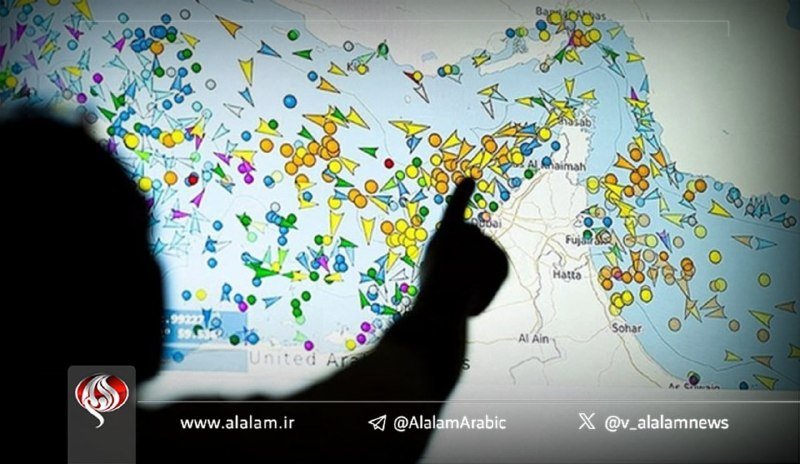
Iran has established a new maritime authority and declared a controlled supervisory zone covering the Strait of Hormuz, the narrow Gulf waterway through which roughly a fifth of the world's oil passes. The announcement, made on 20 May 2026 by the Persian Gulf Strait Authority — a body newly created under Iran's control — requires all vessels transiting the channel to obtain prior authorization. Within hours of the declaration, the United Nations Food and Agriculture Organization warned that even temporary disruption to Hormuz traffic could cascade into a global agrifood price crisis within twelve months.
The move represents Tehran's most direct assertion of jurisdictional control over the strait since Iran's Revolutionary Guard naval operations became a persistent feature of Gulf security over the past decade. Unlike previous incidents — tanker seizures, brief detentions, or verbal warnings about "reciprocal" action — this announcement carries the institutional weight of a formal regulatory body and an official map of the zone under Iranian supervision.
What Tehran Announced — and Why It Matters
The Persian Gulf Strait Authority published an official map on 20 May 2026 defining the supervisory management zone under Iran's control in the Strait of Hormuz. According to the announcement, all ships transiting the waterway must now seek prior authorization from the Iranian authority — a requirement that, if enforced, would directly conflict with the longstanding principle of unimpeded passage that has governed the strait since at least the 1980s.
The timing is deliberate. The announcement comes amid heightened regional tension following Israeli operations across the Middle East and sustained US naval presence in the Gulf. Tehran has long argued that the strait's geography — a channel narrowing to roughly 34 kilometers at its narrowest point — gives Iran natural leverage over any adversary dependent on Gulf oil exports. The formalization of that leverage into a named regulatory body elevates it from episodic pressure tactic to standing policy.
The Iranian state-aligned PressTV channel confirmed the authority had defined the supervisory zone, describing the measure as an exercise of sovereign jurisdiction over waters Tehran considers its lawful management territory. This framing — framing the move as "management" rather than "blockade" — appears calculated to test the limits of international tolerance while preserving deniability about hostile intent.
The FAO Warning: Food Security, Not Just Energy
The FAO warning, published on 20 May 2026, is the most concrete articulation yet of the economic stakes beyond oil. The Rome-based agency stated that closure or significant disruption to Hormuz shipping could trigger an "agrifood shock" — a term it reserved for supply disruptions severe enough to destabilize food import chains for countries reliant on agricultural inputs transit through the Gulf.
The mechanism is indirect but significant. Grain shipments, fertilizer components, and processed food products flow through the broader Gulf commercial network alongside hydrocarbons. Any prolonged restriction on tanker and cargo traffic would not only spike crude prices — it would ripple upward through the food supply chains of import-dependent nations across South Asia and sub-Saharan Africa.
The FAO's timeline — a "crisis within a year" if disruption persists — suggests the agency models a closure scenario as survivable in the short term but economically catastrophic if sustained. The phrasing is notable: the agency is not warning of an immediate shortage but of a compounding fragility that builds as reserves draw down and alternative routes prove insufficient.
Counter-Narrative: Leverage Without Blockade
The announcement also carries an internal logic that complicates the alarmist reading. Tehran has, over years, refined its strategy of asymmetric signaling — measures that generate maximum anxiety in Western capitals without triggering the military response that a full blockade would invite. The PGSA declaration fits this pattern.
For Iran, the authority represents a mechanism to monitor, inspect, and selectively impede rather than to shut down entirely. A blanket Hormuz closure would be self-harming: Iran itself depends on Gulf exports for government revenue and economic survival. The more credible threat is episodic enforcement — sudden authorization requirements, delayed inspections, or detentions framed as regulatory compliance — calibrated to extract diplomatic concessions without crossing the threshold that triggers American or coalition military action.
This reading does not dismiss the danger. It reframes it: the risk is not a sudden Hormuz shutdown but an escalation ladder where each rung gives Iran slightly more leverage, and where miscalculation — either Iranian overreach or an overly assertive Western response — could produce the very closure the FAO fears.
Structural Stakes: Who Bears the Cost
The Hormuz transit fee question — implicit in the authorization requirement — touches interests far beyond the immediate combatants. Japan, South Korea, and several Southeast Asian economies depend on Gulf crude for energy security. European refineries run on Iranian-adjacent sour crude grades whose alternative supply chains would take months to reconfigure. China, Iran's largest oil customer, has watched Hormuz transit policy with the particular vigilance of a power whose industrial base runs on uninterrupted energy imports.
The FAO's framing is significant precisely because it shifts the stakes beyond the energy market. When a UN food agency issues a price-shock warning tied to a specific maritime chokepoint, it recalibrates the political pressure. Gulf states with significant food import dependencies — Saudi Arabia, the UAE, Qatar — now have a direct interest in de-escalation that did not exist when the conversation was purely about barrels of oil.
The structural reality is that Hormuz's chokepoint geography is the underlying asset. Neither the authority's declaration nor Western counter-pressure can alter the strait's physical dimensions. What changes is the degree to which the management of that chokepoint becomes an instrument of policy rather than a shared infrastructure commons.
Forward View: The Authorization Test
The next seventy-two hours will determine whether the PGSA announcement is a standing regulation or a negotiating position. Iranian state media's framing treats it as the former; Western naval planners are likely treating it as the latter. The critical variable is enforcement: whether commercial shipping companies — who operate vessels flagged to Western, Asian, and Gulf-state owners — will comply with prior authorization requirements or test Iranian resolve by transiting without it.
If traffic continues largely unobstructed, the declaration functions as a sovereignty signaling exercise with limited operational effect. If Iranian patrol assets begin boarding, delaying, or impounding vessels that proceed without authorization, the international community confronts a de facto Iranian control mechanism over the world's most critical maritime transit point. The FAO's twelve-month timeline then begins to look less like worst-case modeling and more like a conservative estimate.
Monexus coverage emphasizes the FAO food-security dimension — a frame largely absent from Western wire reporting, which focused on energy market reaction and US State Department statements. The desk notes that the gravitational pull of the Hormuz story toward oil-price headlines tends to obscure the downstream food-import exposure that makes this situation geopolitically distinct from earlier Gulf confrontations.
Wire provenance
This editorial synthesis draws on the following public wire/social posts:
- http://reut.rs/3PuLW4u
- https://t.me/BellumActaNews/4821
- https://t.me/presstv/31442
- https://t.me/ClashReport/28901
- https://t.me/GeoPWatch/11823