Iran's Market Reopens. The Question Is Whether Anyone Can Afford to Trade
Tehran has cracked open its shuttered stock exchange after nearly three months. The restrictions on who can trade and in what suggest a regime managing collapse, not recovery — while Russia and the Fed draw their own conclusions.
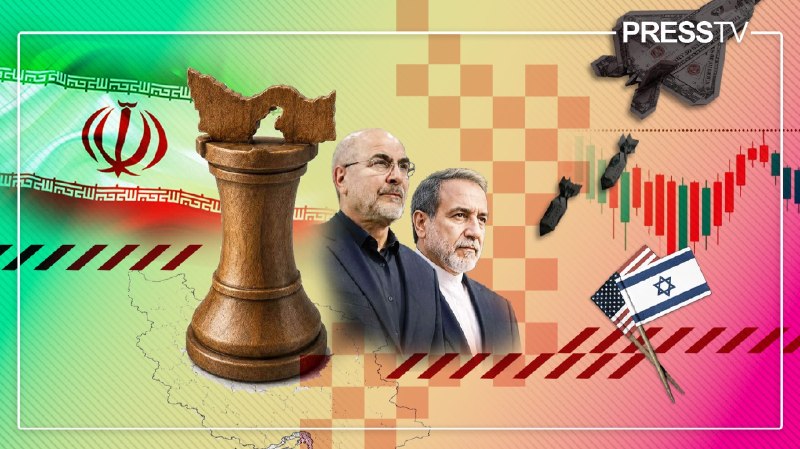
On a date that will read ambiguously in future economic histories — 20 May 2026 — Iran's stock market opened its doors for the first time in nearly three months. The trading floor, such as it was, bore little resemblance to a functioning capital market. Participation was limited to cash equities. Investor restrictions were reinstated. The controlled conditions were not the result of a policy decision reached after careful deliberation; they were the conditions under which any trading was possible at all. The broader Tehran market had been effectively closed since the Israel-Iran exchange of strikes in early March destabilised the financial architecture of a country already operating under some of the world's most comprehensive sanctions.
The timing matters. It is not simply that Iran has been cut off from global capital flows for decades — it is that the war has compressed the timeline for economic survival into something measured in weeks rather than quarters. When a government chooses to reopen a market under conditions that deliberately limit its own liquidity, it is not signalling confidence. It is signalling that the alternative — permanent closure — carries costs it cannot yet absorb. What the reopening actually reveals is the depth of the emergency, not the emergence from it.
The geopolitical shockwave from the conflict has touched every node of the regional and global economy. Russian oil and gas revenues are projected to rise 39 percent year-on-year in May, according to Reuters reporting on Finance Ministry data. The mechanism is straightforward: disrupted Iranian supply and heightened insurance and freight premiums across the Persian Gulf have tightened an already strained global market, allowing Moscow to sell at higher differentials into buyers who can no longer access Tehran's cargoes. That 39 percent figure is not a structural advantage built over years. It is a war premium, and it is accruing to the government that has most directly benefited from the conflict's escalation.
Simultaneously, the Federal Reserve's latest meeting minutes — reported on 20 May 2026 — show a majority of officials anticipating that further interest rate increases would be necessary if the Iran conflict continues to aggravate inflation. The connection is direct: higher energy prices filter through to goods prices, and goods price inflation has proven the most stubborn component of the US inflation picture for two years running. A sustained conflict that keeps oil above ninety dollars a barrel makes the Fed's task measurably harder, and the minutes indicate that the committee has incorporated that scenario into its forward guidance. Markets that had been pricing in a benign rate path for the second half of 2026 now face a more uncertain trajectory.
Russia, for its part, has signalled a willingness to participate in US-Iran talks, according to a post from the Unusual Whales tracking feed on 20 May 2026. Moscow's framing — that it is prepared to help facilitate negotiations — places Russia at the centre of a diplomatic process that would, if successful, affect both the energy supply dynamics that are currently inflating its own revenues and the broader regional stability that the conflict has disrupted. The offer is not purely altruistic. A negotiated de-escalation would restore Iranian supply to global markets, easing the price environment that has boosted Russian fiscal receipts. It would also give Moscow a visible role in Middle Eastern diplomacy at a moment when its influence in Europe is constrained. The offer to mediate is also, implicitly, an acknowledgement that the status quo serves Russian interests — and that those interests may diverge from a prolonged hot conflict.
The Iranian regime's own public posture has been defiant. Tehran has characterised the Western posture as that of an enemy seeking a new round of war, according to statements reported by the Unusual Whales feed on 20 May 2026. That framing — external aggression, existential threat, resistance economy — has been the consistent official narrative for years. What has changed is the material context. The stock market closure was not a symbolic gesture. It reflected real incapacitation: banking system pressures, liquidity constraints, correspondent banking relationships disrupted even further by secondary sanctions designations that followed the March strikes. Reopening under restriction is a way of saying that the state still maintains nominal control over financial infrastructure while acknowledging that full normalisation is impossible under current conditions.
The restrictions in place — cash equities only, investor caps, no derivatives or margin activity — tell their own story. Derivatives markets require counterparties, clearing infrastructure, and confidence that settlement will occur. Margin activity requires leverage, and leverage requires capital that is not frozen in sanctions designations. Cash equities, by contrast, require nothing more than a buyer, a seller, and a price at which to meet. By reducing the market to its most primitive form, Tehran has created a floor for trading activity that can coexist with maximum disruption to everything else. Whether anyone chooses to participate at meaningful scale is a separate question. The sources do not specify trading volumes on the first day of reopening, and early-session data from Iranian markets under sanctions conditions is rarely released in real time.
The 39 percent jump in Russian energy revenues deserves more scrutiny than it has received in Western wire coverage, which has largely framed it as a geopolitical windfall rather than a structural dependency. Moscow's budget for 2026 was constructed on an oil price assumption that was set before the March escalation. The revised fiscal picture — significantly better than projected — creates room for the Russian government to absorb pressure on other expenditure lines, whether military or social. It also raises questions about the incentive structure: does a Russia that profits from elevated prices have a structural interest in a conflict that keeps those prices elevated? The question is not rhetorical. It is a straightforward reading of the financial data. The regime in Moscow has demonstrated throughout the Ukraine war that it manages conflicts according to cost-benefit calculations that Western analysts have historically been reluctant to attribute to it. The same calculus applies here.
The Fed's concern about inflation from conflict-driven supply disruption is analytically sound but politically inconvenient. The United States has imposed extensive sanctions on Iran for decades and has, since the March escalation, tightened secondary sanctions enforcement on entities perceived to be facilitating Iranian oil sales. The logical consequence — fewer Iranian barrels on the market, higher global prices — is the same outcome whether it results from sanctions policy or from armed conflict. The Fed's minutes do not draw this connection, and it would be politically awkward for them to do so. But the connection is structurally present, and it means that the domestic cost of the conflict is being borne in part by American consumers through higher prices at the pump and downstream goods inflation that keeps monetary policy tighter for longer than it would otherwise need to be.
What remains genuinely uncertain is the trajectory of the conflict itself. The sources do not provide a basis for assessing whether the March exchange of strikes represents a ceiling or a floor on hostilities. Iran has characterised the Western posture as aggressive and signalled that it perceives a threat of escalation. Russia has offered to facilitate talks, which suggests Moscow believes the moment is ripe for diplomacy — or that it wants to be seen as the party that tried. The stock market reopening, under the conditions described, is a symptom of a economy under acute stress. Whether those conditions improve, persist, or worsen depends on variables — diplomatic outcomes, military calculations, energy demand seasonality — that the available evidence does not resolve.
The structural picture is clear enough. Iran is not experiencing a recession in the ordinary sense. It is experiencing sanctions compression amplified by active conflict, which produces a different economic shape: not falling output across the board but selective collapse in externally-facing sectors alongside survival mechanisms in those parts of the economy that can function without international integration. The stock market, which by definition requires investors who expect future returns, sits at the intersection of external exposure and future expectations. Its restricted reopening tells you that the regime wants to signal continuity. What it actually demonstrates is the severity of the break.
What comes next will depend on two interacting dynamics. The first is diplomatic: whether the US-Iran talks that Russia has offered to facilitate produce any substantive de-escalation, and on what timeline. The second is economic: whether the global oil market adjusts to the current supply disruption through demand destruction — a recession in major economies — or through supply substitution that restores some equilibrium even without Iranian crude returning to the market. Both paths have consequences for Tehran. Neither path returns Iran to the pre-war economic baseline.
The stock market reopened on 20 May 2026. The men and women who returned to the trading floor in Tehran did so under conditions that would be unrecognisable to investors in any other major economy. The restrictions are not a temporary inconvenience. They are a description of what is possible under current constraints. The regime is managing collapse in the specific, not pretending it has ended.
This desk noted that wire coverage of the Iranian market reopening focused primarily on the technical mechanics of the trading resumption, while Monexus prioritised the structural conditions — sanctions architecture, Russian revenue dynamics, Fed policy spillovers — that make the reopening itself a diagnostic of the regime's options rather than a signal of recovery.