Israel Strikes Multiple Southern Lebanon Targets as Cross-Border Exchange Escalates
Israeli military aircraft and artillery struck at least four locations across southern Lebanon on Tuesday, in what appears to be the most concentrated single episode of cross-border action in recent weeks. The strikes hit towns in the Nabatieh and Tire districts within a 30-minute window on the morning of May 20, 2026.
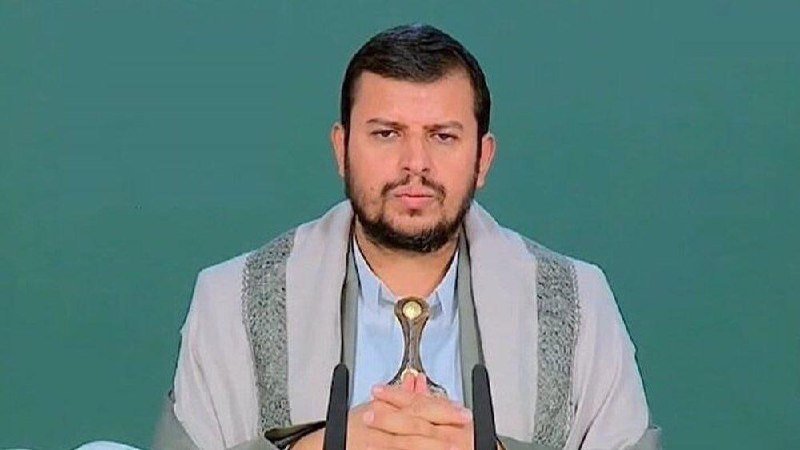
Israeli military aircraft and artillery struck at least four locations across southern Lebanon on Tuesday, in what appears to be the most concentrated single episode of cross-border action in recent weeks. The strikes hit towns in the Nabatieh and Tire districts within a 30-minute window on the morning of May 20, 2026.
The Israeli raids targeted Al-Duwair — specifically a pool facility in that town — in the Nabatieh district, according to initial reports. Artillery bombardment struck Siddiqin, also in the Tire region. Additional air strikes struck Burj Rahal and the Ghandourieh area, with secondary impacts reported between Burj Rahal and Abbasiya. The incidents were logged between 07:58 UTC and 08:27 UTC on May 20, 2026.
The Immediate Sequence
The clustering of strikes across distinct locations — Al Duwair pool, Burj Rahal, Ghandourieh, Abbasiya — within a compressed timeframe points to deliberate, coordinated targeting. Siddiqin was struck by artillery at 07:58 UTC, before the air strikes that followed at 08:22 and 08:23. That ordering — opening with indirect fire before employing aircraft — is consistent with an operation designed to establish a security perimeter before close-range attack runs.
Israeli military spokespeople have not yet issued a statement confirming or contextualising the strikes as of this publication. The Lebanese Armed Forces have also declined comment pending assessment. The timeline of the reports — sourced to regional wire services operating in Arabic — carries the caveat that casualty figures, if any, remain uncorroborated by independent observers.
The Context of Ongoing Exchanges
The strikes land against a backdrop of sustained, if fluctuating, cross-border hostilities that have persisted since October 2023, when the Israel-Hamas war in Gaza began. Hezbollah has characterised its operations along the Blue Line as resistance in solidarity with Gaza. Israel has maintained that Hezbollah's entrenchment in southern Lebanon constitutes an existential threat regardless of events in Gaza, and has reserved the right to act pre-emptively against what it defines as terrorist infrastructure.
That framing — resistance versus pre-emption — structures how the same facts are read in Beirut and Tehran, and how they are read in Tel Aviv and Washington. Both sides have invoked international law selectively. Both have at various points signalled willingness to negotiate, then returned to military action when diplomatic off-ramps closed. The strikes of May 20 do not appear to be an anomaly in that pattern; they appear to represent a decision, by one or both parties, that the diplomatic window has narrowed enough to justify an escalation in the targeting tempo.
Israeli security assessments have repeatedly cited Hezbollah's weapons capacity, tunnel networks, and forward-deployed personnel as justification for operations that would not be contemplated if the group remained east of the Litani River under existing UN Security Council resolutions. That underlying tension — unresolved since 2006 — provides the structural condition for episodes like the one reported on May 20.
Competing Narratives and Their Limits
Regional media, including outlets with close alignment to Tehran, framed the strikes as part of a pattern of Israeli aggression against Lebanese sovereignty. Al Alam Arabic, the Iran-state-adjacent broadcaster, reported the incidents as urgent developments under an alert banner. The Cradle Media, which occupies an anti-Western editorial position, described the targets as civilian and agricultural infrastructure alongside military positions, arguing the strikes served a dual purpose of degrading Hezbollah capacity and intimidating the local population.
Israeli sources, had they commented, would likely frame the same strikes as surgical responses to specific threat vectors — positions from which anti-tank fire or surveillance had been conducted. The discrepancy is not incidental: it reflects a fundamental disagreement about whether Hezbollah is a legitimate armed actor responding to Israeli operations in Gaza, or an occupying force in southern Lebanon that Israel has the right to neutralise regardless of the Gaza context.
The location of a "pool" among the targeted sites in Al Duwair is a detail that illustrates the entanglement. It may be a recreational facility adjacent to a position being used for military purposes. It may be a straightforward civilian target with no proximate military function. The sources available to this publication as of filing do not establish which interpretation applies. Readers should note that precision strikes near civilian infrastructure in urbanised terrain are a documented feature of this conflict, and that such incidents are routinely contested.
The Humanitarian and Diplomatic Fallout
Lebanon's civilian population in the south has been subjected to repeated displacement, infrastructure damage, and economic disruption. The towns struck on May 20 — Siddiqin, Burj Rahal, Ghandourieh — are small communities whose local economies were already under severe strain from Lebanon's ongoing financial collapse. The addition of artillery and air strike impacts compounds hardship that has no immediate political resolution.
On the diplomatic side, the strikes complicate efforts — reportedly underway through U.S. and French mediation — to structure a ceasefire framework that would address both Gaza and southern Lebanon in a linked arrangement. Hezbollah has conditioned its north-facing restraint on a Gaza ceasefire; Israel has insisted it retains the right to act against threats in Lebanon independently of any Gaza agreement. The strikes of May 20 suggest Tel Aviv has determined that diplomatic cover for restraint is insufficient, and that continued action is preferable to accepting what Israeli officials have described as an unacceptable baseline threat.
The strikes also underscore a structural dynamic that has defined this phase of the conflict: escalation by increments, each calibrated to stay below a threshold that would force a broader response, yet each raising the floor for what the next episode will require to achieve its objectives. Whether May 20 represents a one-day surge or the opening phase of a renewed campaign is not yet clear from the available reporting.
What Remains Unknown
The reporting underpinning this article derives from Telegram-sourced dispatches via regional wire services. The primary sources — Al Alam Arabic and The Cradle Media — are aligned with Iranian political and strategic interests, and their framing of Israeli military action carries the editorial posture of that alignment. This publication has reported the facts of time, location, and weapon type as described; characterisations of intent, civilian impact, and proportionality should be read with that sourcing caveat in mind.
Direct confirmation from the Israel Defense Forces, the Lebanese government, or UNIFIL — the UN peacekeeping mission in southern Lebanon — had not been received at the time of filing. Casualty figures, if any, remain unconfirmed. Whether the strikes were planned as a discrete operation or represent the early phase of a sustained campaign is a question the available sources do not resolve.
Wire provenance
This editorial synthesis draws on the following public wire/social posts:
- https://t.me/alalamarabic/492847
- https://t.me/TheCradleMedia/12819
- https://t.me/alalamarabic/492853
- https://t.me/alalamarabic/492851
- https://t.me/thecradlemedia/12820