Israeli Airstrikes Hit Southern Lebanon Village Kafra, Testing Fragile Ceasefire Architecture
Israeli warplanes struck the village of Kafra in southern Lebanon on 20 May 2026, a move immediately condemned by Lebanese state media and regional observers as a breach of the ceasefire framework governing the Israel-Lebanon border.
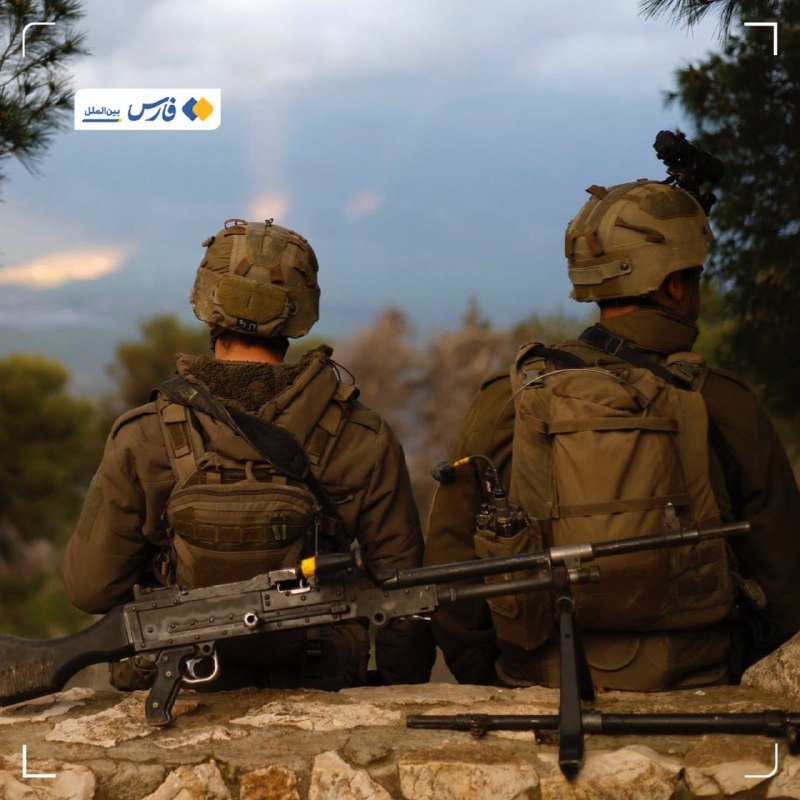
Israeli warplanes struck the village of Kafra in southern Lebanon on 20 May 2026, according to multiple regional and Lebanese media reports confirmed within hours of the incident. The Israeli air force carried out the operation, marking one of the most significant violations of the informal ceasefire framework that has governed the Israel-Lebanon border since late 2025. Lebanese state-aligned outlets and regional observers immediately characterised the strike as a breach of the understanding, while Israeli authorities have offered no public explanation for the timing or targeting rationale.
The attack drew swift condemnation from Lebanese government-affiliated media, with the strike described as part of a pattern of ongoing Israeli military activity that regional actors argue undermines whatever residual stability the border zone has maintained. The incident compounds a landscape already complicated by the parallel but distinct ceasefire discussions continuing in Gaza, where the same actors responsible for southern Lebanon dynamics have been party to separate — and still incomplete — negotiations. What began as a carefully brokered arrangement to halt cross-border hostilities has since been subjected to repeated stress tests. The Kafra strike represents the most direct one yet.
The Ceasefire Under Pressure
The November 2025 ceasefire understanding between Israel and Lebanon was, from its inception, a fragile instrument. Unlike a formal peace agreement with binding legal commitments, it functioned as a political accommodation — a mutual acceptance that further escalation served neither party's immediate interests. It lacked the institutional architecture of a treaty, the enforcement mechanisms of a UN mandate, and the domestic political cover that would allow either government to absorb the costs of sustained compliance without facing criticism from security-focused constituencies.
Reporting from regional sources, including The Cradle Media and Iranian state-affiliated outlets, frames the Kafra strike as the latest in a series of Israeli actions that have tested the boundaries of that accommodation. Whether the strike was a deliberate signal, an operational response to intelligence regarding militant activity in the area, or something else entirely remains unclear — Israeli military communications have not provided on-record justification for the specific targeting decision. The absence of an immediate Israeli statement leaves the incident open to the interpretation most favourable to critics: that the ceasefire's substantive commitments have always been subordinate to Tel Aviv's unilateral right to act on its own security assessments.
Israel's Security Calculus
The Israeli framing — insofar as it can be reconstructed from prior public statements and the broader posture of the Israel Defense Forces — holds that the ceasefire does not foreclose action against what the military classifies as imminent threats. Under this interpretation, if intelligence indicated the presence of armed personnel or materiel in Kafra that posed a risk to northern Israeli communities, the strike was not only permissible but consistent with the agreement's own self-defense provisions. This logic has been invoked repeatedly since the ceasefire took effect, and Israeli officials have shown little appetite for permitting the absence of formal hostilities to constrain operational readiness.
The problem with this position is not its legal coherence but its strategic downstream effects. Every strike that Lebanese actors characterise as a ceasefire violation — regardless of the intelligence rationale behind it — erodes the political sustainability of the arrangement on the Lebanese side. Hezbollah, which retains substantial military capacity despite the nominal ceasefire, faces domestic pressure to respond to what it can frame as Israeli aggression. The Lebanese Armed Forces, for their part, find themselves caught between the requirement to object to violations of Lebanese sovereignty and the calculation that escalating the dispute serves neither their institutional interests nor the country's broader stability.
What makes Kafra significant is not its scale alone — the sources do not provide casualty figures or structural damage assessments at time of publication — but its location. Southern Lebanon, particularly the area south of the Litani River, has been subject to strict constraints on armed presence under the ceasefire framework. A strike in this zone, rather than at the frontier or in disputed territory, carries a different political weight than an incident closer to the demarcation lines.
The Broader Architecture and Its Fault Lines
The ceasefire governing the Israel-Lebanon border does not operate in isolation. It is embedded within a wider regional structure of incomplete truces, parallel negotiations, and competing security frameworks that span Gaza, the West Bank, Syria, and the broader Middle East. The informal nature of the arrangement — not ratified by the Lebanese parliament, not subject to UN Security Council enforcement, dependent on mutual restraint rather than third-party monitoring — has always made it vulnerable to the kind of incident that occurred in Kafra.
What regional analysts have long noted is that ceasefires between parties with fundamentally different strategic objectives tend to function as breathing spells rather than endpoints. The absence of a final political resolution means that both sides maintain what they regard as legitimate reasons to resume hostilities if their core interests are threatened. The Kafra strike sits within that dynamic. Israeli decision-makers are calculating that the benefits of degrading whatever threat prompted the strike outweigh the costs of re-igniting the border tensions that the ceasefire was designed to suppress. Lebanese and Hezbollah-linked actors are calculating that acquiescing to the strike, without some form of response, normalises a precedent that makes future Israeli operations easier.
The structural pattern here is not unique to this particular ceasefire. Across the region, informal arrangements have repeatedly given way to renewed violence when one party determines that the costs of restraint exceed the costs of action. What distinguishes Kafra is the precision of the target selection and the timing — occurring on the same day as other regional developments, it reflects a moment when Israeli military planning appears to be operating with less deference to diplomatic signals than it did during the initial ceasefire negotiations.
Stakes and the Road Ahead
If the Kafra strike remains an isolated incident, its significance will be largely rhetorical — another data point in the ongoing argument about whether the ceasefire has any genuine force. If it triggers a response, whether from Hezbollah directly or from Lebanese state actors seeking to demonstrate sovereignty, the escalation dynamics that the ceasefire was designed to suppress will reassert themselves. The timeline for that determination is measured in days, not weeks.
What is clear is that the informal ceasefire has entered a phase of accelerated deterioration. Each incident adds to the stock of grievances that each side accumulates against the other, making the political cost of renewed hostilities lower and the political cost of continued restraint higher. Israeli military doctrine, shaped by a leadership that has consistently privileged operational flexibility over diplomatic caution, provides no natural brake on this trajectory unless explicit political guidance intervenes. Lebanese decision-makers, for their part, face a government in Beirut that is financially and politically constrained from posture confrontations with Israel, but that does not control the armed groups operating in its territory.
The most immediate stakes are for the communities along the border — in northern Israel and southern Lebanon — who have experienced the relative quiet of the past months as a fragile reprieve rather than a durable peace. The Kafra strike suggests that the window may be closing.
This publication's coverage prioritises reporting from regional and independent outlets operating outside the dominant Western wire framework. The framing of the strike as a ceasefire violation reflects the characterisation offered by multiple Lebanese and regional sources; Israeli military channels had not issued a formal statement at time of publication.
Wire provenance
This editorial synthesis draws on the following public wire/social posts:
- https://t.me/thecradlemedia
- https://t.me/presstv
- https://t.me/gazaalanpa
- https://t.me/TheCradleMedia