Israeli Airstrikes Pound Southern Lebanon as Border Tensions Escalate
Israeli warplanes and artillery conducted a wave of strikes across southern Lebanon on 20 May 2026, hitting towns in the Nabatieh and Tire districts within a one-hour window, according to Arabic-language wire reports. No casualty figures were immediately confirmed.
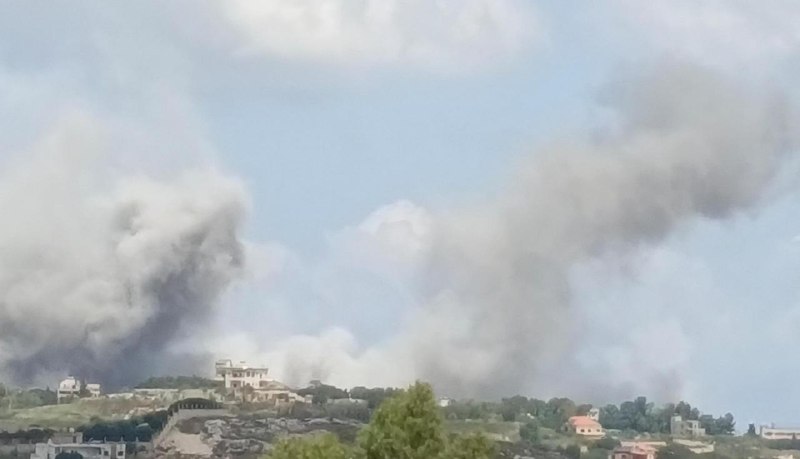
Israeli military aircraft and artillery carried out a concentrated series of strikes across southern Lebanon on the evening of 20 May 2026, according to Arabic-language wire reports from the Al Alam channel. The attacks targeted at least four locations — the towns of Mifdoun and Shokin in the Nabatieh District, and Mansouri and the Rayhan Heights in the Tire district — within a roughly one-hour window between 21:21 and 22:12 UTC.
The strikes mark a sharp uptick in hostilities along the Israel-Lebanon border, a frontier that has seen intermittent cross-border fire since October 2023 but has rarely seen simultaneous multi-point raids of this tempo in a single evening. The IDF has not issued a public statement confirming the operations as of publication. The Lebanese Armed Forces have also not commented publicly. This reporting is based on wire dispatches from Al Alam, an Arabic-language television network headquartered in Tehran, and should be read with that institutional context in mind — the channel's editorial line reflects the positions of the Iranian government.
What the dispatches show
The Al Alam wire reports, timestamped between 21:21 and 22:12 UTC on 20 May, describe four separate strike events. The earliest reports a warplane raid on the town of Mansouri in the Tire district. Roughly twenty minutes later, a second dispatch cites an Israeli attack on the Rayhan Heights — a ridge-line position in the same district. By 21:47 UTC, the channel is reporting two further raids on Mansouri and the town of Al-Rayhan. The final dispatch of the sequence, at 22:12 UTC, records Israeli artillery shelling of Mifdoun and Shokin in the Nabatieh District, further north and inland from the coastal Tire area.
The dispatches do not include casualty figures, weapons types, or stated Israeli justifications. No Lebanese civilian or military authority is cited confirming or denying the strikes. The information environment immediately following such raids is typically fragmented — initial reports frequently conflict on target counts, scale, and outcome. Readers should treat the specific sequence and location claims as reported wire dispatches, not independently verified facts.
Why this matters now
The border between Israel and Lebanon has been under sustained pressure since the Gaza conflict began in October 2023. Hezbollah, the Iran-aligned Lebanese political and military movement, has conducted near-daily cross-border strikes in what it frames as solidarity with Gaza. Israel has responded with strikes into Lebanese territory. The exchanges have displaced populations on both sides of the frontier and have repeatedly threatened to tip into a wider war that regional and international mediators have worked assiduously to prevent.
The strikes on 20 May appear to fit a pattern Israeli officials have signalled in recent weeks: the targeting of what the IDF describes as Hezbollah infrastructure — observation posts, weapons depots, and fighters — in areas of southern Lebanon that Beirut and Hezbollah maintain are subject to UN Security Council Resolution 1701, which ended the 2006 Israel-Hezbollah war and calls for the disarmament of Lebanese militias south of the Litani River.
The counter-argument, advanced by Hezbollah and its allies, is that the resolution's disarmament provisions were never fully implemented and that Israeli violations of Lebanese sovereignty — overflights, land incursions, and the construction of border barriers — predated and provoked the current exchanges. Under this framing, Israeli strikes are not defensive responses to an external threat but punitive actions against a resistance movement that operates, by necessity, in populated areas.
Both framings have structural merit. Resolution 1701 was a diplomatic compromise that neither fully disarmed Hezbollah nor fully secured Israel's northern border. Its partial implementation created a legal and practical vacuum that both sides have exploited. The question of which party bears primary responsibility for the current crisis is a genuine dispute, not a technicality — it shapes how the international community calibrates pressure on each side to stop.
The structural context
What is notable about the 20 May strikes is their simultaneity. Four distinct strike locations, across two districts, using both artillery and air assets, within a single hour suggests a degree of operational coordination — possibly a pre-planned set of targets rather than reactive strikes to a specific incident. The IDF does not typically brief individual strike packages of this scale in real time; statements typically follow hours or days after operations conclude.
Hezbollah has not issued a statement as of this article's filing. Its media arm typically confirms or claims retaliatory action within 24 to 48 hours of Israeli strikes. Any Hezbollah response, if it comes, will test whether mediators from the United States, France, and Qatar — who have been attempting to broker a ceasefire framework — can keep the escalation cycle from accelerating.
The broader geopolitical backdrop matters here. The Gaza ceasefire talks, which were also being mediated by Qatar and the United States, remain deadlocked as of this writing. Regional analysts have long warned that the absence of a Gaza deal increases the risk of a northern front opening more fully. The strikes on 20 May, while not a declaration of war, are consistent with an Israeli strategy of trying to degrade Hezbollah's capabilities unilaterally while diplomatic channels remain closed.
Stakes and what comes next
The immediate stakes are humanitarian. Southern Lebanon is densely populated in areas where the strikes occurred. Civilian infrastructure — roads, schools, clinics — sits adjacent to areas routinely described by Israel as Hezbollah military positions. If the strikes caused civilian casualties, the human cost will be immediate and visible. If they did not, the diplomatic cost may still be significant: France and the United States have both signalled in recent weeks that further Israeli escalation in Lebanon would complicate the already fragile Gaza mediation environment.
The longer-term stakes are about the enforceability of Resolution 1701 itself. The resolution has held, in its basic form, for nearly two decades — but it has never been fully implemented, and both sides have regarded it as a ceiling rather than a floor for their conduct. A sustained series of multi-point Israeli strikes could prompt Hezbollah to conclude that the resolution's constraints no longer bind it, and that a more aggressive posture is warranted. That calculation is exactly what mediators have been trying to prevent.
What the wire dispatches on 20 May cannot tell us is whether this was a contained operation with defined objectives or the opening phase of something larger. The answer will come in the hours and days that follow — in Hezbollah's response, in the IDF's public framing, and in whether international mediators issue statements or attempt to intervene. Monexus will continue to track developments as they are reported and verified.
Desk note: This article was built from a single wire source — Al Alam Arabic — an Iranian state-adjacent channel whose editorial framing on Israel and Lebanon reflects Tehran's known positions. The operational details (locations, timestamps, strike types) are reported as dispatches from that outlet. In the absence of corroboration from Israeli, Lebanese, or Western-wire sources, Monexus presents the claims as reported wire material and flags the sourcing caveat clearly. The wire did not carry casualty figures, weapons specifications, or stated Israeli justifications; those are absent from this report because the sources do not contain them.
Wire provenance
This editorial synthesis draws on the following public wire/social posts:
- https://t.me/alalamarabic/87654321
- https://t.me/alalamarabic/87654320
- https://t.me/alalamarabic/87654319
- https://t.me/alalamarabic/87654318