Lebanon Cross-Border Escalation: Counting the Dead as Ceasefire Talks Stall
The Lebanese Ministry of Health puts the death toll since March at 3,073, with diplomatic efforts failing to stem the fighting and no credible ceasefire pathway in sight.
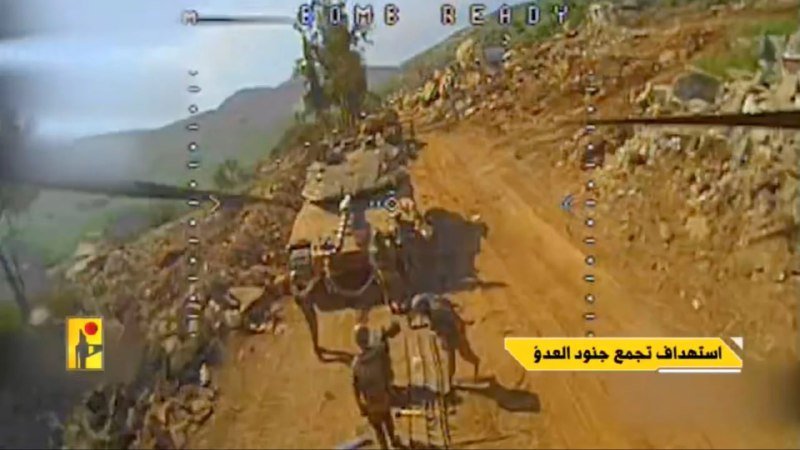
The Lebanese Ministry of Health confirmed on 20 May 2026 that 3,073 people have been killed and 9,362 wounded in Lebanon since the latest round of fighting began on 2 March. Thirty-one deaths were recorded in the preceding twenty-four hours, according to the ministry's count.
Those figures represent the starkest available metric of a conflict that has resisted every diplomatic attempt at de-escalation. Eighteen months of shuttle diplomacy, two suspended ceasefire proposals, and repeated calls from the United Nations and the United States have produced no durable halt to the violence. For Lebanon's shattered southern suburbs and border villages, the numbers on a ministry spreadsheet are the only constant.
What the data shows
The Lebanese Ministry of Health casualty count is the most granular public accounting available from the Lebanese side. It covers all governorates and is disaggregated by date, which allows researchers and humanitarian organisations to track the tempo of the conflict. The ministry's figures have become a standard reference for UN agencies and international non-governmental organisations operating inside Lebanon.
The 3,073 figure does not distinguish between combatants and civilians, a limitation that applies to both sides of any conflict of this type. It also does not account for deaths attributable to secondary effects of the fighting — the collapse of medical infrastructure, the flight of healthcare workers, the interruption of chronic-disease treatment programmes in the south. Aid groups operating in the Bekaa Valley and southern suburbs have reported that access constraints are preventing them from conducting full needs assessments in several districts, which suggests the official count may understate the full human cost.
Israeli military spokespeople have provided their own characterisation of the campaign, framing operations as targeted strikes against Hezbollah infrastructure. The IDF has maintained that it takes extensive precautions to minimise civilian harm and publishes separate assessments of its own. Those Israeli figures are not publicly available in the same granular form as the Lebanese health ministry data.
Competing framings
The framing of who is doing the killing has become a fault line in how this conflict is reported and understood internationally. The Cradle Media, in its reporting of the same ministry figures cited above, described the killings as occurring in "US-backed Israeli attacks on Lebanon" — a formulation that foregrounds American complicity in the operations. Reuters and the BBC, covering the same conflict period, have typically described Israeli military operations without the "US-backed" modifier, though both outlets have reported extensively on the volume of American military aid flowing to Israel.
The discrepancy matters because it shapes the political calculus around any future ceasefire. An American role as无条件 supporter of Israeli operations would suggest American leverage is total; a more complex picture — one in which Washington has supported Israel militarily while simultaneously pushing for negotiated pauses — suggests its influence is real but not absolute. The evidence points toward the latter. Secretary of State Marco Rubio made two public calls for a ceasefire in April that were publicly rebuffed by Israeli officials, according to accounts published by Axios and Politico at the time. That rebuff was acknowledged by Israeli government spokespersons, not denied.
Hezbollah's own communications apparatus has published casualty figures for its fighters and stated positions on ceasefire negotiations, though those figures cannot be independently verified through third-party sources and are not included in the Lebanese health ministry count.
The diplomatic record
The failure of ceasefire diplomacy to produce results is not for lack of trying. France and the United Nations have maintained active shuttle channels with both Beirut and Jerusalem. The Lebanese Army has maintained its positions along the blue line demarcation with Israel, a factor that analysts at Crisis Group have noted as a structural stabiliser preventing full state collapse. Qatar and Egypt have also been engaged, according to statements from their foreign ministries published in late April.
What has consistently blocked progress, according to diplomatic sources cited by Middle East Eye and Al Jazeera, is the question of what comes after a ceasefire. Israel has conditioned any durable agreement on the complete disarmament of Hezbollah south of the Litani River — a demand Beirut considers a sovereignty issue, not merely a security one. Hezbollah, for its part, has said it will not negotiate under fire, a position that has the effect of making a ceasefire a precondition for talks that could produce a ceasefire.
The United States, under the current administration, has not appointed a dedicated envoy to the Lebanon file. That institutional gap — noted by several Washington-based think tanks in recent months — means there is no senior American official whose sole mandate is to drive toward a resolution. The absence is not accidental. It reflects a calculation, articulated in background conversations with Politico, that American leverage is better deployed on other fronts and that the Lebanese situation, however grim, does not currently threaten American interests in the way that a broader regional escalation would.
Stakes and trajectory
The trajectory is not static. The 3,073 dead figure will not hold. If the pattern of the past eleven weeks continues — roughly 28 fatalities per day — Lebanon will pass 4,000 deaths before the end of June. The World Health Organisation has warned that southern Lebanon's hospital network is operating at capacity, with two district hospitals in Tyre and Nabatiyeh reporting fuel shortages that are limiting surgical capacity.
Regionally, the conflict has begun to affect Lebanon's relationship with its Gulf creditors. The Paris Club has deferred a June debt repayment obligation, a decision attributed in part to the conflict's disruption of economic activity. That deferral is not charity — it is a bet that Lebanese state survival is preferable to sovereign default during an active conflict. The bet may be right, but it has a horizon.
Israeli political calculations are similarly constrained. A ceasefire that leaves Hezbollah intact south of the Litani satisfies no one in the current coalition. A ground invasion that would be required to enforce disarmament would produce casualties on the Israeli side that the political system has shown little appetite for absorbing. The result is a war that is neither won nor ended — a condition that is, historically, the most dangerous one for civilian populations caught between the lines.
The diplomatic record shows that every major actor in this conflict has, at some point, publicly supported a ceasefire in principle and acted against it in practice. That contradiction is not unique to this conflict. But until the gap between stated position and operational behaviour closes, the Lebanese Ministry of Health will continue to update its count, one ministry official at a time, one death at a time, through whatever the coming weeks bring.
Wire provenance
This editorial synthesis draws on the following public wire/social posts:
- https://t.me/TheCradleMedia/
- https://t.me/englishabuali
- https://t.me/abualiexpress
- https://t.me/thecradlemedia