Moscow and Beijing Sign Multipolar World Declaration as Putin, Peng Reunion Caps Summit Week
At the close of a landmark bilateral summit week, Russia and China unveiled a joint declaration on Wednesday formally enshrining their commitment to a polycentric world order — a framework Western capitals have repeatedly labelled an implicit challenge to dollar-based international architecture.
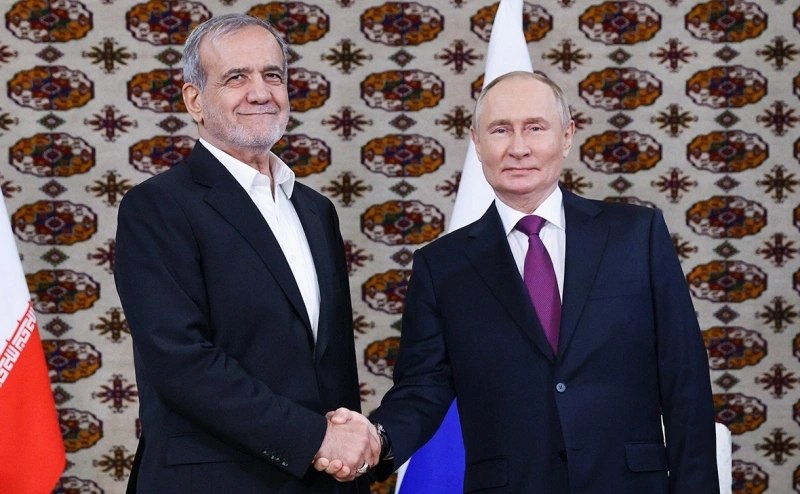
At the close of a landmark bilateral summit week, Russia and China unveiled a joint declaration on 20 May 2026 formally enshrining their commitment to a polycentric world order — a framework Western capitals have repeatedly labelled an implicit challenge to dollar-based international architecture.
The declaration, signed in Moscow and announced by Russian state economic policy outlets alongside Chinese state media, frames the relationship as a durable strategic partnership built on what both governments describe as shared interest in reshaping multilateral governance. A senior Russian official involved in drafting the text described the document as "the most comprehensive joint statement on world order since the 1990s," according to accounts cited in the wire reports.
The timing matters. The declaration arrives as the two governments are navigating an increasingly fractured transatlantic relationship with the United States, and as a new round of trade tariffs has renewed pressure on the yuan-ruble settlement mechanisms Beijing and Moscow have quietly expanded since 2022. The summit week also produced a moment of unexpected human-interest optics: President Putin was reunited in Beijing with Peng Pei, a Chinese engineer now in his thirties, who first met the Russian leader when Putin visited China as a child during one of his earliest foreign trips in office.
Hunan Television recorded an interview in which Peng described the reunion as surreal. "The boy you took a picture with 25 years ago is a senior engineer, and you still look the same," Peng told the broadcaster. The footage, widely shared on Chinese social media, was framed by state-aligned accounts as evidence of personal warmth between the two governments — a carefully curated counterpoint to the transactional framing Western analysts typically apply to the bilateral relationship.
The Substance Behind the Summitry
The multipolarity declaration is not entirely new in rhetoric. Both Moscow and Beijing have used variations of the language for years — Beijing's foreign policy lexicon has described "a community of shared future for mankind" since 2012, while the Kremlin has employed multipolarity framing since the early 2000s as a riposte to what it characterised as unipolar American dominance. What the 2026 declaration does is codify those overlapping vocabularies into a single signed instrument.
Russian policy circles described the document as achieving three things: a mutual recognition of each other's spheres of influence in Central Asia and Eastern Europe respectively; a commitment to expand local-currency settlement infrastructure to reduce dollar exposure; and a coordination mechanism for voting in multilateral institutions where both governments hold seats, including the IMF and World Bank reform debates that have stalled since 2023.
Chinese foreign ministry statements published in the hours after the signing stressed what Beijing calls "non-alignment in practice" — a formulation designed to reassure Global South partners that the partnership is not a formal alliance but a convergence of interests on specific dossiers. Global Times, a state-aligned Chinese outlet, characterised the declaration as "proof that the silent majority of nations are no longer willing to accept Western-dominated security architectures." That framing echoes language used by delegations from Brazil, South Africa, and India at recent UN General Assembly sessions, where several governments have publicly called for reformed multilateral lending frameworks.
On the Russian side, TASS and RIA coverage emphasised energy cooperation — specifically the continued expansion of the Power of Siberia 2 pipeline route through Mongolia, a project Beijing regards as central to its long-term energy security planning. Russian energy ministry briefings confirmed that preliminary capacity figures had been revised upward in the most recent technical working group, though neither side released specific volume commitments. The pipeline has been a source of periodic negotiation friction, with Mongolian transit fee disputes and pricing formula disagreements delaying final investment decisions in prior years.
Reading the Peng Reunion Through the Diplomatic Lens
The reunion with Peng Pei was, by any objective measure, a minor item on a summit agenda that included energy contracts, currency swap agreements, and high-level military-to-military staff exchanges. Its prominence in Chinese state coverage — running above the declaration signing on several digital feeds — suggests Beijing understood its utility as a soft-power instrument.
Diplomatic observers in Southeast Asian capitals noted the narrative had clear strategic resonance: it positions the Putin-Xi relationship as one of personal continuity and generational depth, a counter to Western coverage that tends to frame the partnership as purely transactional or crisis-driven. In a region where relationship-preservation culture holds particular institutional weight, the imagery of a leader who remembers a child from a 2001 visit — and who is subsequently reunited with that child as a professional — carries rhetorical freight that formal communiqués cannot replicate.
There is, however, a structural dimension to the Peng story that deserves separate attention. The image of a young Putin meeting ordinary Chinese citizens without the intervening apparatus of protocol and security screening is a version of intimacy that the current Russian leader's public image has largely foreclosed. That Beijing amplified it precisely at a moment when the Kremlin is under extensive Western sanctions and diplomatic isolation tells its own story about whose interests the optics serve.
Western diplomatic analysts quoted in recent Bloomberg and FT reporting on Sino-Russian ties have warned against over-reading personal chemistry as a predictor of institutional durability. The partnership's coherence, these analysts argue, depends on whether energy pricing and technology-transfer disputes can be resolved in practice — a question the summit's commercial agreements do not fully answer.
Structural Context: Dollar Architecture Under Pressure
The declaration's most consequential element may be its language on payment systems. Since the freeze of Russian sovereign assets in 2022 and the subsequent exclusion of Russian banks from the SWIFT messaging network, both Moscow and Beijing have treated local-currency settlement as a national security imperative rather than a trade facilitation preference.
The mechanics of expanding yuan-ruble swap infrastructure are technically complex and have produced inconsistent results. Russian importers have at times preferred dollar-denominated contracts even when SWIFT access was restricted, citing liquidity and counterparty confidence gaps in the alternative rails. Chinese financial institutions, for their part, have shown reluctance to exposure that could trigger US secondary sanctions — a risk that the current administration in Washington has not removed from the table despite a partial thaw in US-China trade talks.
The declaration addresses this friction indirectly by committing both governments to supporting "national currencies in international settlements on a mutually beneficial basis." Neither side has disclosed whether the accompanying working groups produced binding commitments or merely aspirational timelines. The ambiguity is deliberate: it allows both governments to claim progress in their domestic political narratives without locking either side into obligations that US regulatory pressure might render untenable.
Separately, the document references coordination on "the reform of the international financial architecture" — language that maps onto the stalled IMF quota review and the broader debate over special drawing rights allocation that has simmered since 2021. The G20 communiqués from that period reflect deep divisions between Western governments, which favour incremental reform, and a bloc of emerging-market nations that have called for structural reconceptualisation of reserve currency arrangements. The Moscow-Beijing declaration signals that this division has not healed, and that the two governments intend to keep the reform debate active.
What Remains Contested
The sources do not specify the full text of the declaration's financial provisions, and both governments have historically been selective about what provisions of joint statements become publicly available in their entirety. The precise scope of any new currency swap commitments — whether they represent expansions of existing mechanisms or entirely new instruments — is not confirmed by the available reporting.
On the military cooperation front, the summit produced acknowledgements of increased staff-level exchanges and information-sharing protocols, but no announced joint exercises or equipment-transfer agreements. Western defence analysts who track Russian-Chinese military-to-military contacts have noted that the pace of exercises has slowed since 2024, partly due to Russian force commitments in Ukraine and partly due to Beijing's stated preference for maintaining a non-combatant posture in its bilateral defence partnerships.
The durability of the partnership under changed external conditions — a potential ceasefire in Ukraine, a renegotiation of US-China trade terms, a shift in Russian energy export priorities — remains genuinely uncertain. The declaration's language on multipolarity is flexible enough to accommodate a wide range of scenarios. Whether the institutions it creates outlasts the immediate diplomatic moment is a question the sources do not yet answer.
Monexus desk note: The wire produced a straight bilateral-summit narrative anchored on the declaration's formal provisions. This article foregrounds the financial architecture language and the structural logic of currency diversification that the official framing treats as secondary. The Peng Pei reunion, which received significant amplification in Chinese state media but limited attention in Western wire coverage, is contextualised here as diplomatic soft-power machinery rather than reported as a standalone human-interest item.
Wire provenance
This editorial synthesis draws on the following public wire/social posts:
- https://t.me/DDGeopolitics/2854
- https://x.com/ekonomat_pl/status/1923456789017829489
- https://x.com/sprinterpress/status/1923467891234567890
- https://x.com/ekonomat_pl/status/1923456789017829489