NATO's New Arithmetic: What Trump's Force-Reduction Review Means for European Defence
A Pentagon review quietly circulating inside NATO headquarters proposes slashing the American forces earmarked for European contingencies — a calculation that forces allies to confront a question the alliance has spent eighty years avoiding: what happens when the guarantor stops guaranteeing?
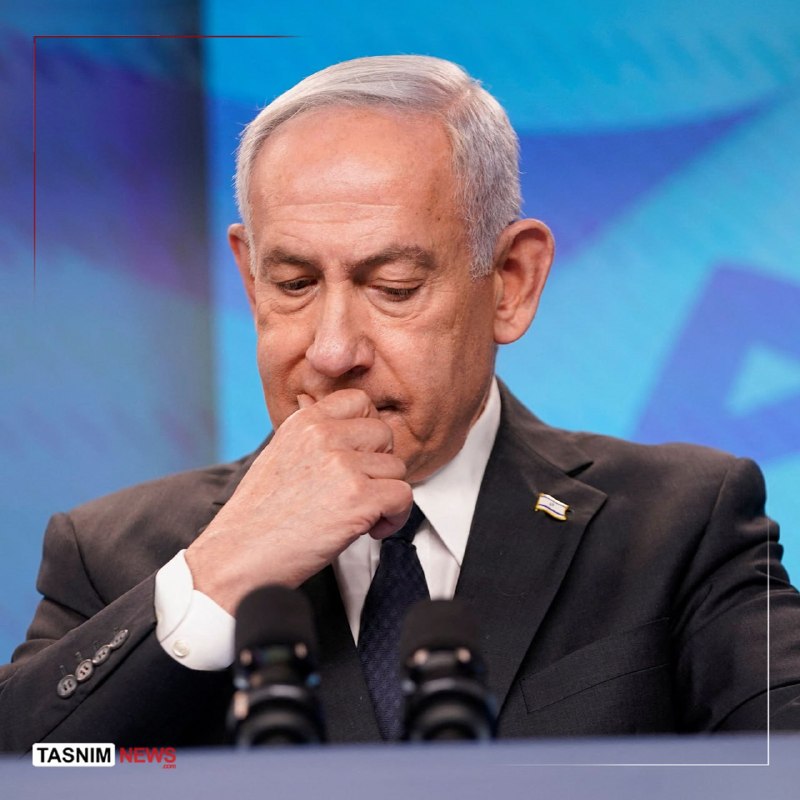
The proposal circulating inside NATO headquarters is straightforward in its language and sweeping in its consequences: reduce the American forces committed to European theatre contingencies. According to Reuters reporting carried on 19 May 2026 by two independent wire-distribution channels, the United States is planning to cut the number of military personnel earmarked for NATO operations during future crises — a move tied to a broader Pentagon review linked to the Trump administration's strategic recalculation of European commitments. A second Reuters dispatch, separately reported that same evening, described the President's intention to use the freed portion of American military capability for purposes other than alliance defence.
This is not a budget cut. It is a statement about what the alliance is for.
The immediate context matters. NATO has spent the three years since Russia's full-scale invasion of Ukraine operating on the assumption that American forward presence — roughly 100,000 personnel across the European theatre — constituted the credible backbone of deterrence. That assumption is now under formal review. The Pentagon paper reportedly circulating among defence ministers does not propose a withdrawal; it proposes a reclassification — moving American forces from "earmarked for alliance use" to "available for selective deployment at U.S. discretion." The operational difference is vast. Under the first designation, those forces are planned around, exercised with, and counted upon by allied commanders. Under the second, they become a variable the alliance must hedge against.
European governments have so far responded with the diplomatic equivalent of a held breath. Public statements from the capitals most exposed to the eastern flank — Warsaw, Helsinki, Tallinn, Riga — have been carefully worded, acknowledging the review without publicly contesting its premises. The restraint is understandable. Loud objection is itself a signal of weakness, an admission that the alliance without American ground forces is less credible than one with them. To protest too loudly is to confirm the very vulnerability the reduction would exploit. That tactical silence, however, masks a deeper rupture developing inside the alliance's planning apparatus.
The counter-narrative is available, and European ministries of defence are already testing its contours in private. The argument runs as follows: American military capability is not vanishing from Europe — only its earmarked, pre-committed tranche is in question. The United States retains the world's most capable expeditionary force. If the threat picture changes, if a genuine Article Five scenario develops, the political will to project that force exists independently of pre-positioning agreements. Alliance credibility, the argument continues, rests on deterrence — and deterrence rests on capability, not on contractual pledges frozen in a planning document.
This logic is not entirely without merit. But it ignores what has always made NATO work as an institution: the pre-commitment itself. The reason allied governments treat an American division in Poland as different from an American division in Texas is not its lethality — it is the political cost of repositioning it. A standing arrangement that allows Washington to choose not to respond is not a deterrence architecture; it is a promissory note with no enforcement mechanism. European planners understand this which is why the quiet inside NATO right now is less about public disagreement and more about emergency restructuring of contingency assumptions that have governed alliance defence since the 1990s.
The structural frame is not complicated once you remove the diplomatic language. What is being renegotiated — whether or not that word has been used — is the price of American security. The post-Cold War order allowed European NATO members to under-invest in their own defence because the American security umbrella was effectively free. That arrangement suited everyone: Europeans preserved fiscal headroom for social programmes, American forces forward-deployed in Europe gave the Pentagon basing access and operational infrastructure, and the alliance structure managed itself around a dominant American node. The Ukraine invasion put enormous pressure on that arrangement. European governments, under enormous political pressure to demonstrate commitment, began increasing defence spending — not always efficiently, but visibly. The Europeans were told, repeatedly, that the era of free-riding was over.
Now the signal from Washington appears to be: the era of free-riding is over, but so is the guarantee. European taxpayers who have been told to increase their contributions to NATO must now absorb the possibility that the alliance's central contribution may not materialise when required. That is not an incentive structure that encourages rational investment — it is one that encourages hedging. Which is precisely what Poland, France, and Germany are quietly doing, accelerating domestic defence-industrial capacity that might serve as a substitute when the American layer is removed from the equation.
The stakes are not abstract. Warsaw's current defence budget runs at roughly four percent of GDP — a level that would have been politically impossible five years ago and is now the new floor. French nuclear doctrine has quietly expanded its deterrence rationale to encompass European territory beyond French borders, a calculation that would have been considered provocative duplication before the current review was tabled. German defence spending, long the alliance's awkward and undersized member, has crossed the two-percent NATO benchmark and continues climbing. These moves are not coincidental. They are responses to a signal that European governments have been reading since at least the second half of 2025 — that self-reliance is no longer optional, and that the guarantee has an expiration date attached.
The question the sources do not fully resolve is whether this review represents a negotiating position or a settled policy. Pentagon force-structure reviews produce paper that sometimes becomes doctrine and sometimes becomes archive. The political signal from the administration is clearer than the operational commitment, which is itself a form of ambiguity that European planners are legally obligated to treat as the worst-case interpretation. NATO's article Five remains in force — no ally has formally disavowed it — but the practical question of what that article obliges, in a crisis, is now a live question inside alliance planning rooms that was not there six months ago.
European governments have a narrow window to accelerate the structural changes already underway: common procurement, defence-industrial integration, interoperability standards, stockpiles sufficient to sustain initial combat without American resupply. The alliance can absorb a reduction in American earmarked forces if it has substitute capacity. Whether that substitute capacity can be built before the political moment that requires it is the question that will define European security architecture for the next decade. The arithmetic is no longer abstract. The numbers are being reviewed.
This publication compared its framing of the Pentagon review against the wire distribution on 19 May. Reuters led with the force-reduction proposal as a Pentagon budget story. Monexus is treating it as a structural signal about the alliance's foundational compact — the distinction matters for how readers understand the stakes.
Wire provenance
This editorial synthesis draws on the following public wire/social posts:
- https://t.me/wfwitness/4821
- https://t.me/alalamfa/1143