Poland Warns Kyiv Over Drone Incursions Near NATO Borders
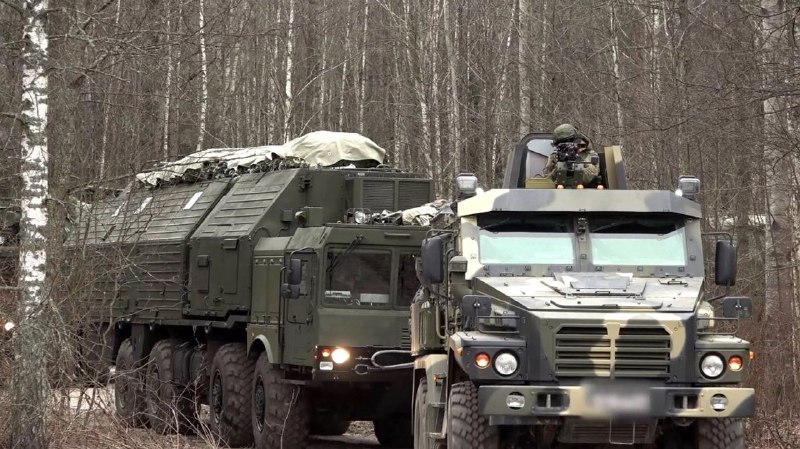
Poland's Ministry of National Defense issued a formal demand on 20 May 2026 that Ukrainian drone operations remain clear of NATO-member territory, according to wire reports from that date. The directive follows incidents in which Ukrainian-launched drones have come close to or briefly entered the airspace of Poland and other eastern NATO allies during strikes against Russian military targets. Polish Defence Minister Jacek Siniakowicz reinforced the message in concurrent remarks, calling on Kyiv to exercise greater precision in selecting targets inside Russia to prevent any spillover that could trigger NATO's collective-defence obligations under Article 5.
The exchange highlights a persistent tension at the heart of Western military support for Ukraine: the further Ukraine pushes its long-range capabilities, the more the logistical and legal responsibility for managing escalation risk shifts onto its NATO backers. Warsaw, as a direct neighbor of both Ukraine and the Russian exclave of Kaliningrad, occupies the most exposed position in this arrangement. The Polish demand is not a withdrawal of support — Poland remains one of Kyiv's most consistent military suppliers — but it signals a clear line that the Polish government will not treat as routine the risks inherent in drone operations near a live NATO border.
The Targeting Calculus
Ukraine has employed drones extensively against Russian logistics nodes, airfields, and energy infrastructure deep inside what it regards as occupied Ukrainian territory and, increasingly, targets inside Russia itself. The capability has grown more sophisticated since the early months of the full-scale invasion, shifting from Soviet-era Shahed variants supplied by Iran to a domestic Ukrainian production programme that has expanded both range and payload capacity. That expansion has brought Ukrainian operations closer to NATO's eastern perimeter — not in terms of political intention, but in terms of physical geography.
The incidents prompting Warsaw's complaint have not, according to available reporting, resulted in any confirmed breach of Polish airspace. Polish radar coverage along the approximately 400-kilometre border with Ukraine is robust, and NATO's integrated air-defence architecture in the region has been significantly upgraded since 2022. But proximity without breach is not a sustainable argument indefinitely. The risk of mechanical failure, navigational error, or a last-minute course correction — any of which could place an unmanned aircraft on NATO territory — grows with every additional strike mission flown near the frontier.
The Counter-Narrative: Kyiv's Position
Ukrainian officials have argued that the geographic constraints imposed by NATO-member borders limit their ability to strike legitimate military targets effectively. From Kyiv's perspective, restrictions on targeting serve Russia's defensive interests by creating no-go zones that Russian forces can exploit. Ukrainian commanders have noted that Russian military infrastructure along the border region — supply depots, command centres, and troop concentrations — sits close enough to the frontier that imprecise drone launches carry inherent risk regardless of flight-path planning.
The argument has structural merit. A defending force under aerial attack from an adversary with significant drone capability is not unreasonable to ask that the supporting alliance absorb some measure of operational risk. But the asymmetry matters: Poland's obligations under NATO treaty are unconditional in a way that Ukraine's operational preferences are not. Warsaw cannot trade a stable border for a successful strike on a Russian ammunition depot, and Polish political leadership knows it.
The Structural Picture
What Warsaw is managing is not merely a bilateral drone-safety question. It is a proxy for the broader unresolved debate over how far NATO's support for Ukraine can extend without drawing the alliance into direct confrontation with Russia. The drones issue crystallises that debate in miniature: each additional kilometre of Ukrainian strike range adds a corresponding increment of risk that the systems supporting those strikes — intelligence sharing, satellite data, communications relay, logistics corridors — will be interpreted by Moscow as NATO involvement rather than Ukrainian initiative.
Poland has been among the most forward-leaning NATO members in backing Ukraine, hosting significant military training operations and serving as a primary conduit for Western weapons deliveries. That posture has made Warsaw simultaneously a more credible voice in demanding responsible use of those capabilities and a more potentially exposed party if those capabilities produce unintended consequences. The Defence Minister's statement is calibrated to hold both positions at once: support Kyiv, but not at a cost to Article 5.
Stakes and What Comes Next
If the targeting-incident problem is not resolved through technical coordination — shared rules of engagement, real-time deconfliction channels, or refined flight-corridor agreements — Poland's options narrow. Publicly warning Kyiv is the mildest tool available. More significant would be restricting the logistics corridors through which Western-supplied drones and components reach Ukrainian launch sites inside Poland. That step would signal a fundamental rupture in the bilateral defence relationship, and there is no indication Warsaw is contemplating it. But the demand, as issued, serves notice that the patience for ambiguity is finite.
For Kyiv, the practical implication is that drone operations near the Polish border will face tighter constraints — constraints that may reduce strike options even against legitimate military targets. Ukraine's domestic drone programme may accelerate in response, reducing reliance on systems whose launch parameters are shaped by external diplomatic considerations. Whether that industrial response can keep pace with the operational demands on the front is a question the available sources do not resolve.
Poland has been one of Ukraine's most consistent military partners since the 2022 invasion. This article's framing reflects Warsaw's position as a NATO frontline state with both strong support for Ukraine and unambiguous treaty obligations of its own.
Wire provenance
This editorial synthesis draws on the following public wire/social posts:
- https://t.me/euronews/78942
- https://t.me/hromadske_ua/45671