Putin and Xi Draw a Red Line on Iran — and Against the West
Xi and Putin issued a rare joint condemnation of US and Israeli military operations on Iranian territory on 20 May 2026, hours after Putin met Premier Li Qiang in Moscow — a synchronization that reflects deepening strategic coordination between Beijing and Moscow and a growing willingness to present a unified diplomatic front against Western pressure.
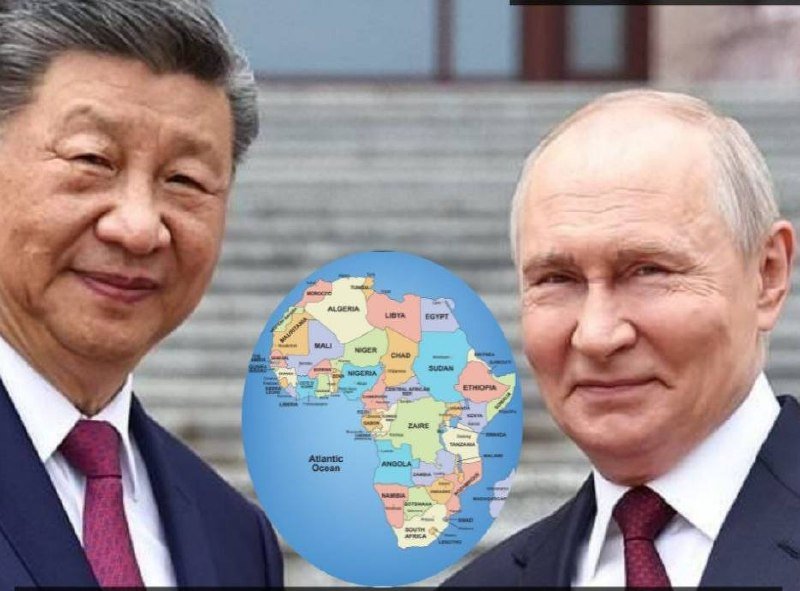
On the same day that Russian President Vladimir Putin received Chinese Premier Li Qiang at the Kremlin, the two governments issued a rare joint condemnation of American and Israeli military operations conducted on Iranian territory. The statement, released on 20 May 2026 and carried by Fars News, represented the most explicit diplomatic broadside yet from the Beijing–Moscow axis against the escalating US-Israel pressure campaign against Iran — and it came wrapped in the symbolism of a bilateral summit.
The synchronization was deliberate. Putin and Li met in Moscow earlier that morning; within hours the two governments had coordinated language sharp enough to use the word "condemn" in reference to actions by two American allies operating in concert. For Beijing and Moscow, the statement served multiple purposes simultaneously: a gesture of solidarity with a partner state under pressure, a signal to the Global South that the alternative pole of international order is coherent and responsive, and a test of whether the Western coalition's resolve on Iran would bend under coordinated diplomatic cost.
What the Statement Said — and What It Didn't
The joint declaration named the operations explicitly as "American and Israeli attacks," a framing that skips the careful diplomatic language Washington and Jerusalem typically prefer. It positioned the strikes as illegal under international law and called for their cessation. The speed with which Beijing and Moscow aligned their language — both governments speaking with one voice within hours of the operations beginning — suggests either prior coordination or a mature mutual understanding about how to respond to Western escalation scenarios that have become familiar.
What the statement conspicuously did not do was specify the legal basis for Iran's own nuclear programme, or offer any language conditioning support for Tehran on political reforms or regional behaviour. That absence is itself a statement. It tells Western capitals that Beijing and Moscow will not use leverage over Iran as a bargaining chip with the West — a posture that contrasts sharply with the approach taken by European governments, who have long tried to link sanctions relief to nuclear non-proliferation commitments.
The Chinese foreign ministry, for its part, has consistently argued that maximum-pressure campaigns destabilise the Middle East rather than contain it, and that multilateral diplomacy — not targeted strikes — is the durable instrument for managing proliferation risks. Moscow's position mirrors that logic. Both governments have substantial economic relationships with Tehran and both have strategic interests in preventing a US monopole on Middle Eastern security architecture.
The Counterpoint: Theatre or Strategy?
Western analysts will note a familiar tension in reading joint statements of this kind: are Beijing and Moscow actually willing to back their condemnation with material consequences — new trade infrastructure, banking channels that route around SWIFT, military cooperation — or is the exercise primarily rhetorical? The record of previous Sino-Russian alignment moments suggests the answer is mixed.
China has been clear-eyed about its Iran exposure. Chinese companies have substantial energy interests in Iranian oil fields and have invested in infrastructure along the western border provinces that would feel the knock-on effects of any regional escalation. Russia, for its part, has used Iranian cooperation in adjacent theatres to complicate Washington's strategic calculations — a relationship that has its own transactional logic.
Xi himself was notably absent from the meeting with Li; Premier Li Qiang, the administrative head of government, carried the bilateral portfolio on the Chinese side. Some analysts read the absence of Xi at the summit table as a signal that the Iran statement was a diplomatic exercise managed at the working level, not a strategic decision requiring personal presidential involvement. Others argue that China's premier carries sufficient authority for a statement of this kind and that the optics were calibrated precisely to suggest Xi was engaged from Beijing.
Either way, the Western calculation in Washington and Tel Aviv likely runs along similar lines: condemnations from Beijing and Moscow are a known cost of the current posture, and neither capital has shown willingness or capacity to translate public opposition into operational disruption of the US-Israel campaign. That calculation may be correct. But it may also be incomplete — the diplomatic cost of being seen by the Global South as a predictable enemy of any government that resists Western pressure is cumulative, and it compounds quietly over time.
The Structural Frame: Multipolar Pushback on Western Terms
The episode sits inside a broader pattern that has been building since the post-2022 realignment accelerated. Beijing and Moscow have demonstrated an increasing ability to coordinate on geopolitical flashpoints — not because their interests are identical, but because their calculations about Western overreach converge often enough to make public alignment worthwhile. The Iran statement is the latest instance of a choreography that has previously played out around Ukraine, around African infrastructure, around Latin American energy deals, and around Southeast Asian maritime disputes.
What makes this instance distinctive is the directness of the language. Earlier Sino-Russian joint statements on Middle Eastern issues tended to use diplomatic circumlocution — "concerns," "calls for restraint," "opposition to unilateralism." "Condemn" is stronger. It is the vocabulary of adversarial positioning rather than managed disagreement. When Xi and Putin use it in the same sentence about the same operation, they are drawing a line: this is not a regional dispute, this is a contest over whose norms govern the international order.
That framing serves China's interests more directly than Russia's. Beijing has been building the case for a more pluralistic security architecture in the Gulf — one in which Chinese capital, Chinese diplomacy, and Chinese energy demand have as much weight as American carrier groups or Israeli intelligence relationships. The joint statement helps that case domestically and internationally. Moscow's interest is more immediate: any distraction for Washington in the Middle East is useful pressure relief in the European theatre.
Stakes and Forward View
The immediate practical question is whether anything changes. American and Israeli planners almost certainly proceeded with operations on 20 May on the assumption that condemnation from Beijing and Moscow was coming and would not be sufficient to alter the calculus. That assumption is reasonable on its face. Neither China nor Russia has demonstrated a recent willingness to risk direct confrontation with the US over a third country's security.
But the diplomatic geography matters. The joint statement — issued on the same day as a bilateral summit — is a datapoint in a longer series. Each instance of Sino-Russian coordination on geopolitical flashpoints reduces the novelty of the next one. American policymakers who assumed that great-power competition would play out in separate regional theatres are finding that the adversary axis is more coherent than they expected. The cost of sustaining pressure on multiple fronts simultaneously rises with each instance of Beijing and Moscow acting in concert.
For Iran, the statement offers rhetorical solidarity without material guarantees. Tehran has heard such assurances before, and the gap between Sino-Russian public declarations and private behaviour toward Washington is a standing source of anxiety in Iranian strategic calculation. What the statement does provide is diplomatic cover — a signal that Tehran is not isolated, that the alternative pole of international order is paying attention, and that any effort to use Iranian instability as leverage in a broader great-power settlement will face opposition from two of the world's most consequential capitals.
That is not nothing. It is also not enough to change the trajectory of events on the ground. But it reshapes the diplomatic environment in which those events unfold — and that environment has a way of determining which escalations become irreversible and which quiet down before they metastasise.
Monexus covered this development as a geopolitics desk piece, foregrounding the joint statement and its structural implications rather than operational details of the military operations themselves, which were still emerging at the time of publication.
Wire provenance
This editorial synthesis draws on the following public wire/social posts:
- https://t.me/FarsNewsInt/11238
- https://t.me/tasnimnews_en/45219
- https://t.me/JahanTasnim/99841