The Resistance Vocabulary Is Back — And the West Still Has No Answer
Hezbollah's coordinated messaging campaign on May 20 makes one thing clear: the resistance frame has not weakened. If anything, it has been sharpened by three years of war in Gaza and the failure of Western-led diplomatic processes to resolve the northern border question.
On May 20, 2026, Hezbollah issued a statement that contained no ambiguity. The fighters of Lebanon's resistance movement would not rest, would not settle, until every Israeli soldier had left Lebanese soil. The language was not new. What was new was the timing — and the context in which it landed.
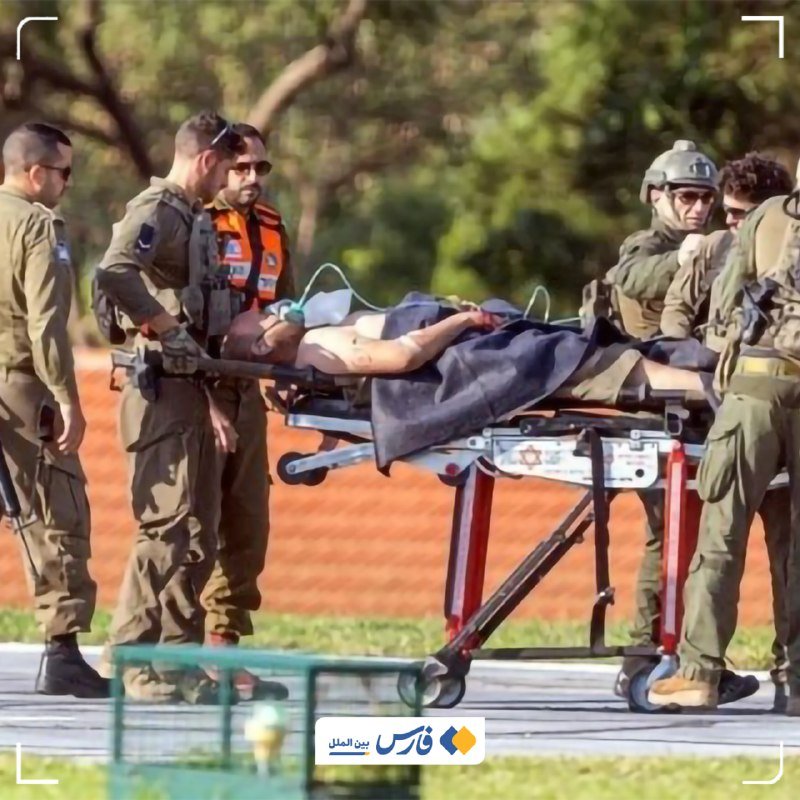
On the same day, according to reporting by Iranian state-aligned outlets including Tasnim News and Press TV, a Hezbollah drone struck Israeli forces in southern Lebanon. The Israeli military acknowledged casualties among its troops. Separately, Lebanese Parliament Deputy Speaker Gibran Basil — representing a Christian political movement — publicly aligned himself with the resistance framework, describing armed resistance as a pillar of Lebanese national power. Three data points, three platforms, one message: the resistance is not a fringe position in Lebanese politics. It is a structural feature.
Western coverage of this sequence will reach for language of escalation and threat. That framing is not wrong, but it is incomplete. What the May 20 messaging reveals is something more consequential: the resilience of a political vocabulary that the West spent decades attempting to delegitimize, and its continued ability to shape how large parts of the Middle East — and the Global South broadly — understand the conflict. That vocabulary has not been defeated. It has been sharpened.
The Drone Strike and What It Signifies
The tactical detail matters. Hezbollah did not fire a rocket from a distance and wait for confirmation. It deployed a drone — a precision platform — into an active military zone and struck a target among Israeli soldiers. The group then publicized the strike. According to Iranian state-adjacent reporting, the Israeli army admitted that a number of its forces were injured in the attack. The combination of operational capability and deliberate public communication is not accidental. It is a message to three audiences simultaneously: the Israeli military, which must now account for a threat it cannot fully preempt; the Lebanese domestic audience, which is reminded that the resistance delivers results; and the broader axis of aligned forces, which calibrates its own posture accordingly.
This is how deterrence signaling works in practice — not through formal diplomatic channels but through demonstrated capability followed by public acknowledgment. The May 20 drone strike, assessed alongside the accompanying political statements, reads as a single coordinated act rather than two separate events. That coordination is itself a form of power.
Why the Resistance Vocabulary Persists
The language of "resistance" against "occupation" carries specific ideological weight. It reframes armed action not as aggression but as the fulfillment of a historical obligation — the defense of sovereign territory against a foreign presence that has persisted, in various forms, since 1978. It also carries generational continuity: the fighters of 2026 invoke the same framing as those who fought the Israeli occupation of southern Lebanon before the 2000 withdrawal. That continuity is not mythological. For communities in south Lebanon, the Israeli presence — whether as a border patrol, an aerial surveillance zone, or an occupying force — has been a lived reality across multiple decades.
This framing does not travel equally everywhere. In Washington, London, and Brussels, "resistance" is treated with suspicion at best and condemnation at worst. But in Tehran, in Baghdad, in parts of North Africa and the Horn of Africa, in South Asian capitals where anti-colonial movements shaped national identity, the vocabulary lands differently. The implication is not that Hezbollah's characterization is universally accepted. It is that the international conversation about the Middle East is not, in fact, conducted in a single language — and that Western observers who assume their dominant frame is neutral are making an analytical error.
The sustained Gaza conflict, now in its fourth year, has reinforced rather than discredited this vocabulary. Every month of bombardment in Gaza makes the resistance frame more legible to audiences outside the region who might otherwise dismiss it as regional propaganda. Whether that effect is intended or incidental is beside the point: the frame holds.
The Counterpoint Western Analysts Will Raise
Israeli defense officials and their Western counterparts would offer a different account. From their perspective, the Israeli military presence in southern Lebanon is a response to the existence of a hostile armed force — Hezbollah — that has explicitly committed to the destruction of the Israeli state. The 2006 war did not resolve this threat; it paused it. Israeli operations in recent years, including strikes inside Lebanon, are framed as anticipatory self-defense against an organization that retains a vast arsenal and has demonstrated willingness to use it. The drone strike of May 20 is evidence for this argument, not a refutation of it.
This counterpoint is serious and should not be waved away. Hezbollah is a non-state armed actor with its own command structure, strategic objectives that do not always align with Lebanese state interests, and a financing and weapons pipeline that operates largely outside any international legal framework. Whatever the legitimacy of resistance as a concept in the abstract, its operationalization by a specific group with specific capabilities demands separate analysis.
But the existence of a legitimate Israeli security concern does not automatically invalidate the structural argument about the persistence of the occupation framing. Both things can be simultaneously true: Hezbollah poses a genuine threat to Israeli civilians, and the framing through which that threat is understood by a significant portion of the regional and Global South audience is one that Western policy has failed to displace.
What This Means for the Region's Trajectory
Lebanon enters this moment in a condition of profound institutional fragility. The state apparatus is weakened, the economy has not recovered, and political authority is distributed across competing power centers in ways that make coherent national strategy nearly impossible. Into that vacuum, Hezbollah's resistance posture provides something the Lebanese state cannot: a narrative of purpose and a demonstrated capacity to impose costs on a more powerful adversary. Gibran Basil's public alignment with the resistance framing — delivered as it was by a figure from a Christian political movement — signals that this narrative has moved well beyond the Shia community that forms Hezbollah's base. It is becoming a cross-sectarian reference point.
For Israel, the northern border presents a strategic dilemma without an easy exit. Civilian populations in the north have been evacuated. Military options carry the risk of a second front at a moment when Gaza operations have not concluded. Diplomatic negotiations have produced no durable ceasefire. The drone strike of May 20 is a reminder that the clock is running.
The deeper question — one the sources do not fully answer — is whether this represents genuine strategic escalation or calibrated pressure ahead of renewed diplomatic contact. Hezbollah's public statements and battlefield actions have historically been coordinated with diplomatic timelines. Whether the May 20 messaging signals a decision point or a positioning move remains unclear from the available record.
What is clear is that the vocabulary of resistance has survived everything the Western policy establishment has deployed against it: military pressure, diplomatic isolation, economic sanctions, and sustained public messaging campaigns. That survival is itself a fact that deserves acknowledgment — not as a judgment about legitimacy, but as a description of political reality that any durable regional solution will have to account for.
Monexus led with the operational facts — the drone strike, the Israeli casualty acknowledgment, and Basil's political statement — treating the resistance frame as a structural feature of regional politics rather than a fringe phenomenon. Western wire coverage will likely foreground Israeli casualty figures and government statements. The framing gap between those two approaches is the story.
Wire provenance
This editorial synthesis draws on the following public wire/social posts:
- https://t.me/presstv/78689
- https://t.me/tasnimnews_en/52401
- https://t.me/JahanTasnim/32188