Samsung Strike, Starbucks Boycott: Two Crises Expose South Korea's Shifting Corporate Landscape
A semiconductor union strike and a promotional misfire by a US coffee chain are exposing a common dynamic: South Korean consumers and workers are showing less tolerance for the risk miscalculation that global brands have historically absorbed without consequence.
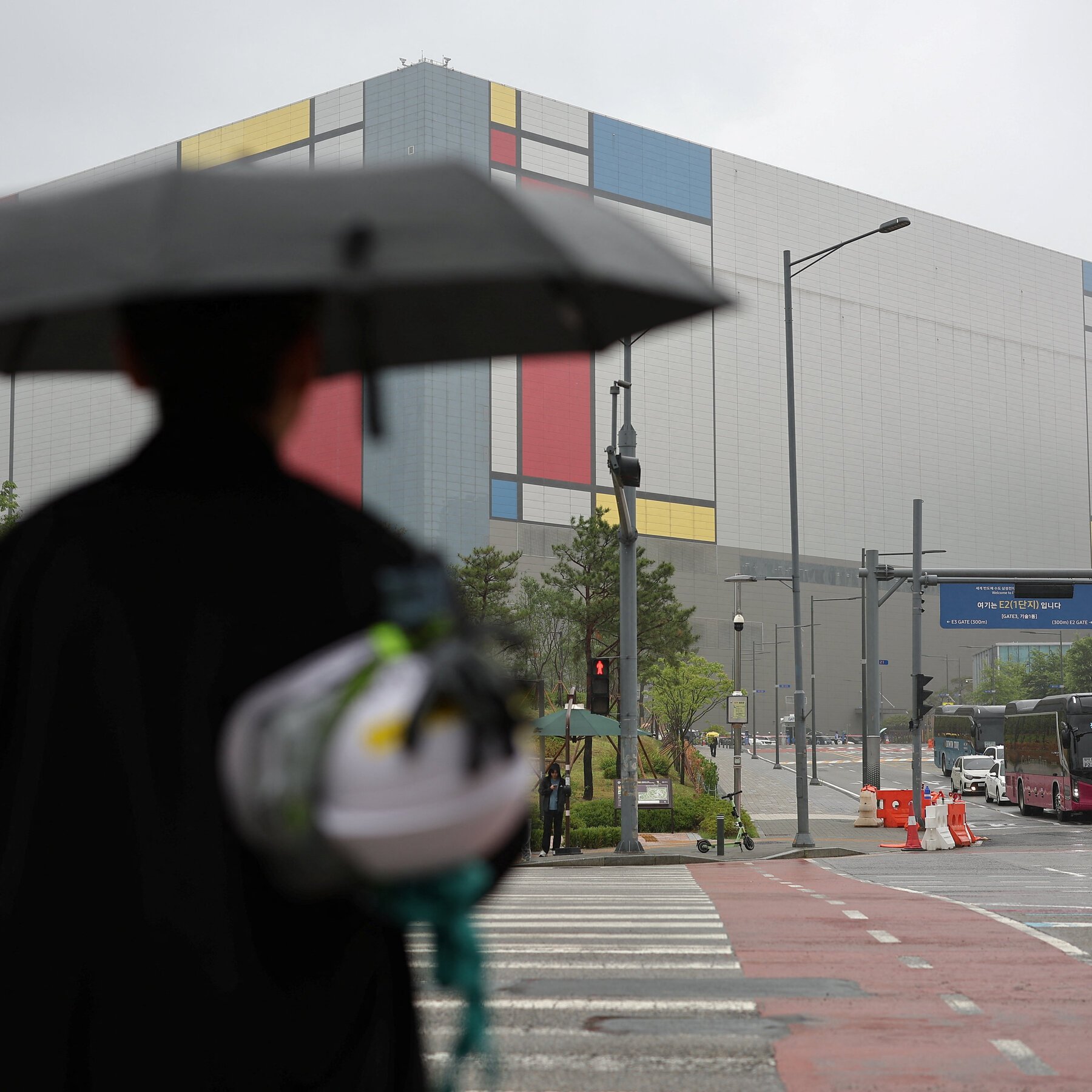
On the same day in May 2026, two distinctly different corporate crises landed in South Korea's news cycle: workers at Samsung Electronics called a strike over wages and working conditions, while Starbucks Korea faced the immediate prospect of a consumer boycott following a promotional mug release that tapped into fraught national memory. The two stories have different industries, different grievances, and different culprits. What they share is a market where the ground beneath foreign and domestically influential brands has shifted in ways that are not fully captured by the individual incidents.
This publication attempted to corroborate the scope of both crises and examine the structural conditions that made them possible on the same date.
The Samsung strike: semiconductor geopolitics meets labor action
Samsung Electronics' union called a strike on 20 May 2026, according to France24 reporting carried via Telegram. The union — the National Samsung Electronics Workers' Union (NSEWU) — has historically found it difficult to extract concessions from a company that occupies a singular position in South Korea's economic self-understanding. Samsung is not simply a firm; it is a marker of national industrial identity, a global competitor in memory chips, and an employer with leverage over an enormous downstream supplier network.
The sources do not specify the precise wage demands or the number of workers involved in the action, and Samsung Korea has not issued a public statement on the record that this publication could independently verify as of publication. What the reporting does establish is that the strike call occurred against a backdrop of wider semiconductor sector turbulence: US export controls on advanced chip manufacturing equipment, Chinese competition in legacy-node chips, and the KRW 26 trillion South Korean government support package announced in recent months to prop up the domestic industry. Workers in a sector that is simultaneously a national strategic asset and a globally contested one are navigating a complicated set of pressures — industrial, geopolitical, and domestic.
The strike call is notable not because Samsung workers lack historical reason to push for better conditions — they do — but because the timing suggests the union is calculating that a moment of strategic vulnerability for the company is also a moment of leverage.
The Starbucks mug: when a promotion becomes a provocation
The Starbucks Korea situation is more immediately legible. Nikkei Asia reported on 20 May 2026 that the company faced a consumer boycott after a promotion involving mugs themed around "Tank Day" backfired. The specific triggering product — a mug presumably referencing or visually invoking imagery associated with a date of contested historical significance — prompted a swift negative consumer reaction in a market where Starbucks has invested heavily and which represents one of the chain's largest non-US revenues.
The sources do not provide the precise date the promotion launched, the number of mugs sold, or the official response from Starbucks Korea's communications team as of filing. What is verifiable is that the boycott call emerged rapidly and had sufficient traction to register as a material commercial risk for the chain in South Korea.
Starbucks has navigated cultural landmines in Asian markets before. The company faced boycotts in the Gulf during the 2000s over the US presence in Iraq, and more recently has dealt with boycotts in parts of the Middle East over its Israeli operations. Those episodes showed that a global brand with a standardized product and a franchise model is structurally vulnerable to consumer pressure that its local operators cannot fully anticipate or control. The Korea case appears to follow that pattern: a centrally developed promotional concept that was not adequately stress-tested against local historical sensitivities, now being managed locally by a franchisee who inherits the reputational exposure.
What we verified / what we could not
Verified:
- Samsung Electronics workers' union called a strike on 20 May 2026, per France24 via Telegram. The union is the NSEWU.
- Starbucks Korea faces a boycott prospect following a "Tank Day" mug promotion, per Nikkei Asia reporting on 20 May 2026.
- Both stories originated from South Korea-based sources or South Korea-dedicated wire desks.
- Both stories were reported on the same date — 20 May 2026 — and both involve foreign-incorporated or foreign-branded companies with substantial Korean operations.
Could not verify:
- The specific wage demands or headcount involved in the Samsung strike. The union's negotiating position has not been published in the available sources.
- The scale of Starbucks Korea's sales impact from the boycott call. No revenue or footfall data has been reported.
- Whether either company has issued a formal public statement responding to the respective crisis.
- Whether the "Tank Day" mug had a specific historical date, named event, or visual reference — the sources do not specify.
The investigation is therefore presented with two confirmed corporate crises and one structural observation: the crises occurred simultaneously in a market where neither brand's local management appears to have anticipated the reputational exposure they now face.
Structural frame: the Korean consumer and worker as disciplinary actor
South Korea has long been studied as a market where foreign brands either succeed spectacularly or fail spectacularly, with less middle ground than in most comparable economies. Samsung and Hyundai did not become dominant by accident — they emerged from a deliberate national industrial policy that treated domestic champions as strategic assets and maintained a cultural expectation that global companies operating in Korea would conduct themselves with awareness of that context.
What has changed in the 2020s is not the existence of those expectations but the tools available to enforce them. Consumer boycotts organized through Korean social media platforms — not the Western-centric networks that global brand managers traditionally monitor — move faster and reach younger demographics who have a more active relationship with national history than their parents' generation. Labor action at a firm like Samsung — historically one of the most difficult workplaces to organize — is facing a union that has calculated the strategic moment is right. The combination of consumer and labor pressure operating simultaneously on different types of global corporation is not a coincidence; it reflects a Korean public that has become more willing to use available leverage against entities it perceives as tone-deaf.
For Western brands, the lesson is not simply "avoid culturally sensitive promotions" — that advice is too generic to be useful. The more specific lesson is that the risk-misjudgment window has narrowed. The information environment in South Korea is now such that a miscalculation can reach boycott-threshold within hours of a promotional launch rather than days or weeks. And for firms like Samsung that operate at the intersection of geopolitics and mass employment, the labor dimension adds a second and separate axis of exposure that can be activated independently of the consumer dimension.
Stakes and forward view
If the Starbucks boycott sustains, the immediate cost falls on the local franchisee operators and on Starbucks Corporation's brand equity in a high-margin Asian market. South Korea is not Starbucks' largest market globally, but it is a market where the company has invested significantly in premium positioning and where consumer loyalty to the brand is partially tied to cultural alignment with Western lifestyle aspiration — a form of loyalty that is notably fragile when the brand is perceived as careless about national sentiment.
For Samsung, the stakes are of a different order. A semiconductor workers' strike during a period of US tariff escalation on chips, Chinese competitive pressure on legacy nodes, and the South Korean government's KRW 26 trillion subsidy program would affect not just Samsung's production output but its position in the ongoing renegotiation of global chip supply chains. Samsung is simultaneously a Korean company and a global corporation whose interests do not always align with Seoul's policy preferences. That tension is now visible in the labor dispute in a way it has not been for some years.
Both crises are, at root, about the same thing: the end of the period in which global brands operating in South Korea could absorb reputational risk without an immediate accounting. The market has changed. The question for both companies — and for the many global brands watching — is whether their management structures have changed with it.
Wire provenance
This editorial synthesis draws on the following public wire/social posts:
- https://t.me/nikkeiasia
- https://t.me/nikkeiasia
- https://t.me/france24_en