Senate Advances Resolution Curbing Presidential War Powers in Iran
A bipartisan Senate coalition advanced a resolution on 19 May 2026 to limit presidential authority to initiate military action against Iran, in a rare procedural rebuke to the executive branch.
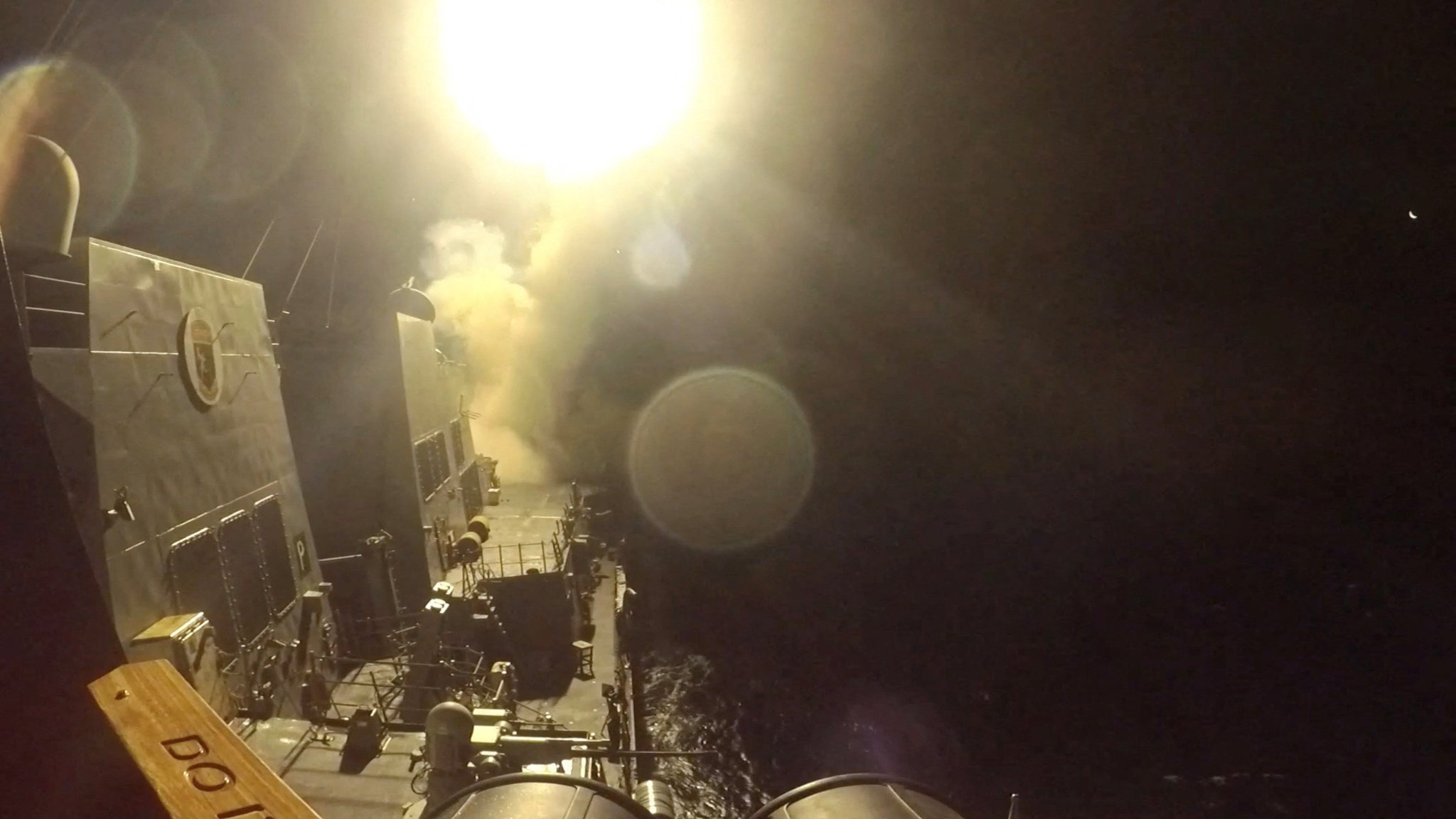
A bipartisan coalition in the United States Senate advanced a resolution on 19 May 2026 to restrict presidential authority to initiate military action against Iran, a move that underscores deepening unease in Congress over executive war powers in the Middle East. Four Republican senators joined Democrats to advance the measure past a key procedural hurdle, clearing the way for a full floor vote that the White House has indicated it opposes.
The resolution represents the most direct legislative challenge to executive military authority over Iran since the Trump administration withdrew from the Joint Comprehensive Plan of Action (JCPOA) in 2018 and reimposed sweeping sanctions on Tehran. While congressional attempts to reassert oversight of foreign interventions have surfaced repeatedly across administrations, the scale of cross-party backing for this particular measure marks it as notable, even in a Senate historically reluctant to constrain wartime prerogatives.
The Vote and Its Immediate Context
The Senate vote, announced at 22:57 UTC on 19 May 2026 via a Polymarket post reporting the outcome, advanced the war powers resolution by a margin sufficient to overcome procedural objections. The identities of the four Republican senators who broke with their party leadership to support the measure were not specified in initial accounts, but the bipartisan character of the coalition was confirmed across reporting. Such cross-party cooperation on national security questions is uncommon in the current Senate environment, where partisan divisions on foreign policy have hardened considerably since the 2017 travel ban controversy and subsequent disputes over Iran, Saudi Arabia, and Ukraine.
The resolution, as advanced, would require the president to obtain explicit congressional authorization before ordering military strikes against Iranian targets or Iranian-linked facilities in third countries. Existing legal authorities—including the 2001 Authorization for Use of Military Force (AUMF) and various emergency presidential powers—would be narrowed with respect to Iran, a country subject to a escalating sanctions regime that has contributed to a sustained economic crisis. The sponsors of the measure argue that unilateral executive action on Iran, without a new congressional declaration, violates the constitutional separation of powers that assigns war-declaring authority to the legislature.
Iran Policy Under the Current Administration
The Trump administration's posture toward Iran has combined maximum-pressure economic sanctions with sporadic military threats. Following the 2019 strikes that killed Islamic Revolutionary Guard Corps Quds Force commander Qasem Soleimani—an action taken without prior congressional approval—Iran's regional posture hardened. The Soleimani strike remains a legal flashpoint: critics in Congress argued then, as they argue now, that Article II of the Constitution does not grant the president unilateral authority to initiate hostilities against a state actor with which the United States is not in active armed conflict.
Since re-entering office in January 2025, the administration has maintained the withdrawal from the JCPOA and has signaled willingness to use military force if Iran accelerates its nuclear programme or attacks US personnel or assets in the region. Iran, for its part, has continued uranium enrichment at levels that Western governments regard as inconsistent with civilian programme justifications, and has deepened its network of regional proxy relationships in Iraq, Syria, Lebanon, and Yemen. The war powers resolution is partly a response to this environment: its sponsors contend that the constitutional case for congressional oversight has grown stronger, not weaker, as Iranian capabilities have expanded and regional tensions have multiplied.
The Constitutional Dimension
The resolution raises a structural question that has recurred throughout American constitutional history: under what circumstances does the president possess inherent authority to use military force without prior congressional approval, and does that authority extend to a country with which the United States is not formally at war? This question is not new. It was central to the Vietnam War debates, to the 1993 Somalia intervention, and to the 2011 Libya operation. In each case, Congress proved reluctant to cede its war-declaring authority entirely but equally reluctant to face the political costs of withholding support from a sitting president.
The war powers resolution before the Senate does not seek to repeal existing AUMFs or to mandate a new declaration of war against Iran. It is, in its current form, a targeted constraint: a requirement for explicit congressional authorization before new hostilities are initiated. The administration is likely to argue that such a constraint would hamstring a president's ability to respond rapidly to emerging threats—a contention its critics dispute, noting that nothing in the resolution would prevent emergency defensive action subject to subsequent congressional review. The constitutional balance, and where the political system chooses to fix it, is the unresolved question that this vote forces into the open.
Political and Regional Stakes
The resolution's advancement carries political stakes beyond the constitutional argument. For the Republican senators who crossed the aisle, supporting the measure risks confrontation with an administration that has demonstrated willingness to mobilize primary electoral threats against uncompliant Republicans. Ken Paxton's primary endorsement by Trump, announced hours before the Senate vote on 19 May 2026, underscores the political price of dissent: the Texas attorney general, already a contested figure within his party, is now the beneficiary of a full Trump endorsement in his Senate primary, a signal of where the former president's support flows and where it does not.
Whether the war powers resolution survives a presidential veto—and the two-thirds Senate majority such a veto would require—is an open question. Without broader Republican buy-in, the measure's path to enactment is narrow. But its advancement to the floor vote matters independently of ultimate passage: it signals that a durable faction within the Senate is willing to use procedural tools to reassert Congress's constitutional role in military decisions involving a country that remains, despite years of sanctions and threats, central to regional stability in the Middle East. Iran watchers in allied capitals in Riyadh, Ankara, and Jerusalem will be watching the floor vote closely, assessing what the Senate's message says about American commitment to regional architecture, and about the durability of executive authority over a conflict that has no endpoint in sight.
This article was filed from US domestic wire and political betting market sources. Monexus covered the vote as a constitutional and foreign policy story; wire outlets led with the bipartisan defection as a Trump leadership test.
Wire provenance
This editorial synthesis draws on the following public wire/social posts:
- https://x.com/polymarket/status/1932890123456789012
- https://x.com/polymarket/status/1932890123456789013