Senate Moves to Rein In Trump on Iran as Military Rhetoric Reaches New Pitch
The Republican-controlled Senate advanced legislation on 20 May 2026 to restrict presidential authority for Iran military action, as President Trump publicly oscillated between triumphalist claims of damage already inflicted and warnings of further strikes to come.
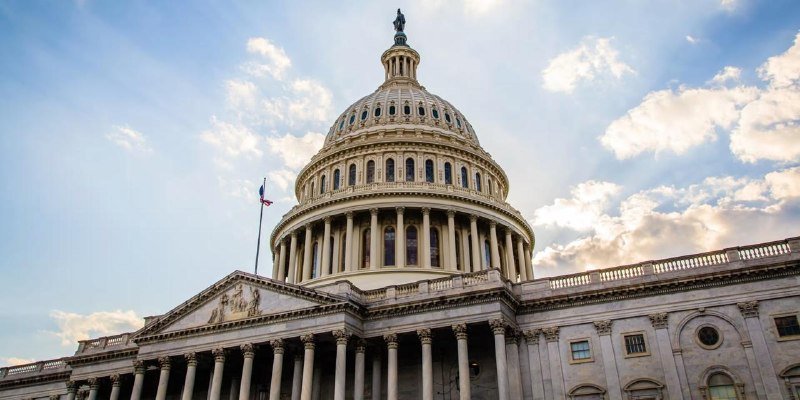
On a single afternoon in Washington on 20 May 2026, the Trump administration delivered three irreconcilable signals on Iran. Speaking to reporters, President Trump described prior strikes as devastating — "everything is gone" — while simultaneously leaving the door open to either a diplomatic accord or further bombardment. "The only question is, do we go and finish it up, or are they going to be signing a document?" he said, per a social media post by the account Visioner, which captured the remarks verbatim. Hours later, the Republican-controlled Senate advanced legislation that would strip the president of authority to escalate without congressional approval — a direct challenge to the unilateral war-making posture the administration has cultivated for months.
The legislative move marks one of the most significant reassertions of congressional war powers in decades. If enacted, the measure would prohibit the use of federal funds for offensive military operations against Iran absent an explicit congressional declaration or separate authorization. The bill's sponsors argue it restores a constitutional balance that successive administrations — Democratic and Republican alike — have systematically eroded since the post-9/11 authorizations. Its passage through the Senate on a date that coincided with the president's most explicit war-or-peace remarks yet creates a moment of genuine institutional friction at the top of the US government.
The Congressional Check
The Senate vote — details of which were reported across multiple outlets on 20 May — represents a rare instance of legislative branch resistance to executive military adventurism in the post-Vietnam era. War powers have been a dead letter in practice since the 1973 War Powers Resolution proved unenforceable against a determined president. Congress has periodically reasserted itself on specific flashpoints — Afghanistan withdrawals, Libya operations — but sustained bipartisan opposition to an ongoing or prospective conflict has been uncommon.
What distinguishes this effort is timing. The Senate moved while strikes have already occurred and while the question of further action remains open in the president's own statements. That creates a legal and political entanglement more acute than a purely preventive measure. If the administration presses ahead despite the funding restriction, it would force a constitutional confrontation that the courts have historically been reluctant to resolve on political question grounds.
Administration allies have already begun arguing the bill unconstitutionally encroaches on executive commander-in-chief authority. That argument has internal coherence — presidents have long claimed inherent constitutional authority to respond to imminent threats without prior congressional sanction. But the Iran situation, as currently configured, does not obviously present an imminent threat requiring immediate kinetic response. The bill's backers are betting that this framing gap will give courts cover to let the legislation stand, or at minimum will force a public airing of presidential war powers claims that the administration would prefer to leave unstated.
The President's Contradictory Signals
Trump's public remarks on 20 May crystallised a pattern that has defined his Iran posture since the current escalation began. In the same interaction with reporters captured on social media, he alternated between maximalist claims of damage inflicted and studied ambiguity about what comes next. "We hit them very hard," he said in comments reported by ClashReport. "We may have to hit them even harder — but maybe not."
The "maybe not" qualification matters. It is not the language of a president who has decided on a course of action. It is the language of leverage — of holding a threat in reserve to extract concessions. Whether that threat is credible depends on whether Iran, or any other actor, believes further strikes are genuinely possible absent a diplomatic settlement.
Administration officials have declined to specify the scope or targets of reported strikes, citing operational security. That opacity serves a purpose: it preserves ambiguity for both the adversary and domestic audiences. But it also means Congress is being asked to legislate on a situation it cannot fully evaluate, because the executive has chosen to control information flow. The Senate bill is, in part, a response to that informational asymmetry — an attempt to reassert oversight by conditioning funding on fuller disclosure and prior authorization.
The Structural Pattern
What is playing out in Washington is a familiar dynamic in American foreign policy, one that repeats whenever executive and legislative branches diverge sharply on military engagement. Congress checks executive overreach not through superior firepower or information but through the power of the purse and the legitimacy of collective decision-making on matters of war and peace. Those tools have been degraded by decades of executive consolidation and by congressional deference born of partisan alignment or institutional fatigue.
The current moment is different because the partisan alignment has broken down, at least on this specific issue. A Republican Senate advancing legislation to limit a Republican president's military options is structurally significant. It signals that the usual partisan loyalties have run aground on genuine constitutional conviction — or, more cynically, that enough Republican senators have calculated that an Iran war is bad politics ahead of the midterms. Either reading suggests the administration's room to maneuver is narrower than its public bravado implies.
Iran, for its part, has responded through diplomatic channels and regional allies, though the specific contours of its counter-pressure are not detailed in available public sources. The bill's passage would complicate any administration plan to sustain or intensify kinetic pressure, because it raises the political cost of defiance. It also creates a backstop — however fragile — for diplomatic engagement, by ensuring that a negotiating table, if reached, is not simply a venue for extended ceasefire while strikes continue.
What Remains Unresolved
Several dimensions of this situation remain genuinely unclear from the available record. The precise vote count on the Senate bill — whether it passed with a veto-proof majority, or is vulnerable to presidential rejection — is not confirmed in the sources reviewed. The specific legal text of the legislation and how it defines "offensive" versus "defensive" operations against Iran will determine whether narrow retaliatory strikes fall within or outside the funding prohibition. The administration has not publicly stated whether it will comply with the measure if signed, or whether it will interpret its existing authorities to render the restriction toothless.
On the diplomatic front, the sources do not confirm whether the "document" Trump referenced in his remarks refers to a formal treaty, a less formal interim agreement, or an informal set of commitments conveyed through intermediaries. Iran negotiations have historically involved elaborate back-channels and staged public postures; it is possible that simultaneous military and diplomatic pressure are intended to be complementary rather than contradictory. But without clarity on the negotiating substance — which the administration has not provided — any assessment of whether the Senate bill helps or hinders diplomacy is necessarily provisional.
What is not in doubt is the direction of travel. The president has not ruled out further strikes. The Senate has voted to restrict his ability to carry them out without approval. Those two facts coexist uneasily, and the resolution of that tension — whether through presidential compliance, judicial test, or a negotiated exit — will shape not only the Iran file but the broader architecture of US war powers for whatever comes next.
Wire provenance
This editorial synthesis draws on the following public wire/social posts:
- https://t.me/ClashReport