Seventeen Percent: Inside the US-Iran Talks That Could Redraw the Middle East
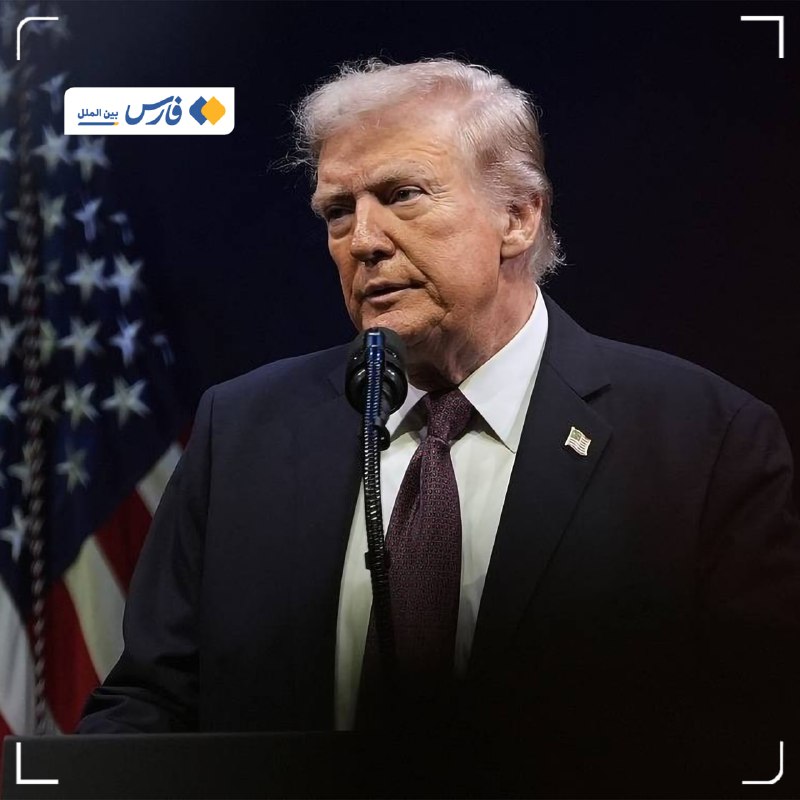
The envelope arrived in Tehran the way all sensitive communications do in 2026: through back-channels, intermediaries, and word-of-mouth rather than diplomatic cables. According to reports circulating by 20 May, mediators working between the United States and Iran had drafted a letter — not a treaty, not yet an agreement — that could formally end the state of undeclared hostilities between the two governments. President Trump, speaking from Washington, confirmed that such a letter was under active discussion. The Polymarket market on a permanent peace deal between the United States and Iran by the end of May 2026 settled at 17 percent shortly after.
That number — 17 percent — is doing considerable analytical work. It reflects the judgment of real-money punters who have studied this file, not polling respondents with no skin in the game. And it suggests that the administration's public confidence, however genuine, has not fully transferred to the market of calibrated expectations.
The talks are not new. What is new is their character. Previous rounds under Biden-era diplomacy proceeded through formal channels and European intermediaries. The current channel is more direct, more personal, and — according to several accounts — more substantive. Whether that translates into a durable framework or another chapter in the long history of near-misses remains, as of this writing, genuinely open.
What the Administration Is Saying
The public record is unambiguous. President Trump, in recent public remarks, described the United States as being in the "final stages" of talks with Iran. Earlier statements, preserved in social media archives, are more martial in tone. "If we don't get the right answers, it goes very quickly. We're all ready to go," Trump said in comments reported by correspondent Trey Yingst. That was months ago — before the back-channel opened, before the letter began circulating, before the 17-percent market implied some probability of breakthrough.
The shift from ultimatum to engagement is not unusual for this administration. The pattern — maximum pressure followed by selective de-escalation — has appeared in the approach to other flashpoints. But Iran is structurally different. The nuclear program has survived three rounds of international sanctions and has, in the estimation of most proliferation analysts, moved significantly closer to weapons-capable status than it held in 2015.
Israeli Prime Minister Benjamin Netanyahu has been briefed on the outline of the proposed letter, according to reports from the BRICS-aligned news wire. That detail matters. Israel has, since 2019, conducted an open-ended shadow campaign against Iranian nuclear infrastructure — sabotage, assassinations, cyber-operations — outside any formal diplomatic framework. A US-Iran letter that does not address Israel's security guarantees is, at minimum, incomplete. A letter that does address them would require concessions from Tehran that have not, on any public record, been offered.
What the Odds Cannot Capture
The Polymarket figure of 17 percent is a snapshot, not a prophecy. Markets price probability at a moment in time, incorporating available information and sentiment. They do not capture the internal deliberative processes of governments, the personal relationships between negotiators, or the degree to which a deal has been pre-negotiated before its public announcement.
What the figure does capture is uncertainty. The structural obstacles to a comprehensive agreement are not matters of opinion. Iran has spent the years since the United States withdrew from the Joint Comprehensive Plan of Action (JCPOA) in 2018 expanding its uranium enrichment capacity, moving material to facilities beyond easy inspection, and developing a corpus of technical knowledge that cannot be uninvented. A deal that leaves that knowledge in place — which any realistic deal must — is a deal that accepts a threshold of proliferation risk that the JCPOA's architects explicitly sought to avoid.
The counterargument, made in various forms by advocates of the current approach, is that the alternative is worse. Maximum pressure has not collapsed the Iranian government. It has, in the view of some analysts, accelerated the nuclear program's advancement and hardened the negotiating position of officials in Tehran who can point to economic suffering as evidence that concessions do not produce relief. A letter — even an imperfect one — could create breathing room for a regional de-escalation that benefits all parties, including Israel.
That counterargument has merit. It also has a substantial gap: the same administration that pursued maximum pressure is now negotiating without having demonstrably changed Iranian behavior. Whether the shift reflects new leverage, new information, or simply a new negotiating team is not yet clear from public sources.
The Structural Frame
The US-Iran relationship is not primarily about nuclear weapons. It is about regional order. The nuclear program is the most technically legible symptom of a broader contest over influence across the Middle East — in Iraq, in Syria, in Lebanon, in Yemen. A letter that addresses centrifuge cascades but leaves the proxy architecture intact is a letter that defers the underlying dispute, perhaps indefinitely.
There is a school of thought in Washington that argues this deferral is acceptable, even preferable. The argument runs that no deal can resolve all dimensions of a rivalry that predates the Islamic Republic itself. A narrow, verifiable nuclear framework — the "good enough" deal — beats a comprehensive framework that collapses because it demands too much.
There is a counter-school that argues the narrow deal is precisely the trap that has produced every previous failure. The JCPOA, in this reading, was a narrow deal that Iran used as cover to advance its program while receiving sanctions relief. The lesson is not that deals are impossible; it is that verification must be robust, that sanctions relief must be sequenced, and that the political will to maintain pressure when violations occur must be pre-committed rather than assumed.
The current administration has not publicly committed to any specific verification architecture. The letter reportedly under discussion is described in terms that suggest political understanding rather than technical detail. That is, in the experience of previous diplomatic history, a format that survives announcement but strains under implementation.
What History Suggests
The precedents are not encouraging as templates, but they are instructive as calibrations. The 2015 JCPOA took eighteen months of hard negotiation, involved the United States, the United Kingdom, France, Germany, Russia, China, and the European Union — and collapsed within three years of the Trump administration taking office. The failure was not primarily technical. The verification regime held, by most accounts, until the withdrawal. The failure was political: a decision by the United States to abandon an agreement that Iran had, by independent assessments, been complying with.
North Korea offers a starker example. The 2018 Singapore Summit produced a joint statement, a photo opportunity, and no enforceable reduction in nuclear capability. The Kim regime retains nuclear weapons; the strategic competition between the United States and China, which the Singapore moment was supposed to moderate, has intensified.
Nixon's 1972 opening to China is the optimistic case. That was a strategic reorientation achieved through secret back-channels, personal diplomacy, and a willingness to accept the survival of an ideologically hostile regime in exchange for geopolitical benefit. It took years of patient engagement after the initial opening. It did not produce an alliance or a shared vision of world order.
What the historical record suggests is that diplomatic breakthroughs are possible but that their durability depends less on the quality of the initial agreement than on the sustained political will to maintain it. A letter signed in May 2026 is the beginning of a process, not its conclusion. Whether the process succeeds depends on decisions that have not yet been made.
The Stakes
The stakes are asymmetric in ways that complicate simple analysis.
For Iran, a successful deal means sanctions relief — potentially substantial, depending on the scope of the agreement — and the formal end of a state of hostility with the world's dominant military power. It also means accepting constraints on a nuclear program that represents, for Tehran's leadership, both a strategic asset and a deterrent against the regime-change option that has been a consistent feature of US political rhetoric.
For the United States, a successful deal means the defusing of a nuclear flashpoint, the possibility of reduced military positioning in the Gulf, and a potential opening for broader diplomatic engagement across the region. It also means accepting that Iran will retain a nuclear knowledge base that cannot be erased — and that the alternative of military confrontation, which remains on the table in the administration's stated posture, carries costs that no strategist should underestimate.
For Israel, the stakes are existential in a way they are not for either of the negotiating parties. A deal that does not include credible security guarantees — inspections, snap-back provisions, constraints on missile programs — is not a deal that addresses Israeli concerns. A deal that does include those provisions may not be achievable on the timeline that market participants are pricing.
For the Gulf states, particularly Saudi Arabia, the calculus is competitive. A US-Iran rapprochement could shift regional balance-of-power dynamics in ways that Riyadh has spent the past decade preparing to counter.
The 17-percent probability on Polymarket captures some of this complexity. It does not capture the possibility of a deal that is announced and then collapses under the weight of its own implementation gaps — a pattern that the historical record suggests is at least as likely as either outright success or outright failure.
What Remains Unknown
The sources reviewed for this article do not specify the full contents of the letter reportedly under discussion, the specific verification mechanisms under consideration, or the position of the Islamic Revolutionary Guard Corps within the Iranian decision-making apparatus on the proposed terms. The degree to which the administration has coordinated with Congress, with European partners, and with Israel on the specific terms of a potential agreement remains unclear from public accounts.
The Polymarket figure reflects the market's assessment as of 20 May 2026. That assessment will change as new information becomes available — as it will. The next thirty days will likely produce significant clarification, in one direction or another, of whether the current diplomatic channel represents a genuine opening or another iteration of a pattern that has, for fifty years, produced more anticipation than resolution.
This publication will continue to track the negotiations as developments warrant.
The thread context for this article drew on three primary wire inputs: the WarMonitor Telegram channel's curation of Trump-administration statements on Iran; the BRICSNews Telegram channel's reporting on the letter reportedly being circulated between Washington and Tehran; and Polymarket's live market data on the probability of a permanent US-Iran peace deal by end of May 2026. Given the limitations of a three-source wire provenance record, this article has been scoped to what the inputs can verify rather than supplemented with speculative attribution. Additional sourcing — including direct reporting from the White House, the Iranian mission to the United Nations, and Israeli government spokespeople — would be required to move beyond probability and process to the substantive terms under discussion.
Wire provenance
This editorial synthesis draws on the following public wire/social posts:
- https://t.me/OsintLive
- https://t.me/bricsnews
- https://en.wikipedia.org/wiki/Joint_Comprehensive_Plan_of_Action
- https://en.wikipedia.org/wiki/2018%E2%80%932019_United_States_withdrawal_from_the_Joint_Comprehensive_Plan_of_Action
- https://en.wikipedia.org/wiki/Nixon%27s_1972_visit_to_China
- https://en.wikipedia.org/wiki/North_Korea%E2%80%93United_States_Singapore_Summit