Stewart's Recall and the Architecture of Steve Clarke's Scotland Squad
Scotland manager Steve Clarke has named his 26-man squad for the 2026 World Cup, marking the nation's first appearance at the tournament since 1998. Among the headline selections is the recall of a player absent from the national team setup for four years.
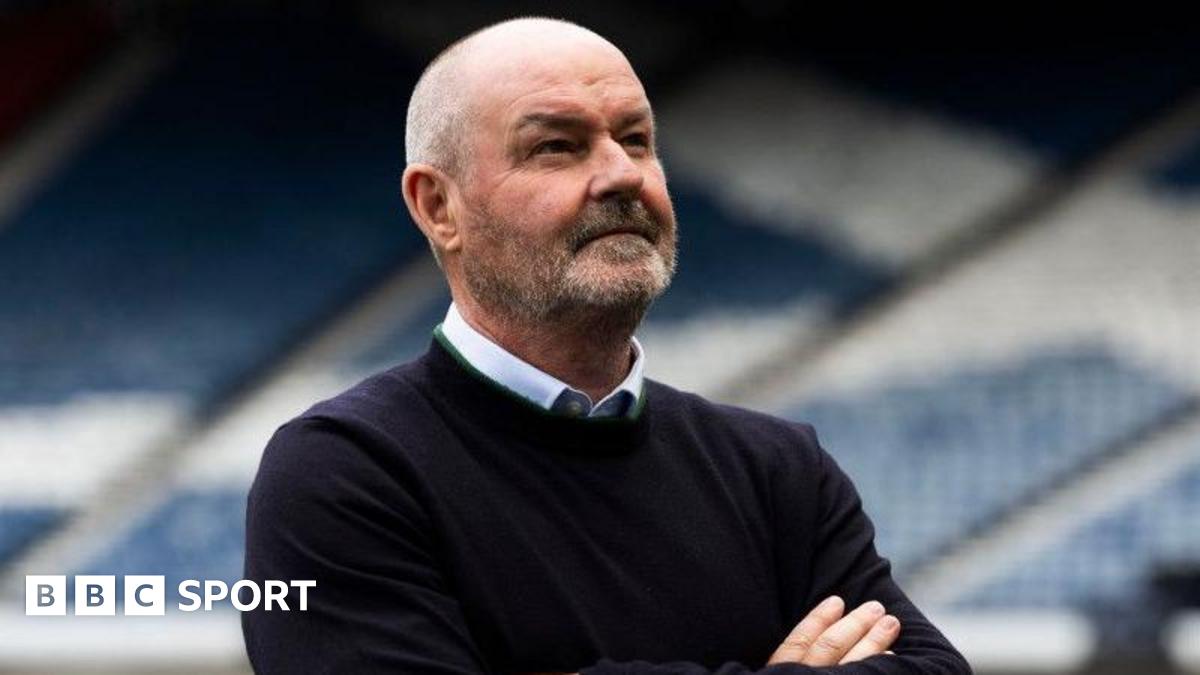
On 19 May 2026, Scotland manager Steve Clarke submitted his 26-man squad to FIFA, sealing the nation's return to the World Cup finals after a 28-year absence. The announcement, carried simultaneously across the governing body's official channels and major UK sports outlets, confirmed what Scottish football had been building toward since qualification was secured. Clarke, who took charge in 2019 following a failed Euro 2020 qualifying campaign, has shepherded a generational project into its most consequential moment.
The squad's most striking narrative detail is the recall of Stewart, absent from international duty for four years. The decision signals Clarke's willingness to reward form and availability over reputation—a posture that has defined his selections throughout the qualifying campaign. Also named were Gordon, whose experience between the posts provides cover for the younger generation of shot-stoppers in the squad, and Curtis, whose inclusions reflects a mid-season surge in domestic form that caught the coaching staff's attention.
Tierney and McTominay anchor the defensive and midfield units respectively, providing the spine that Clarke's system relies upon. Both have navigated significant club-level disruptions in the build-up to the tournament—Tierney through repeated injury absences at Arsenal, McTominay through the tactical upheaval at Old Trafford—yet both reported for national team duty in sufficient condition to feature in Clarke's plans. Their availability is not incidental. It is structural. Scotland's qualifying record under Clarke demonstrates a consistent pattern: player continuity correlates with results continuity.
The draw placed Scotland against Haiti in their opening group fixture on 14 June 2026, a matchup that carries both opportunity and structural risk. Haiti, operating from a smaller football infrastructure, nonetheless produced qualifying performances that dispatched higher-ranked opponents through pace and physical application. Scotland's analytical preparation will need to account for a side with little to lose and considerable talent to deploy in transition. For Clarke, the opening fixture represents the moment when tactical theory confronts on-field resistance.
What distinguishes this Scotland squad from the 1998 vintage—last time the saltires appeared at a World Cup—is not merely the passage of time but the underlying architecture of preparation. Clarke has operated with a consistent tactical framework since his appointment, prioritizing defensive solidity and efficient ball progression over expressive attacking play. The squad announcement suggests no departure from that template. The selections favour multiposition players, those comfortable under pressure in compact defensive shapes, and those capable of maintaining shape when fatigued. This is deliberate curation, not default curation.
Yet the approach invites scrutiny. The conservative framework has drawn criticism from segments of the Scottish press concerned that Clarke's system, effective in qualifying, may prove too rigid against opponents who can exploit narrow defensive structures. The counterargument—that Scotland lacked the individual talent to play expansively and still win—is partially valid but not entirely satisfactory. The tournament context differs from qualifying: intensity rises, opponents study your patterns, and the margin for error compresses. Whether Clarke's architectural choices represent prudent conservatism or tactical conservatism that may cost Scotland at the critical moments remains the unresolved question heading into June.
The stakes for Scottish football are substantial. A World Cup campaign generates revenue, attention, and a pipeline of future talent motivated by the visibility of representing Scotland on the global stage. Failure to advance beyond the group stage would not invalidate Clarke's project but would complicate the narrative around his succession planning and the next generation's development. Success—a run to the knockout rounds—would reshape how Scottish football markets itself internationally, potentially shifting the competitive calculus for qualification in the next cycle.
The sources do not specify Clarke's thinking on Stewart's tactical role or the specific nature of the communication between coaching staff and the recalled player. The squad announcement itself provides only the names and the number; the stories attached to those names are inferred from context, pattern, and prior coverage. That gap is normal in sports reporting at this remove from the tournament itself. The analytical work—assessing what the squad means for Scotland's prospects—proceeds on the available evidence, which is substantial but not complete.
This desk covered Clarke's squad announcement as a selection story first, and a geopolitical one second. The wire focused on the returnee narrative; this publication examined the structural logic beneath the names.