The Tanker Wasn't a Signal. It Was the Problem.
The U.S. Navy boarded an Iran-flagged vessel in the Gulf of Oman on Tuesday — then let it go. That outcome, not the boarding, tells us where this administration actually stands on Iran.
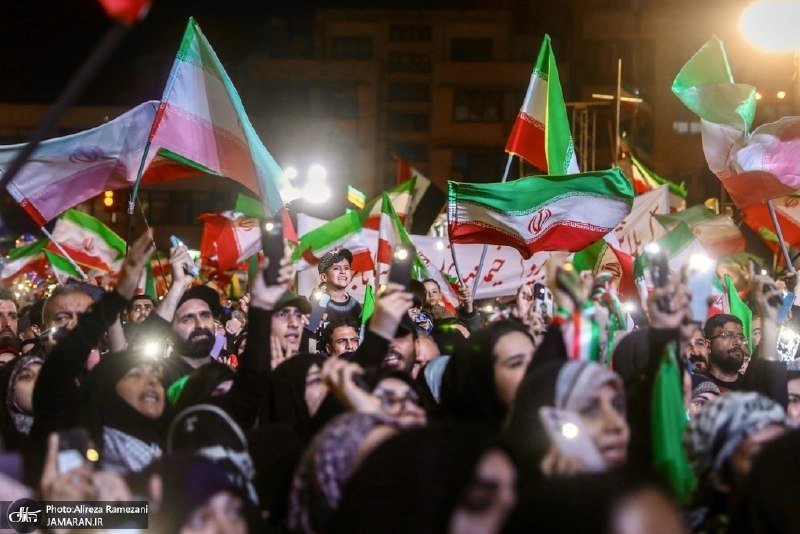
The U.S. Navy boarded an Iran-flagged vessel in the Gulf of Oman on Tuesday. By the time the operation concluded, the tanker had been released and was continuing its voyage. No cargo was seized. No penalty was assessed. The episode lasted long enough to be photographed and reported; not long enough to constitute a policy.
That is the most accurate description of where American Iran policy stands in late May 2026: visible, kinetic, and structurally incoherent.
The boarding itself was not meaningless. It demonstrated to allies in the Gulf and to maritime insurance markets that the U.S. naval presence in the Strait of Hormuz remains active and that the rules of the waterway have not been suspended. But the release without consequence reframes that demonstration. It signals not strength but restraint — or, depending on how one reads it, paralysis. The administration simultaneously boards Iranian vessels, negotiates with Tehran through intermediaries, and warns that the Fed may need to raise interest rates because the Iran conflict is keeping inflation elevated. These are not the actions of a coherent strategy. They are the actions of a government running parallel tracks that occasionally collide.
The simultaneous disclosure on Tuesday that the Federal Reserve's Open Market Committee minutes show a majority of officials anticipating rate increases if the Iran war continues to aggravate inflation adds a dimension that is easy to overlook in the heat of the diplomatic coverage. The conflict is not only a military and diplomatic problem. It is a macroeconomic one. Oil markets have already repriced risk across the Gulf. Insurance premiums for vessels transiting the Strait have climbed. The channel through which Iranian crude reaches global markets — never fully closed despite maximum sanctions pressure — has widened and narrowed with each escalation, and the uncertainty itself is a cost that gets passed through to consumers in Europe and Southeast Asia.
That background helps explain why Britain's announcement of a $5 billion trade deal with Gulf states on the same day registers as more than routine commercial diplomacy. London is not simply selling goods. It is buying insurance — financial and geopolitical — against the scenario in which the U.S.-Iran confrontation destabilises the Strait of Hormuz for a sustained period. The deal is shadowed by the Iran war precisely because every Gulf capital is running the same actuarial calculation. Britain is doing it openly. Others are doing it quietly.
The underlying contradiction the United States has not resolved is whether the goal is a negotiated settlement that normalises Iran's role in regional and global oil commerce, or a pressure campaign designed to produce regime capitulation. The two objectives are not mutually exclusive in the abstract, but they become incoherent in practice. A pressure campaign requires sustained, escalating cost imposition. The boarding and immediate release of a tanker undercuts the cost imposition. A negotiated settlement requires credible commitments from both sides. The simultaneous presence of a naval boarding operation and peace talks undermines the commitments — or at minimum signals to Tehran that the military pressure is largely performative.
President Trump said on Tuesday that the U.S. is in the "final stages" of talks with Iran. The market assigns a 17 percent probability to a permanent peace deal by the end of the month, according to Polymarket pricing. That number is not nihilism. It reflects the honest read of a track record: previous rounds of diplomatic contact have collapsed, and the structural pressures inside both governments — hardliners in Tehran, a domestic political environment in Washington that punishes concessions to Iran — have not materially changed. The 17 percent is the market's verdict on the incoherence, not on the talks themselves.
What would change the calculus is not more simultaneous signalling but the elimination of it. If the U.S. Navy is going to board vessels, the boarding should result in cargo seizures, designation updates, and secondary sanctions actions that materially raise the cost of Iranian oil transit. If the U.S. is going to negotiate, the military posture should signal patience rather than provocation — leaving the boarded tanker at anchor while talks proceed, rather than releasing it to a standing diplomatic process. These are not contradictory strategies in theory. In practice, the inconsistency communicates weakness to both audiences: to Tehran, that the pressure is not serious enough to compel concessions, and to Gulf allies, that the U.S. commitment to keeping the Strait open is contingent on diplomatic timetables rather than operational capability.
The Fed's warning on inflation adds the final layer. Monetary policy operates on a slower clock than naval deployments or diplomatic calendars, but the signal from the FOMC minutes is unambiguous: the Iran conflict is now large enough to register in interest rate decisions. That means it is large enough to register in every economic projection the White House is simultaneously relying on to justify the diplomatic push. The administration cannot simultaneously use the economic damage from the conflict as a bargaining chip with Iran and warn the Fed that the conflict requires a monetary response without acknowledging that the two tracks are in tension.
The tanker will not be the last such episode. As long as the strategic ambiguity persists — as long as boarding and releasing, sanctioning and negotiating, pressuring and talking remain simultaneously active with no apparent hierarchy — each individual operation will be read not as a signal but as evidence of the incoherence that makes signals unreliable. The administration has time to resolve this. But the Polymarket odds suggest the market does not believe it will.
Wire provenance
This editorial synthesis draws on the following public wire/social posts:
- http://reut.rs/4tIcgGd