Tea, Energy, and the Architecture of Counter-Order
Xi Jinping's reception of Vladimir Putin in Beijing on 20 May 2026 was choreographed as a rebuttal. The question is whether the choreography amounts to a strategy.
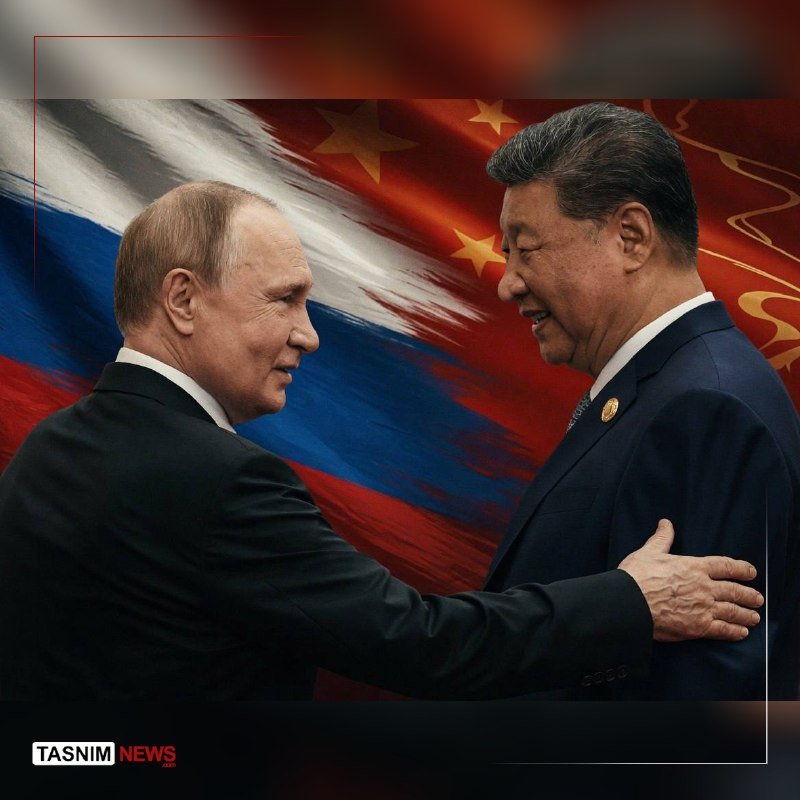
The ceremony in Beijing on 20 May lasted exactly as long as it needed to. A formal guard of honour, a handshake, a brief joint appearance before the cameras — then Xi and Putin disappeared into the Great Hall of the People for what the official readout called "back-to-back strategic coordination." The choreography was deliberate: a diplomatic rebuttal wrapped in protocol, timed to land while Washington was still absorbing the previous week's transactionalSummit between the same two powers, this time in reverse order. Xi receives the leader who was just in the White House, then Xi receives the leader who was just in the White House — a sequence that says something, whether or not anyone in the room intended it to.
That something is the point. The Xi-Putin meeting was not primarily about energy contracts or pipeline volumes, though those were on the agenda. It was about the optics of symmetry: two leaders who regard themselves as architects of a world order the United States did not design and cannot exclusively manage. The language Beijing and Moscow used — "polycentric world," "reliable energy," "strategic coordination" — is not boilerplate. It is the vocabulary of a project.
The Geometry of the Meeting
The Reuters framing called it "tea diplomacy," a phrase with its own irony: the same meeting that Beijing presented as a conversation between equals was described in Western headlines as a gesture of fealty. Neither reading is wrong, and the gap between them reveals something about how differently the same act reads across geopolitical registers.
From Beijing's perspective, the summit was a signal to the Global South that alternatives exist. Two of the world's largest territorial states, one energy-rich and the other manufacturing-dominant, presenting themselves as a coordinated pair — that is a product, and the customers are capitals in Africa, Southeast Asia, the Middle East, and Latin America that are tired of being asked to pick sides in a contest they did not choose. Whether that product delivers is another matter. The Xi-Putin relationship has friction points —Central Asian border management, Central Asian influence, competition for Central Asian pipeline access — but for the moment, the shared interest in reducing American leverage outweighs them.
From the Western perspective, the summit was confirmation of an alignment that has been visible for years. The Russia-China partnership has been building since at least 2014, and the invasion of Ukraine accelerated rather than complicated it. China's official position on the war — neither condemnation nor material support for Russia — has provided diplomatic cover while trade volumes between the two countries surged. The energy deals announced after the summit follow a pattern: Russian crude flows east, Chinese manufactured goods flow west, and the dollar is progressively removed from the settlement layer. That is not coincidence.
The Energy Layer
Energy was the concrete substance of the meeting. The SCMP reported that "reliable energy" and strategic coordination were the operational centrepiece of the talks. For Russia, locked out of Western capital markets and European energy markets, China is the essential customer — the counterparty that makes sanctions economically survivable. For China, Russian energy provides a degree of supply security at prices that are negotiated bilaterally rather than set by global benchmarks denominated in dollars.
The pipeline economics matter. Russian pipeline gas and crude oil sold to China under bilateral contracts are insulated from the spot-market volatility that Western buyers face. That insulation has value to Beijing, particularly as Chinese industrial policy demands predictable energy inputs for manufacturing scale. The structural logic is not sentiment — it is two countries finding, in each other, the counterparties their alternative systems require.
This does not make the relationship a romance. Russian analysts have long noted China's bargaining power in bilateral energy talks; Moscow needs Beijing more than Beijing needs Moscow, a dynamic both sides understand. The summit messaging papered over this asymmetry with diplomatic language, but the underlying arithmetic did not change.
The Multipolar Framing
The most substantive claim from Beijing-adjacent reporting was that the summit was about shaping a "polycentric world" — a phrase that appears in Chinese diplomatic vocabulary as a direct counter to the liberal international order's presumption of a single dominant power centre. The SCMP noted that the two leaders were "trying to shape a polycentric world," phrasing that treats the ambition as an active project rather than an aspiration.
The structural argument here is not academic. A multipolar world, if it emerges, changes the leverage calculus for every smaller state. It creates optionality — and optionality has value in international negotiations. The United States' ability to sanction, to exclusion from SWIFT, to control dollar-denominated trade, rests on a unipolar infrastructure that multipolarity would steadily erode. China and Russia are not building a new order overnight. They are building the plumbing — the alternative payment systems, the bilateral currency swap arrangements, the energy contracts settled outside dollar markets — that makes a multipolar order technically feasible when political conditions ripen.
The tea-and-ceremony in Beijing was a milestone in that plumbing project. It normalises the relationship as a continuing strategic coordination rather than a wartime marriage of convenience. The message to third countries is: there is an alternative infrastructure being built, and it is available to you when you need it.
What Remains Uncertain
The sources do not specify what concrete agreements were reached beyond the framing language. The energy deal specifics, the financial arrangements, the timeline for alternative-currency settlement expansion — these details were not available at time of publication. The gap between summit symbolism and operational reality is where the multipolar project either succeeds or disappoints. Beijing and Moscow have spoken the language of coordination fluently for a decade. The harder test is whether the infrastructure they describe actually functions when tested.
The answer will come not from the next ceremony but from the next disruption — the moment a third country faces pressure from Washington and finds that the alternative system holds. That moment has not yet arrived. The architecture is visible; the load test is not.
The Stakes
If the Xi-Putin alignment deepens and the alternative financial infrastructure matures, the United States loses leverage it has exercised for fifty years. That is not a marginal outcome — it is a reorganisation of the basic terms on which global trade and diplomacy operate. The countries that benefit most are not Beijing or Moscow specifically but the broad set of states that have chafed under a system where American preferences carry automatic weight through dollar access. Whether a more distributed order is more stable, more just, or simply more contested — that question is not answered by a ceremony. It is answered over decades.
The tea was real. The strategy is real. Whether it amounts to a world the two leaders claim to be building is a question the photographs cannot resolve.
This publication covered the Xi-Putin summit through the SCMP, Reuters, and Nikkei Asia wire files, prioritising the diplomatic framing language both sides used to describe the meeting over the Western framing of Beijing as either submitting to Moscow or leading it.