The Dual Presidency: Trump as Celebrity Endorser and War Commander
On the same day President Trump called reality-TV figure Spencer Pratt 'a character' and weighed in on Los Angeles's mayoral race, he also warned that the United States may need to attack Iran even harder. The juxtaposition reveals something structural about how the American presidency now operates.
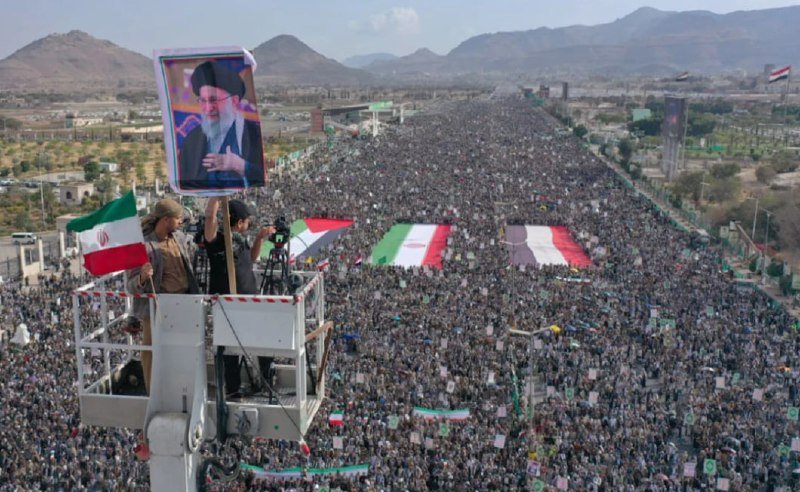
There is a particular vertigo that sets in when the same press conference contains both a presidential assessment of a reality-television figure's qualifications for civic office and a warning that the United States may need to escalate military action against a nation of 88 million people. On May 20, 2026, that vertigo arrived on schedule. President Donald Trump, speaking to reporters, offered his verdict on Spencer Pratt's campaign for mayor of Los Angeles — 'He's a character,' the President helpfully observed — before pivoting to the subject of Iran, where, he said, the United States may have to attack even harder.
The episode would be easy to dismiss as the natural chaos of a given Tuesday in American politics, the kind of tonal whiplash that exhaustion has trained the public to absorb without comment. But the juxtaposition is not incidental. It is structural. What the dual spectacle reveals is a presidency that has fully internalized the logic of entertainment: where foreign policy involving the possible deaths of thousands and a celebrity mayoral endorsement are processed through the same communicative register, receive the same presidential attention span, and generate the same cable-news chyrons.
The Grammar of Presidential Triviality
The decision to weigh in on Spencer Pratt's mayoral campaign is not a gaffe or an aside. It is a choice, and the choice is revealing. A sitting president, with intelligence briefings, ongoing negotiations, and geopolitical crises on his desk, found it appropriate — strategically, politically, or simply habitually — to offer commentary on a reality-TV personality's city-level electoral prospects. The sources do not indicate who in the press pool prompted the question, or whether the President raised it himself. What matters is that he treated it as press-conference fare, the kind of content that a president's communications operation apparently considers worth the presidential minutes.
This matters because the presidency's agenda is not infinite. Every topic elevated to the podium displaces something else. The decision to discuss Pratt is also a decision about what the office will not discuss: the specific legal or diplomatic mechanisms behind any Iran escalation, the Congressional authorization question, the alliance-coordination required with European partners who have consistently opposed unilateral American military action. These omissions are not visible. The Spencer Pratt soundbite is.
The Iran Threat as Aesthetic
The same press conference, however, contained a substantive escalation signal. Trump told reporters on May 20, 2026, that the United States may have to attack Iran even harder, while adding the caveat that a deal remains possible and the administration will wait and see. The phrasing is notable: 'attack Iran even harder' deploys the language of escalation as rhythm, as punctuation, without specifying what 'harder' means operationally or legally. Cruise missiles? Strikeforce? Ground action? The administration has not publicly defined the outer boundary of what 'even harder' represents, which is itself informative. Vague escalation signals serve a different function than specific military planning: they manage audience perception, keep adversaries uncertain, and maintain domestic political salience without committing to a course of action.
This is not a new feature of American foreign policy. Presidents have always used ambiguity strategically. What is newer is the context in which this ambiguity now operates. When the same man who calls a reality-TV figure 'a character' is the same man who controls the nuclear authorization codes, the interpretive framework shifts. The informality that makes celebrity commentary comfortable also makes military signaling legible primarily as performance. Iran is not a board game, but the communication style increasingly treats it as one.
Media Normalization and the Attention Economy
The question for coverage is not whether Trump's commentary was unusual — it was — but how the media apparatus processes the unusual as ordinary. Both the Spencer Pratt moment and the Iran signal received straightforward, on-the-record treatment: question asked, answer given, chyron generated, segment filed. The editorial framing treated the two items as equivalent in-news-value, distinguished only by subject matter. There was no editor's note observing that a president discussing a reality star's mayoral run while threatening a foreign nation-state represents a category error. There rarely is.
This normalization has a specific function: it reduces cognitive load for audiences conditioned to expect unpredictability. But it also forecloses a harder question that coverage rarely asks, which is what kind of decision-making apparatus produces a presidency where both subjects occupy the same morning. The answer is not simply Trump. It is a media ecosystem that rewards accessibility and personality over institutional depth, a political class that has learned that celebrity association delivers valence without policy cost, and an audience whose attention is genuinely finite and therefore grateful for brevity even when brevity flattens complexity.
What Remains Unsaid
The sources do not indicate what specific Iranian action prompted the 'attack even harder' formulation, what diplomatic channels remain open, or whether any Congressional notification has occurred or is planned. The administration has not published a formal strategy document on Iran since taking office. European allies — France, Germany, the United Kingdom — have publicly urged restraint in recent months, according to reporting from wire services that have covered the Iran file continuously. Whether those allies were consulted before the May 20 remarks is not specified in the available record.
The Pratt endorsement raises its own questions. The sources do not indicate what Pratt's policy platform consists of, whether the President was briefed on Los Angeles's fiscal situation, housing crisis, or wildfire preparedness — all live policy questions in the city — or whether the endorsement reflects any substantive engagement with the office Pratt is seeking. The entertainment logic that generated the comment is also the entertainment logic that will amplify it. That is the loop.
The Stakes
The immediate stakes of the Iran rhetoric are real, even if the comment's operational meaning is unclear. Escalation language, even hedged with 'wait and see,' constrains diplomatic options. It raises the signaling temperature with a regional power that has demonstrated willingness to proxy-attack through non-state actors. It signals to Gulf allies — Saudi Arabia, the UAE, Bahrain — that American policy direction remains in flux, which affects their own calculations. Whether the comment was improvisational or deliberately calibrated, its effect on the diplomatic environment is negative until clarified.
The stakes of the celebrity presidency logic are longer-term and harder to quantify. When the threshold for presidential commentary becomes indistinguishable from late-night talk-show monologues, the office loses something that formal authority alone cannot restore: the presumption of considered judgment. A president who treats existential foreign policy and a reality star's city-council race as equivalent conversational territory is not merely being inconsistent. He is communicating that the performance of decision is interchangeable with decision itself, that signaling is strategy, and that proximity to power — celebrity, media, or political — substitutes for qualification.
The market for that proposition is apparently robust. Whether it produces good governance is a question the chyrons have stopped asking.
Wire provenance
This editorial synthesis draws on the following public wire/social posts:
- https://t.me/OANNTV/14563
- https://t.me/ourwarstoday/12441