Trump Claims Iran Nuclear Talks Near Deal; Tehran Denies Final Agreement
The Trump administration claims breakthrough-level progress in nuclear talks with Iran, but Tehran's own statements tell a markedly different story about where negotiations actually stand.
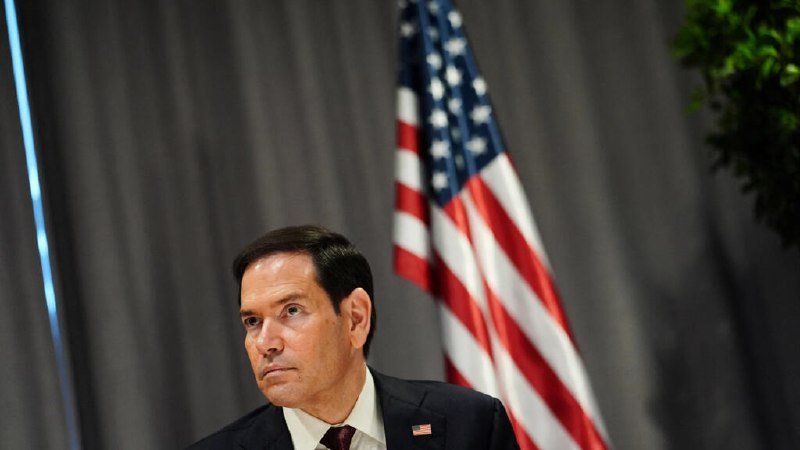
President Donald Trump said on 20 May 2026 that negotiations over Iran's nuclear programme were in their "final stages," raising the prospect of a diplomatic breakthrough after years of escalating tensions. The declaration, posted to social media and reported widely across wire services, landed differently in Tehran: Iranian officials and state-linked media spent the same day publicly disputing the characterisation, describing the talks as ongoing and preliminary rather than as a near-concluded deal.
The divergence matters. US officials have described the current round of back-channel discussions as the most productive in years, pointing to a reduction in Iran's uranium enrichment activities as evidence of good faith. Iranian officials, however, have consistently framed their participation as exploratory, with senior figures in Tehran inserting public caveats every time Washington signals imminent agreement.
\n\n## The American Read
The Trump administration's framing has been consistent over recent weeks: sanctions relief is available in exchange for verifiable limits on Iran's enrichment programme, and talks are progressing toward a written arrangement. US officials have noted that previous sanctions imposed under the "maximum pressure" framework remain in place and would only be lifted contingent on verified compliance milestones. The Epoch Times reported on 20 May 2026 that the United States has frozen all property belonging to individuals already sanctioned as part of this broader effort, signalling continued enforcement pressure even as diplomatic channels stay open.
Administration allies have pointed to a track record of bilateral agreements brokered outside formal multilateral frameworks as evidence that Washington can structure a deal directly with Tehran. Critics note that the absence of European partners — who participated in the 2015 Joint Comprehensive Plan of Action — narrows the diplomatic coalition and could complicate verification mechanisms.
\n\n## Tehran's Counter
Middle East Eye reported on 20 May 2026 that Iranian officials are weighing a proposal but have stopped well short of endorsing it. State-linked analysts in Tehran have emphasised that any agreement must include the lifting of sanctions imposed under non-nuclear rubrics — including designations linked to ballistic missile activity and regional proxy activities — a demand that has historically been a deal-breaker in US-Iran negotiations.
Iran's nuclear programme continues to operate under International Atomic Energy Agency monitoring, though inspectors have reported limitations on access to certain sites. Tehran has insisted that its enrichment activities are entirely peaceful and calibrated for civilian energy needs, a position contested by US intelligence assessments but not directly contradicted by the IAEA's current public findings.
The Gaza conflict, still unresolved at the time of reporting, adds a further layer of complexity. Iranian officials have suggested that a sustainable diplomatic outcome must account for the broader regional environment, a linkage the Trump administration has rejected as outside the scope of nuclear-specific talks.
\n\n## What the Gap Reveals
The pattern is familiar: Washington announces progress, Tehran publishes a correction. In the间隙 between the two framings sits the actual negotiation — a process that, by the admission of both sides, involves technical complexity, internal political constraints, and trust deficits that cannot be papered over with simultaneous press releases.
Coverage of these talks has routinely deferred to the language of official spokespeople, treating White House declarations as the news peg and Iranian responses as a reactive counterpoint. That sequencing reinforces an assumption that the United States sets the pace and Iran reacts. The sourcing suggests a more mutual dynamic: neither side appears to be making substantive concessions without conditions the other has publicly identified as non-starters.
The structural question — whether a bilateral US-Iran arrangement can function without European participation or IAEA Plus-modified protocols — remains genuinely open. The 2015 deal worked because it was multilateral; critics of that framework argued it was also constraining. A 2026 successor arrangement, if it materialises, would look structurally different by design.
\n\n## Stakes and Forward View
A durable agreement would reshape energy market calculations, ease pressure on allied states in the Gulf, and remove a persistent source of friction between Washington and its European partners. An collapsed round would likely see the re-imposition of secondary sanctions on any remaining oil customers and an acceleration of Iran's enrichment cascade toward weapons-grade thresholds.
Neither outcome is imminent. Both administrations have domestic audiences that demand proof of leverage before any formal signing ceremony. The sources available do not establish which direction the current internal deliberations are leaning, only that the public signals remain sharply contradictory.
What remains clear is that the gap between Washington's announced optimism and Tehran's studied caution has been a feature of this negotiation from the beginning. Whether that gap reflects strategic miscalculation, tactical positioning, or genuine disagreement about fundamental terms is a question the available reporting cannot yet answer.
\n\nThis publication's wire briefing prioritised Iranian state-linked sources alongside US reporting for this story, in contrast to several Western wire services that led with the Trump administration's framing and treated Tehran's pushback as secondary response material.
Wire provenance
This editorial synthesis draws on the following public wire/social posts:
- https://t.me/TSN_ua
- https://t.me/epochtimes