Trump Ratchets Up Cuba Rhetoric as Havana Navigates Economic Strains
President Trump delivered sharp language against the Cuban government on 20 May 2026, framing the Havana regime as a historic betrayal of national ideals — escalating a rhetorical posture that analysts say signals renewed pressure ahead of any policy reset.
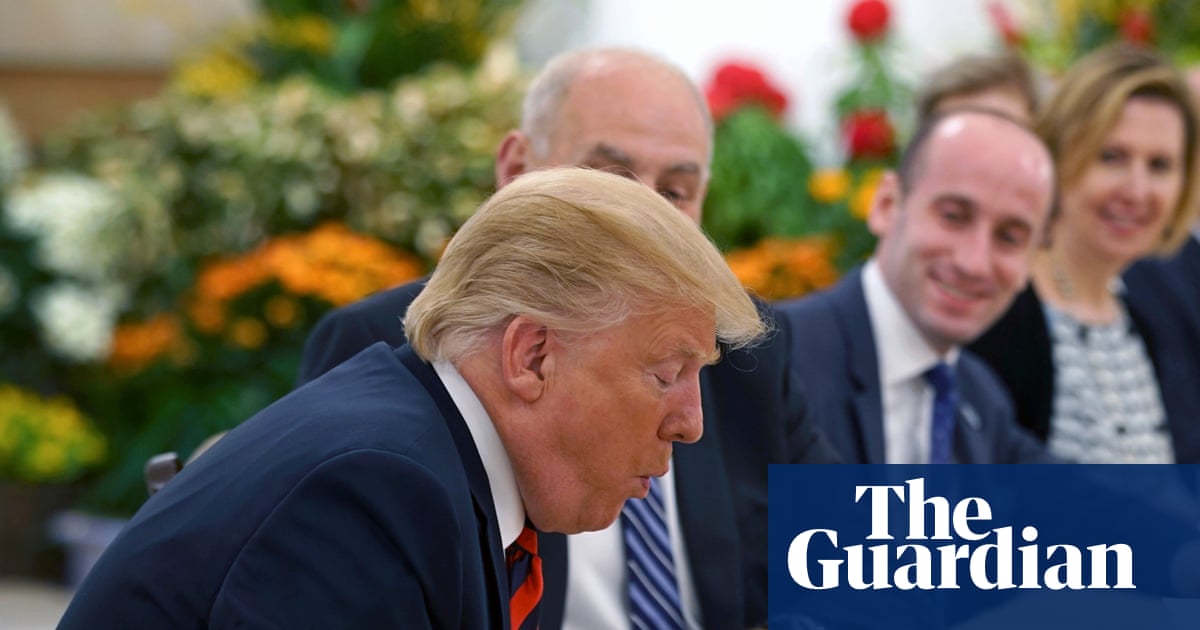
On the afternoon of 20 May 2026, President Trump delivered a pair of statements on Cuba that represented the sharpest language from a sitting US president toward Havana since the Obama-era thaw. "We will not rest until the people of Cuba once again have freedom," the president said, in remarks first flagged by the Open Source Intel monitoring feed. A simultaneous post from the ClashReport channel carried a second formulation: "The regime in Havana today is the direct betrayal of the nation their founding patriots bled and died for." Together, the two statements outline an aggressive rhetorical posture — one that frames the Cuban government not merely as an ideological adversary but as a historical defector from its own national story.
The timing matters. Twenty May marks the anniversary of Cuba's contested 1902 independence, a date that Cuban exiles and Miami-based political organizations have long used to amplify sovereignty arguments. By anchoring the condemnation to that date, the White House draws a direct line between Washington's founding mythology and Havana's current governance — a framing designed as much for domestic Cuban-American constituencies as for international audiences.
A Pattern Reasserted
The language follows a well-worn track. The Trump administration imposed sweeping new sanctions on Cuba's financial sector in the first quarter of 2026, targeting both state-owned enterprises and the shadow banking networks that have allowed Havana to sustain basic commerce despite decades of US restrictions. Those measures followed a period in which several European and Latin American governments had quietly lobbied Washington for a humanitarian carve-out, arguing that blanket sanctions were impeding medical imports and infrastructure repairs after a series of island-wide power grid failures.
The response from Havana has been consistent: framing US policy as economic warfare designed to destabilize a sovereign government. Cuban state media, citing deteriorating conditions in Santiago de Cuba and Matanzas, has amplified reporting on shortages of basic medicines and cooking fuel — framing that directly counters the US narrative of moral clarity. The gap between those two framings — US pressure as liberation theology, Cuban resistance as nationalist dignity — has defined this bilateral relationship since 1962.
What the Rhetoric Cannot Contain
There is a structural tension the presidential language elides. Cuba's current economic situation is genuinely dire — the IMF's most recent regional outlook, published in April 2026, classified the island's fiscal position as among the most precarious in the Caribbean basin. Tourism revenue, once a partial stabilizer, has not recovered to pre-pandemic levels. Remittance flows from the United States, which surged during the Biden administration's easing of family transfer limits, face renewed restrictions under the current Treasury guidance.
But the framing of Havana as a straightforward betrayal of national ideals presupposes that a more cooperative alternative is available and unchosen — a narrative that does not account for the possibility that Cuban leadership has, for decades, made rational calculations within a set of structural constraints partly created by US policy itself. Whether one finds that framing persuasive or not, it is a more complicated picture than the presidential language suggests.
The Regional Dimension
The statements land in a hemisphere that has shifted considerably since the early 2000s peak of US influence. Mexico City has pursued a non-confrontational Cuba policy since the 2018 electoral transition. Brazil, under its current center-right government, has maintained diplomatic ties with Havana while engaging in quieter disagreement over governance standards. Several Caribbean Community (CARICOM) members have publicly opposed the extraterritorial application of US sanctions on Cuba, arguing that Washington's right to restrict its own market does not extend to penalizing third-country companies that trade with Havana.
That regional context constrains what the White House can achieve through rhetoric alone. A full enforcement campaign on secondary sanctions — penalizing third-country banks and commodity traders who handle Cuban transactions — would require cooperation from European allies who have shown limited appetite for confrontation. Without that broader enforcement architecture, the practical impact on Cuban hard-currency reserves remains limited to direct US-channel restrictions.
Stakes and Forward View
The risk for the administration is that heightened rhetoric forecloses diplomatic off-ramps that its own regional partners are quietly keeping open. Several Latin American foreign ministries have, in recent weeks, conveyed to Washington that they are prepared to act as back-channel intermediaries on prisoner releases and medical humanitarian access — but only if the public posture leaves room for a private conversation. Statements that frame Cuba's government as irredeemably illegitimate make that intermediary role politically toxic for any regional capital.
The immediate test will come with the next Treasury sanctions review cycle, expected in July 2026. If the administration escalates to sectoral designations on Cuban energy infrastructure — a step already previewed in congressional testimony by a senior State Department official — Havana will face a genuine supply crunch before the Atlantic hurricane season peaks. That is a humanitarian scenario with regional spillover: fuel shortages in Cuban hospitals would draw immediate coverage from international humanitarian organizations, complicating the US narrative considerably.
For now, the White House has chosen the language of moral clarity. Whether it produces policy results or simply reinforces an existing stalemate will depend on what follows the press release.
This publication noted that the White House framing anchored the condemnation to a symbolically loaded national anniversary — a rhetorical choice that reinforces domestic political signals to Cuban-American voters while leaving open the question of whether the administration has a practical negotiating ladder available should Havana signal flexibility.
Wire provenance
This editorial synthesis draws on the following public wire/social posts:
- https://twitter.com/Osint613/status/2057115358037742037/photo/1tweet
- https://t.me/ClashReport/67845